

Published September 2026 · 12-minute read · by Yegor Nadvornyy, founder of Brainrich Kids
You know this child. They crash instead of sit, hug like a linebacker, narrate at full volume, lick things that should not be licked, and treat every piece of furniture as a summit attempt. Relatives call them "a lot." Teachers call home. And somewhere along the way you heard the phrase that finally fit: sensory seeker. This guide covers what the term means, how to tell a seeker from an avoider, what the science says the behavior is for, and, most usefully, how to feed the need on purpose so it stops feeding itself on your furniture.
The quick answer: a sensory seeker is a child whose nervous system registers sensory input less intensely than average, so they pursue more of it: more movement, more pressure, more sound, more touch, more taste. Seeking is a sensory processing difference, not a discipline problem; it is common in autistic and ADHD kids and also appears in kids with no diagnosis at all. The playbook is supply, not suppression: build intense, safe input into every day (swinging, climbing, hanging, crashing, heavy work), front-load it before demands like school or sleep, and the frantic edge of the seeking typically softens because the tank is actually getting filled.
Jump to: The signs · The science · Seeker vs avoider · How to feed the need · By age · The sleep problem · When to get an OT involved · FAQ
📥 Free printable: The Sensory Toolkit (2 downloads)
The seeker playbook as two 5-page kits: a Sensory Diet Starter Kit with the 26-activity Dose Menu and the Two-Week Dots tracker your child colors, plus a Home Movement Program with skill ladders and cut-out break cards.
The signs of a sensory seeker
No child shows all of these, and every child shows some sometimes. The seeker pattern is about intensity and persistence: this is the child's default setting, every day, across settings.
- Movement: constant motion; climbs everything including people; jumps off furniture; spins without getting dizzy (or loving the dizzy); hangs upside down off the couch; runs instead of walks; rocks and bounces while seated.
- Pressure and touch: crashes into cushions, walls, and siblings on purpose; hugs too hard; loves being squeezed, sat on, or rolled in blankets; touches everything in every store; prefers tight spaces.
- Mouth: chews shirt collars, sleeves, and pencils long past toddlerhood; licks or mouths objects; craves crunchy, chewy, or intensely flavored food.
- Sound and sight: makes noise constantly (humming, sound effects, narration); volume knob seems stuck on high; loves flashing, spinning, fast-moving visuals.
- The tell that ties it together: after truly intense input (a trampoline hour, a wrestling match with a parent, twenty minutes of hard climbing) the child is noticeably calmer, more focused, more cooperative. Input works on them like a meal works on hunger.
If that last line made you nod, you have your answer, and the rest of this guide is your manual.
The science: why the need is real
The framework comes from occupational therapy, beginning with Dr. A. Jean Ayres's work on sensory integration in the 1960s and 70s. The short version: the brain doesn't just receive sensory input, it regulates how strongly input registers. In some children the registration dial runs low. A spin that overwhelms one child barely registers for another, so the low-registration child seeks more, harder, longer, exactly the way you lean closer to a quiet speaker.
Two of the eight senses dominate seeking behavior, and they're the two most parents have never heard of: the vestibular sense (inner-ear motion detection: feeds on swinging, spinning, hanging upside down) and proprioception (muscle-and-joint body sense: feeds on pushing, pulling, hanging, crashing, carrying). A seeker's wildest behaviors are almost always these two senses ordering groceries. The crash into the couch is proprioception. The eleventh spin is vestibular. Seen through that lens, the behavior stops looking random and starts looking like a shopping list.
Seeking overlaps heavily with autism and ADHD, and it also stands alone: plenty of seekers carry no diagnosis. Carol Kranowitz's classic parent book The Out-of-Sync Child and the STAR Institute are the deep-dive resources if you want the full clinical picture.
Seeker vs avoider: the two ends of the dial
| Sensory seeker | Sensory avoider | |
|---|---|---|
| Input registers | Weakly, so they chase more | Intensely, so they defend against it |
| The swing | Higher! Faster! Spin it! | Slow, low, or not today |
| The tag in the shirt | Never noticed it exists | Cannot think until it's cut out |
| The birthday party | First in the bounce house, last out | Overwhelmed by noise and crowd, needs exits |
| What helps | More input, on purpose, on schedule | Less input, predictability, control over dosing |
Three real-world complications: many kids are seekers in one sense and avoiders in another (craves crashing, hates loud noises is a classic combo); the same child can flip with fatigue or stress; and siblings routinely land on opposite ends, which is why one wants the swing spinning and the other wants it gone. There's a full guide to designing for both in one home in our sensory room vs sensory gym comparison. And a note on the quiet flavor of low registration: some low-registration kids don't seek, they just miss input and seem dreamy or slow to respond. Those kids often benefit from the same activities, offered rather than demanded.
How to feed the need (the core playbook)
The strategy is one sentence: schedule intense input before the day demands calm, instead of fighting the seeking after it starts. OTs call the movement-and-pressure portion of this a sensory diet (our sensory diet guide has a full sample day). The rules of thumb:
- Front-load. Ten to twenty minutes of hard input before school, before homework, before restaurants, before bed routines. Input before the demand beats consequences after the meltdown, every time.
- Go heavy. For seekers, gentle doesn't register. Hanging from a bar, climbing to the top, dragging the laundry basket, wheelbarrow-walking to the bathtub: muscles working hard against gravity is the input that actually banks. Proprioceptive input also has the best safety profile: it is the rare input that calms without overloading, which is why heavy work is the first tool out of every OT's bag.
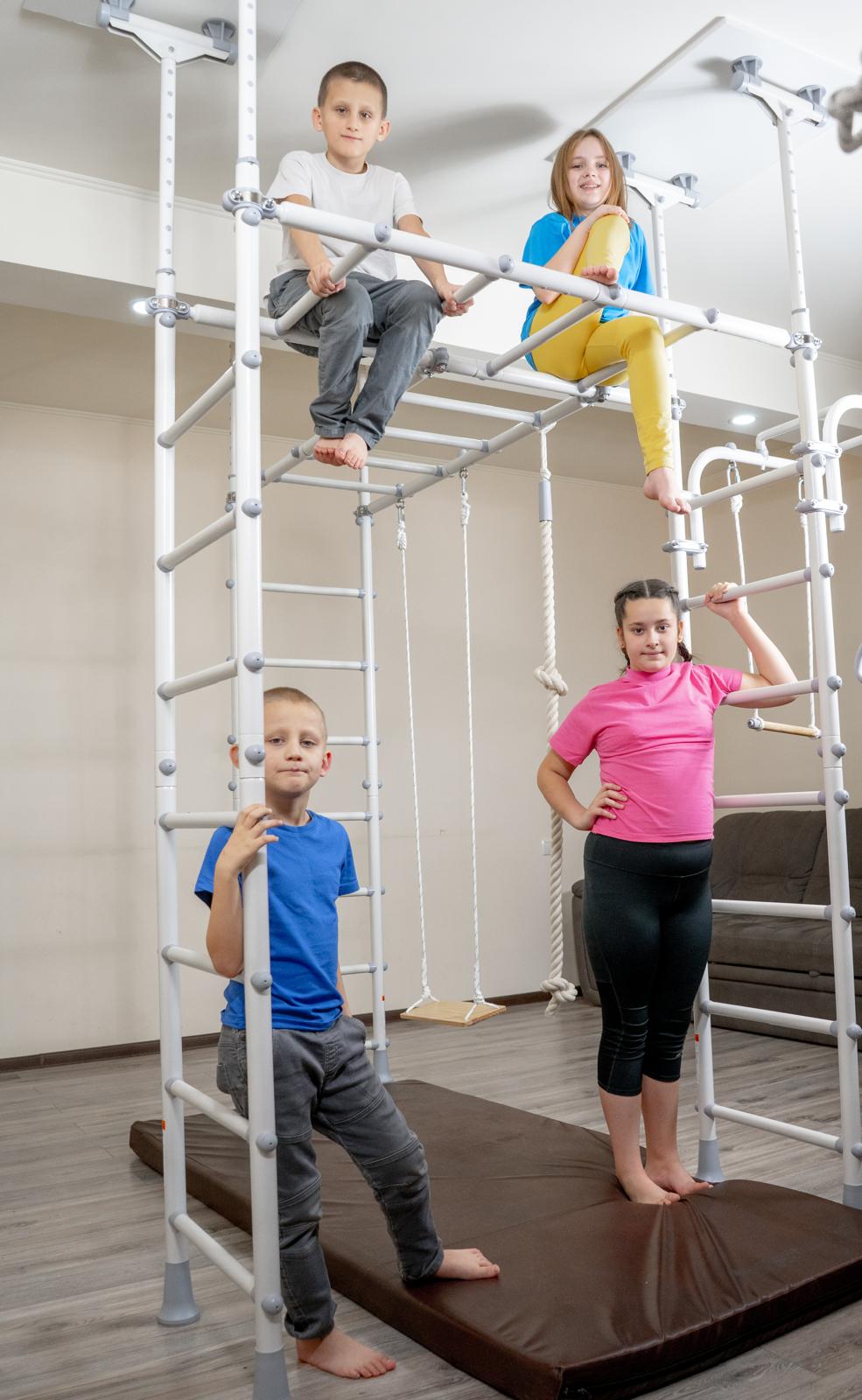
- Make it ambient. The deepest fix is a home where intense input is always available without asking: a climbing frame in the corner, a swing that hangs indoors, a crash pad that lives under both. Seekers self-dose beautifully when the equipment is three steps away. That's the entire design philosophy behind building a sensory gym at home, and it's why our steel frames are rated for 220 lb of working load and safety-tested to 440: seekers bring momentum, and momentum multiplies force.
- Feed the mouth and hands too. Crunchy snacks, chewy foods, water bottles with hard straws for oral seekers; fidgets and putty for hand seekers. Small channels, real relief.
Feeding the need by age
| Age | What the seeking looks like | Best outlets |
|---|---|---|
| 3-4 | Climbing furniture, crashing, constant motion, mouthing | First real climbing frame (independent climbing starts at 3+), low swing, cushion crash zone, playground marathons |
| 5-7 | After-school energy explosions, wrestling, chair tipping, volume | Monkey-bar traverses, rope climbing, rings, gymnastics or martial arts, front-loaded input before homework |
| 8-12 | Seeking goes athletic (or goes screen-shaped if unfed) | Pull-up bar training, climbing gym passes, swimming, biking, rowing; an adult-rated home frame keeps daily supply |
For gift seasons, our gifts for active kids guide sorts presents by mover type, and seekers are the archetypal "every mover type at once" kids.
The sleep problem (yes, it's connected)
"How do I get my sensory seeker to sleep?" is one of the most-searched questions about these kids, because an under-fed seeker at 8 p.m. is a jack-in-the-box. What families and OTs consistently find helps: spend the body before you ask it to be still. Real physical input in the late afternoon (not right before bed: finish intense movement an hour or more out), then a downshift sequence built from calming input rather than commands: a warm bath, a firm-pressure "sandwich" in the couch cushions, slow rocking or slow linear swinging, a weighted blanket if your pediatrician approves, and lights low. Alerting input (spinning, screens, tickling, roughhousing) moves bedtime later; deep pressure and slow rhythm move it earlier. It is not magic, but parents are usually startled by how much of the bedtime fight was really an unfinished sensory day.
When to get an OT involved
Plenty of seekers thrive with nothing more than a well-designed home and knowing parents. Bring in an occupational therapist trained in sensory integration when the seeking is dangerous despite outlets (bolting into streets, climbing truly unsafe structures), when it consistently blocks school participation or friendships, when eating or sleeping stay disrupted, or when you want a professional map of your child's profile. Ask specifically about sensory integration experience, and expect a good OT to hand you home strategies, not just clinic sessions. The STAR Institute is a solid starting point for finding one.
Build the input supply into your house
Steel climbing frames with swings, rings, ropes, and monkey bars: the all-day input source for the kid who can never get enough. Independent climbing at 3+, 220 lb working load, safety-tested to 440. Installs without drilling, 30-day money-back guarantee.
Frequently asked questions
What is a sensory seeker? A sensory seeker is a child (or adult) whose nervous system registers sensory input less intensely than average, so they actively pursue more of it: intense movement, deep pressure, loud sound, strong tastes, constant touch. It is a sensory processing difference described in occupational therapy, not a behavior problem, and the effective response is supplying rich input on purpose rather than suppressing the seeking.
Is sensory seeking a sign of autism or ADHD? It can be part of either, and sensory differences are common in both. But seeking also occurs in kids with no diagnosis at all. A seeker profile alone is not a diagnosis; if you have broader developmental questions, raise them with your pediatrician. The home strategies in this guide help seekers of every neurotype.
What activities help a sensory seeker? The highest-value activities combine vestibular and proprioceptive input: climbing, hanging from bars or rings, swinging (add spinning for kids who crave it), jumping and crashing into soft landings, and heavy work like carrying, pushing, and pulling. Schedule them before demands (school, homework, bedtime) rather than after trouble starts.
What is the difference between a sensory seeker and a sensory avoider? They sit at opposite ends of the same dial. Seekers under-register input and chase more; avoiders over-register input and defend against it. The same swing gets "higher, faster!" from a seeker and a hard no from an avoider. Many kids mix profiles across senses, seeking movement while avoiding noise, for example.
How do I get my sensory seeker to sleep? Feed the body earlier and downshift deliberately: intense movement in the late afternoon ending an hour or more before bed, then calming input in sequence: warm bath, firm pressure like a cushion sandwich, slow rocking or slow linear swinging, low light. Avoid alerting input (spinning, roughhousing, screens) in the final hour. An under-exercised seeker at bedtime is the classic unfinished sensory day.
📚 Keep reading in the Decision Guide
What Is Stimming? A Parent's Guide · Heavy Work Activities for Kids · How to Build a Sensory Gym at Home · The Best Sensory Toys, Sorted by Input · Indoor Activities for High-Energy Kids: Winter Survival Guide · Kids Jumping on the Couch? What Helps
Sources
Ayres, A.J. (1972). Sensory Integration and Learning Disorders. Western Psychological Services. · Kranowitz, C. (2005). The Out-of-Sync Child: Recognizing and Coping with Sensory Processing Disorder. Perigee. · STAR Institute for Sensory Processing. sensoryhealth.org. · CDC. Physical Activity Guidelines for Children and Adolescents. · Brainrich Kids engineering specification: frame working load 220 lb, safety-tested to 440 lb.
Share: