

Published September 2026 · 10-minute read · by Yegor Nadvornyy, founder of Brainrich Kids
Gift guides for autistic kids tend to make the same mistake as gift-givers do: they shop by age. But the age on the box is the least useful fact about an autistic child's wishlist. The useful fact is the sensory profile: what their nervous system is hungry for, and what it defends against. Get that right and the gift gets used daily until spring; get it wrong and it's the unopened thing in the closet that everyone politely ignores. Here's the profile-based guide, plus the gifting logistics (unwrapping, surprises, duplicates) that autism parents wish relatives knew.
The quick answer: shop by sensory profile. Seekers (the climbers, crashers, and spinners) want big-input gifts: climbing frames, swings, trampolines, crash pads, monkey bars. Avoiders want control-and-calm gifts: enclosing pod swings, noise-canceling headphones, tents and forts, deep-pressure items. Mixed profiles (most kids) want both shelves stocked. Add the logistics: honor the special interest, skip surprise-heavy reveals if surprises are hard, and remember December 31 is the FSA deadline, since sensory equipment for a diagnosed child may be HSA/FSA eligible with a Letter of Medical Necessity.
Jump to: Find the profile · Gifts for seekers · Gifts for avoiders · Mixed profiles · Sensory-friendly gifting · By budget · FAQ
Step one: find the profile (60 seconds)
Ask the parent, or if you are the parent, answer from the last normal Tuesday: does this child chase intense input (climbs furniture, crashes into couches, spins, hugs hard, volume up) or defend against it (covers ears, avoids messy textures, melts down in crowds, needs warning before touch)? Chasers are sensory seekers; defenders are avoiders; and most real kids are both, in different senses: the classic combo is craves-crashing-hates-noise. The full science is in our sensory seeker guide; for gift purposes, the sixty-second read is enough.
Gifts for the seekers: big input, daily use
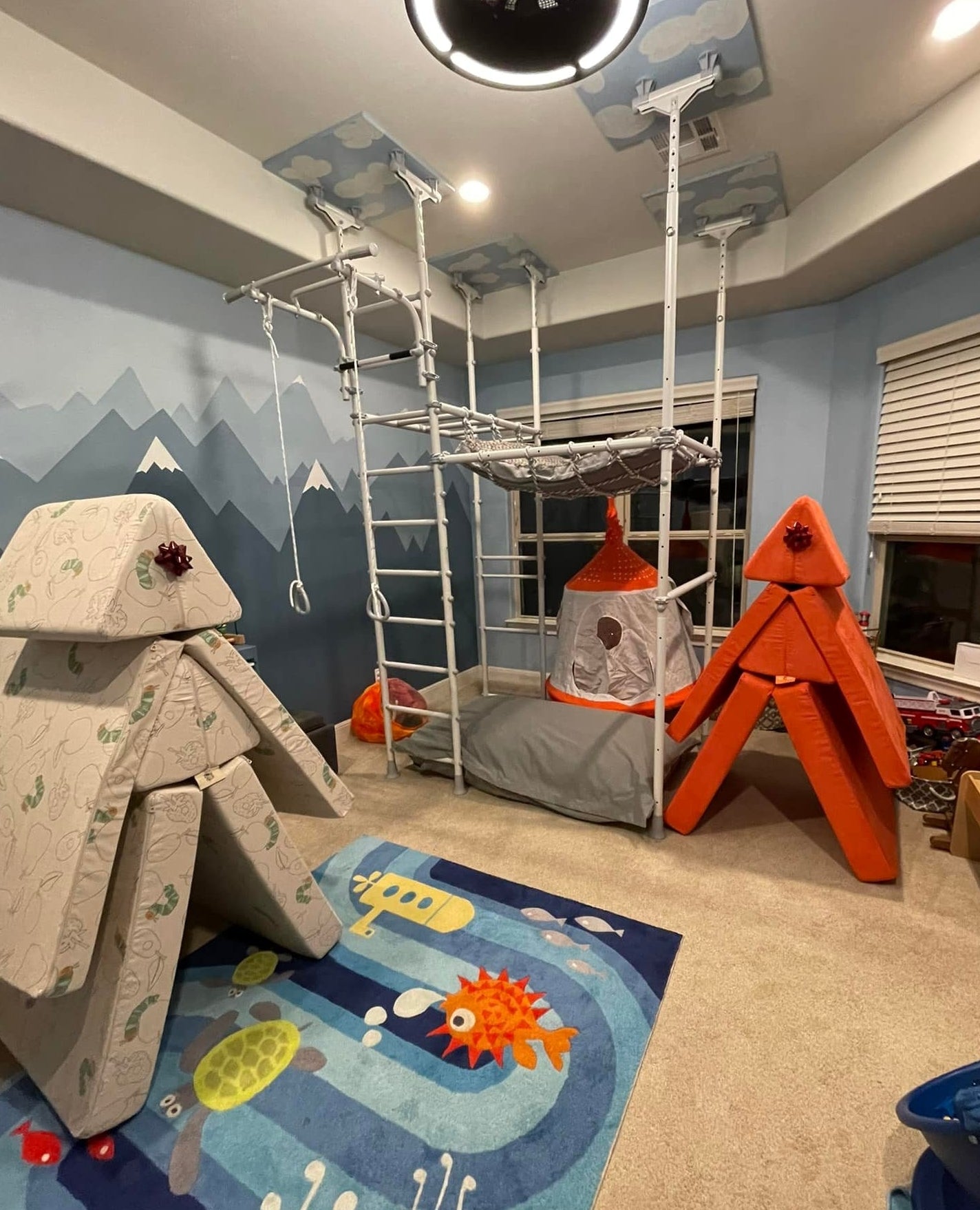
- A climbing frame. The number-one seeker gift because it feeds both hungry senses at once (muscles-and-joints plus balance-and-motion) and it's available at 6 a.m. in January. Our Model T3 ($899) is the classic first frame: steel, no drilling, independent climbing at 3+, and rated for 220 lb of working load, safety-tested to 440, so it survives a seeker's enthusiasm for years. Why climbing specifically: the redirect logic.
- A swing matched to the profile. Seekers usually want open, big-motion swings: disc, trapeze, platform, classic seat. The type-by-type match is in our autism swing guide. For a family that already owns a frame, the $27 Classic Wood Swing is a genuine stocking-level present.
- Monkey bars, stated precisely. Hand-over-hand traverses are seeker catnip, and one construction fact matters for gift-givers: monkey bars are not a stand-alone unit. The clean gift paths: the Spider V3 comes with the monkey bars built in, or the Monkey Bars V3 add-on upgrades a family's existing Brainrich frame.
- A crash pad or thick play mat. The landing zone is half the activity for a crasher, and it upgrades every other piece of equipment's safety at the same time.
- Rings, ropes, and a rope ladder. Rotating challenge for the frame the family already owns; boredom is the seeker's only real enemy.
- Beyond our aisle: a mini trampoline with a handle, a sit-and-spin, a bike upgrade, swim passes: anything with intensity and repetition.
Gifts for the avoiders: control, enclosure, calm
- An enclosing swing. A pod or cocoon swing is the avoider's version of the seeker's disc swing: motion arrives gently, wrapped in fabric, with visual input dimmed. Slow linear swinging is the calming direction.
- Quality noise-canceling headphones. Possibly the highest use-per-dollar gift in the category; let the child pick the color.
- A tent, canopy, or fort kit. A retreat with a door the child controls. Under-the-gym forts count double: several of our families drape the frame into a canopy hideout.
- Deep-pressure items: a weighted lap pad or blanket (sized per pediatrician guidance), a compression sheet, a beanbag big enough to disappear into. Pressure is the input avoiders usually still welcome, because it's predictable and self-dosed.
- Predictability gifts: a visual timer, a picture-schedule kit. Unglamorous, adored.
Mixed profiles (most kids): stock both shelves
The craves-crashing-hates-noise child wants a climbing frame and headphones, a trapeze and a pod swing for after. This is where a modular frame quietly earns its price: the same structure holds the seeker gear (rings, rope, monkey-bar span) and the avoider gear (pod swing, canopy fort), so one corner of the house serves both halves of the same kid, and both kids in a seeker-avoider sibling pair. Our sensory room vs sensory gym guide maps that design problem in full.
Sensory-friendly gifting: the part relatives should read twice
- Honor the special interest without irony. The train kid wants the train thing. A gift inside the interest says "I see you"; a gift meant to broaden horizons says the opposite, in wrapping paper.
- Ask before surprising. For many autistic kids, surprise is a cost, not a feature. A photo of the gift sent ahead, or unwrapping away from the crowd, or even choosing the gift together preserves the joy and deletes the ambush.
- Duplicates are fine. Wanted duplicates are great. The identical plush, the same-again sweatpants: sameness is comfort. Buy the second one proudly.
- Mind the wrapping. Some kids find unwrapping overwhelming (texture, sound, performance pressure). Gift bags, or a "no ceremony" rule, cost nothing.
- Give the receipt to the parents. Best practice for every gift on this page: fit is sensory, and sensory can't be guessed from a catalog.
- Pooling beats piling. One big right gift from six relatives beats six small maybes. Our non-toy gift guide includes a copy-paste message for organizing the family around a pooled gift.
- The December 31 detail: for a child with a qualifying diagnosis and a Letter of Medical Necessity, sensory equipment may be HSA/FSA eligible, and unspent FSA balances mostly expire December 31. A holiday gift and the year-end deadline can be the same purchase: the process is in our HSA/FSA guide.
The guide, by budget
| Budget | Seeker | Avoider |
|---|---|---|
| Under $30 | Classic Wood Swing ($27, needs a frame), chewy necklace, resistance putty | Visual timer, fidget set, soft-texture comfort item in the exact right texture |
| $30-150 | Rings and rope set, rope ladder, mini trampoline, sit-and-spin | Noise-canceling headphones, tent or canopy kit, weighted lap pad |
| $150-700 | Thick play mat, Monkey Bars V3 add-on for an owned frame ($699) | Quality pod swing setup, big beanbag, compression bedding |
| Pooled ($700+) | The full frame that serves both profiles for a decade: Model T3 ($899) to Spider Max V3 ($1,899), chosen via the 60-second quiz | |
One corner that serves the whole profile
Climbing, swinging, hanging, and the pod-swing calm-down corner on one steel frame. No drilling, 30-day money-back guarantee. And the price in October is the price in December: we don't run sales, so there's no reason to wait.
Frequently asked questions
What is a good gift for an autistic child? Shop by sensory profile rather than age. Sensory seekers (climbers, crashers, spinners) get the most from big-input gifts: climbing frames, swings, trampolines, crash pads. Avoiders get the most from control-and-calm gifts: pod swings, noise-canceling headphones, tents, deep-pressure items. When unsure, honor the child's special interest directly and give the parents the receipt.
What are good gifts for a sensory seeker? Equipment that delivers intense movement and pressure daily: a climbing frame (the highest-value pick because it feeds proprioceptive and vestibular input at once), open swings like a disc or trapeze, monkey bars via a frame that includes them, crash pads, and rings or ropes to rotate the challenge on an existing frame.
Can I gift just the monkey bars? Only to a family that already owns a Brainrich frame: monkey bars are an add-on, not a stand-alone unit, since a complete span needs two ladder sets plus the crossbar set. For a household starting from zero, gift the Spider V3, which comes with the monkey bars built in; for owners, the Monkey Bars V3 add-on is the classic upgrade.
How do I give gifts to a child who hates surprises? Remove the surprise, keep the gift: send a photo ahead, let the child unwrap away from the crowd, use a gift bag instead of wrapping, or choose the gift together. For many autistic kids the ambush is the problem, not the present, and predictability turns the same object from stressor into joy.
Are sensory gifts HSA/FSA eligible? They may be, when the child has a qualifying diagnosis and a licensed provider writes a Letter of Medical Necessity; the plan administrator decides. Unspent FSA balances mostly expire December 31, so a holiday sensory-equipment gift and the year-end deadline can be the same purchase if the paperwork starts early.
📚 The rest of the gift trilogy
Non-Toy Gifts for Kids by Age · Best Gifts for Active Kids · Montessori Gifts by Age · Christmas Gifts for Kids Who Love to Climb
Sources
Ayres, A.J. (1972). Sensory Integration and Learning Disorders. Western Psychological Services. · Kranowitz, C. (2005). The Out-of-Sync Child. Perigee. · STAR Institute for Sensory Processing. sensoryhealth.org. · Brainrich Kids engineering specification: frame working load 220 lb, safety-tested to 440 lb.
Share: