

Updated August 2026 · 10-min read · by the Brainrich Kids team
Ask a hundred parents homeschooling autistic kids what saved their year, and you will hear surprisingly few curriculum names. You will hear about a strip of laminated cards on the wall. A schedule is not paperwork for an autistic child—it is the answer to the question their nervous system asks all day long: what happens next? This guide is the practical companion to our environment-first autism homeschooling guide: sample days you can copy, visual schedule formats, first-then boards, movement anchors, and the transition strategies that keep the whole thing from collapsing at 9:40 a.m.
The quick answer: build the day as a fixed sequence of anchors, not a clock schedule: the order stays the same every day, the durations flex with your child. Show that sequence visually (photos, icons, or words your child can see and physically move), because visual supports are among the most strongly evidenced practices in autism education. Place a movement block before the first work block and between every block after it, use a first-then board for demands, and script your transitions (countdown warning → check schedule → carry an object to the next activity). Then work with your child's OT to tune doses and durations to your specific child.
Jump to: Why schedules work · Visual schedule formats · Sample days · First-then boards · Movement anchors · Transition strategies · FAQ
General information for families, not medical or therapeutic advice. Your child's occupational therapist or care team should have the final word on your setup.
Why schedules do so much heavy lifting for autistic kids
The research shorthand is intolerance of uncertainty: studies such as Boulter and colleagues (2014) link the distress of not knowing what comes next to the elevated anxiety so many autistic children carry. A predictable day is not rigidity for its own sake—it is anxiety management, built in structural form. Every question the schedule answers ("what's next?", "how long?", "then what?") is a question your child no longer spends energy holding.
And the evidence for making that schedule visible is about as strong as evidence gets in this field. A systematic review by Knight, Sartini and Spriggs (2015) concluded that visual activity schedules qualify as an evidence-based practice for autistic individuals from preschool through adulthood, helping build, maintain, and generalize skills across settings. The National Clearinghouse on Autism Evidence and Practice (2020) reached the same verdict for visual supports broadly, on the strength of over a hundred studies. Why visible beats verbal: spoken instructions evaporate, and many autistic kids process language slowest exactly when they are most stressed. A card on the wall never needs repeating, never changes its tone, and never gets tired.
One distinction before the samples: schedule the sequence, not the clock. "Math happens after morning climb" survives a slow breakfast; "math at 9:00" does not. Anchors in fixed order, durations that breathe. That single design choice is why homeschool schedules can outperform school ones for autistic kids: school can only promise the clock, while you can promise the order.
Choosing a visual schedule format
Match the format to your child's current representation level, and expect to graduate through these over the years:
| Format | Best for | How it works at home |
|---|---|---|
| Object schedule | Early learners, pre-symbolic | A row of real objects: a spoon means snack, a swing clip means gym time. The child carries the object to the activity. |
| Photo schedule | Most ages 3–6 starters | Photos of your actual desk, gym, and calm corner, velcroed top-to-bottom. Finished cards go into a "done" pocket, which is half the magic. |
| Icon/picture schedule | Kids who generalize symbols | Drawn icons for each anchor; more portable than photos and easier to add new activities to. |
| Written checklist | Readers, roughly 7+ | A whiteboard list the child checks off. Crossing items out delivers the same "done" signal the pocket used to. |
Format rules that hold across all four: the schedule lives at the child's eye level in one consistent spot; the child physically interacts with it (moving, flipping, or checking off, not just looking); and completed items visibly leave the schedule, because a shrinking list is progress a child can see. The free practitioner modules from AFIRM at UNC are an excellent deep-dive if you want the full how-to used in classrooms.
Two sample days you can copy tomorrow
These mirror the rhythms in the main autism homeschooling guide, laid out the way they would appear on the wall. Times are shown only so you can see proportions; on the actual schedule, show sequence, not clock.
| Anchor card | Ages 3–6 · "rhythm day" | Notes for the grown-up |
|---|---|---|
| 🌅 Wake & dress | Same order daily: bathroom, clothes, breakfast | A mini-schedule of 3 cards can run the morning routine by itself |
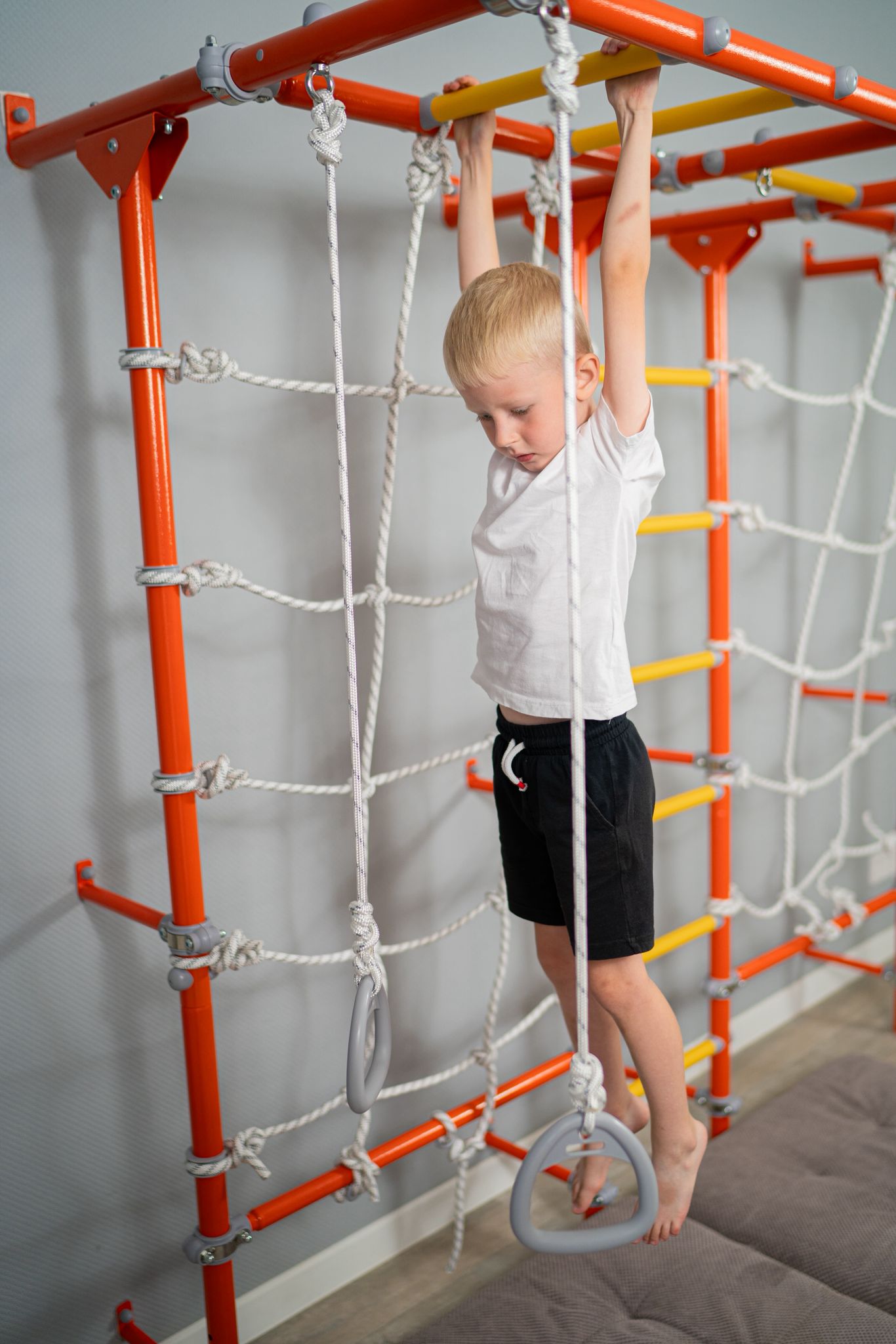
| 🧗 Big movement | 20–30 min of climbing, swinging, hanging | Input before the first demand of the day, never as a reward after it |
| 📖 Table time | One 10–15 min activity, hardest subject first | End while it's still going well; stopping early builds tomorrow's willingness |
| 🪁 Free movement | Child's choice in the movement zone | Unstructured on purpose; this is recess, not another lesson |
| 🦖 Interest time | The dinosaurs, the trains, the maps—with you narrating the learning inside | This is a real academic block wearing a play costume |
| 🍎 Lunch → outside | Park, yard, walk, weather permitting | Outdoor time stays on the schedule as its own promised card |
| 🏕️ Calm block | Quiet corner, audiobook, rest | Downshift practice while regulated, so the corner works when it's needed |
| Anchor card | Ages 7–11 · "block day" | Notes for the grown-up |
|---|---|---|
| 🧗 Morning circuit | A movement circuit the child helped design: net climb, rings, monkey bars | Co-designing the circuit converts the schedule from imposed to owned |
| 🗓️ Schedule review | 2 minutes at the wall: today's cards, any changes flagged with a "change" card | Surprises previewed at 8:30 are not surprises at 11:00 |
| ✏️ Work block 1 | 25–40 min, priority subject, first-then board visible | Timer the child can see; the timer ends the block, not the parent |
| 🤸 Movement break | 10 min chosen input: swing, hang, heavy work | Scheduled, chosen from a menu, never revoked |
| ✏️ Work block 2 | Second subject, ideally interest-adjacent | Reading about the special interest counts—skill plus free motivation |
| 🍎 Lunch & recess | Outdoors when possible, gym when not | The gym is the all-weather backup, not the outdoors replacement |
| 🎨 Project / therapy / co-op | The day's variable slot | Keep variability quarantined to one slot; the spine never changes |
Notice the pattern in both: no two work blocks ever touch. Movement sits between every pair of demands, which is the subject of its own section below.
First-then boards: the smallest schedule that works
A first-then board is a visual schedule shrunk to two frames: FIRST (the demand) and THEN (what follows it). It is the tool for the moments a full schedule is too much: starting a non-preferred task, pushing through a wobble mid-morning, or handling a day when the big schedule has already gone sideways. First-then structures are a standard component of the visual-support toolkit that NCAEP's evidence review covers, and OTs and autism classrooms use them constantly.
FIRST
📖 One page of math
THEN
🤸 Ten minutes on the rings
Rules that keep the board trustworthy: the then always happens (one broken promise costs weeks of buy-in); the first stays small (one page, not "finish math"); the then is genuinely preferred (movement almost always beats stickers, and your child's picks beat yours); and the board is shown, not spoken, especially once frustration has started. One caution echoed by both OTs and the previous article: use movement as the then because it motivates, but never make baseline movement contingent. The scheduled movement breaks happen no matter what; the first-then bonus round is extra.
Movement breaks as the schedule's anchors
Most schedules treat movement as the mortar between the real bricks. For an autistic child, flip it: the movement blocks are the bricks, the load-bearing anchors the academic blocks hang between. The reasoning is regulatory, and the research points the same direction: a systematic review of exercise interventions for autistic children reported positive behavioral outcomes across 13 studies, and vestibular and proprioceptive input (swinging, hanging, climbing, pushing, carrying) are the OT world's everyday regulation levers—covered in depth in our vestibular input explainer and heavy work activities list.
Practical placement rules: big input first (the day's largest movement dose lands before the first demand), a break between every pair of work blocks (10 minutes is a fine default; your child will teach you their real number), and a menu, not a mandate (a "movement choices" card—swing, hang, climb, crash, carry—turns the break itself into autonomy practice). This is also the practical argument for having equipment inside your house: a movement anchor the schedule promises every 40 minutes cannot depend on weather, daylight, or a drive. A gym in the next room keeps the schedule's promises for it; our sensory gym at home guide and sensory swings guide cover the buildout.
"Their most used toy by FAR, like by a landslide. They use it every day for hours."
– LEISA L., MOM OF 3, BRAINRICH OWNER
Transitions: where good schedules go to die
The schedule tells your child what the day holds. Transitions are where the day actually changes gears, and they are the single most common failure point: transitions can consume a substantial share of any structured day, and autistic children often find the switching harder than either activity on its side of it. Kara Hume's classic practitioner guide for the Indiana Resource Center for Autism lays out the toolkit; here is the home version:
| Strategy | What it looks like at home |
|---|---|
| Visible countdown | A sand timer or visual timer the child can watch. "Five more minutes" is abstract; falling sand is not. The timer, not you, ends the activity. |
| Check the schedule | The transition ritual is always the same: activity ends → walk to the schedule → move the done card → see what's next. The wall delivers the news, so the argument isn't with you. |
| Transition object | Carry something belonging to the next activity: the math pencil to the desk, the water bottle to the gym. Hands busy, destination concrete. |
| Preview changes | A dedicated "change" card placed during the morning review whenever the day differs: dentist instead of co-op. Rehearsed surprise is barely a surprise. |
| Movement as the bridge | When a transition is chronically hard, put a mini movement dose inside it: three hangs from the bar between breakfast and table time. The body switches gears before the task asks the brain to. |
Two mindset notes. First, protect finishing: many autistic kids struggle most when pulled from something incomplete, so where you can, let the puzzle finish before the card flips, and where you can't, a "save spot" ritual (photo of the LEGO build, bookmark in the book) makes the interruption survivable. Second, the schedule is the authority, and that's the point: children argue with parents, not with walls. Every transition the wall runs is a negotiation you didn't have.
Which gym anchors your schedule best? Take the 60-Second Quiz →
The equipment behind the movement cards
If your schedule is going to promise climbing, swinging, and hanging every hour or two, the promise needs hardware: safe for daily independent use at ages 3 and up, indoors, with impact mats underneath, and interesting enough to still be the favorite in year three. (Where the movement zone fits in your space is its own puzzle—our homeschool room ideas guide covers layouts from apartments on up.) Two funding notes while you plan: state programs can often cover equipment like this (see the homeschool grants and funding guide), and some families use HSA/FSA dollars with a letter of medical necessity—eligibility details in is a play gym HSA/FSA eligible? That is the brief our gyms are built to, with adjustable bars so the same frame serves the cautious year and the fearless one:


Ready to put the recess card on the wall?
Every gym assembles in an afternoon and is covered by a 30-day money-back guarantee.
Frequently asked questions
What does a good homeschool schedule for an autistic child look like? A fixed sequence of anchors shown visually, with flexible durations: movement first, short work blocks that never touch (a movement break sits between every pair), interest-led time counted as real academics, outdoor time as its own promised slot, and one quarantined "variable" slot for appointments and outings. Sequence over clock is the core design rule.
How many hours a day should we schedule? Fewer than you think. One-on-one instruction is far more efficient than classroom teaching, so most families run 1–3 hours of focused academics inside a fully structured day. The schedule's job is to structure the whole day's predictability, not to fill it with seat work.
Do visual schedules really work, or is it just a Pinterest thing? They are among the best-evidenced tools in autism education: a systematic review by Knight and colleagues found visual activity schedules meet evidence-based practice criteria from preschool through adulthood, and the NCAEP review reached the same conclusion for visual supports across 100+ studies. The Pinterest part is optional; the eye-level placement, physical interaction, and visible "done" mechanism are not.
My child ignores the schedule. What now? Usually one of four fixes: the format is a level too abstract (drop from icons to photos, or photos to objects), the schedule is somewhere the child doesn't look (move it to eye level at the transition point), the child watches it rather than touches it (add the moving-cards ritual), or the schedule has broken promises (a revoked "then" or skipped break teaches kids the wall lies). Rebuild trust with a few days of easy, always-kept schedules before adding demands back.
Should the movement break be earned by finishing work? No. Scheduled movement is regulation maintenance and happens regardless, or the whole system destabilizes; withholding it makes the next work block worse, not better. Use extra movement as a first-then motivator on top of the baseline breaks, never instead of them. Your child's OT can help you size the baseline doses.
How do I handle days when the schedule has to change? Preview at the morning review with a dedicated "change" card, keep the rest of the spine identical, and give the changed slot extra transition support (countdown, transition object, movement bridge). Some families also keep a rehearsed "plan B day" card for sick days and snow days, so even the fallback is familiar.
📚 Keep reading in the Decision Guide
Homeschooling an Autistic Child: Build the Environment First · Homeschooling a Child With ADHD · Homeschool PE at Home · The Homeschool Hub
Sources
Knight, V., Sartini, E. & Spriggs, A.D. (2015). Evaluating visual activity schedules as evidence-based practice for individuals with autism spectrum disorders. Journal of Autism and Developmental Disorders. · Steinbrenner, J.R. et al. (2020). Evidence-based practices for children, youth, and young adults with autism. UNC Frank Porter Graham Child Development Institute, NCAEP. · AFIRM Team, UNC Frank Porter Graham Child Development Institute. Visual supports: evidence-based practice brief packet. · Boulter, C. et al. (2014). Intolerance of uncertainty as a framework for understanding anxiety in children and adolescents with autism spectrum disorders. Journal of Autism and Developmental Disorders. · Bremer, E. et al. (2016). A systematic review of the behavioural outcomes following exercise interventions for children and youth with autism spectrum disorder. Autism. · Hume, K. Transition time: helping individuals on the autism spectrum move successfully from one activity to another. Indiana Resource Center for Autism, Indiana University.
Share: