

Updated October 2026 · 10-minute read · by the Brainrich Kids team
Parents who search for Brainrich alternatives are rarely hunting for a second steel gym. They're weighing a whole different type of equipment: a folding wooden set, a wall ladder, a plastic toddler climber, a Pikler triangle, a weekend DIY build, or a class at a kids' gym. So we put all six types next to a Brainrich frame and scored them on the four numbers that decide the purchase: load rating, years of use, footprint, and cost per year.
The quick answer: Most alternatives cost less on day one and more per year. Wooden and plastic climbers are rated for one small child, usually 50 to 132 lb, and most are outgrown somewhere between ages 4 and 7. A Brainrich steel frame is rated to 220 lb and tested to 440 lb, adjusts as your child grows, and serves kids from toddlerhood (lowest rungs, a parent's hands close by) to 12 and beyond. A Model T3 at $899, used for 9 years and resold at half price, works out to about $50 a year. No other type on this list matches that on all four numbers.
Jump to: Foldable wooden gyms · Wooden wall sets · Plastic toddler towers · Pikler sets · DIY builds · Kids' gym memberships · Comparison table · FAQ
Foldable wooden gyms
These are the A-frame climbers with a small slide, a ladder, a net or two, and hinges so the whole set folds against a wall. They look great in photos, and the price tag is friendly.
Load rating. The ratings we checked across the category run from 50 lb per feature to about 110 lb per child. That covers one preschooler. It doesn't cover two siblings at once, a fast-growing 8-year-old, or a parent showing a move.
Years of use. Makers list windows like 18 months to 4, or 2 to 6. Families tell us the set is cleared in two moves by about 5, then folded into a closet.
Footprint. Open, a folding set takes several feet of floor plus a clear landing zone. Folding helps with storage, but the hinges are also the joints that work loose with daily use.
Cost per year. At $400 to $700 for 3 to 4 years of use, figure about $100 to $235 a year, with little resale once the finish is worn. A Brainrich frame bought at the same moment is still in daily use years after the folding set is gone.
Wooden wall-mounted sets
Wall-bar ladders and wooden ladder gyms bolt into the studs of one wall. They're the closest wooden cousin to a steel frame, and the trade-offs show up after purchase.
Load rating. Published single-user figures we've seen run from about 110 lb to 250 lb, sometimes with different numbers for the same gym on different pages. Several models publish no rating at all. Ask for it in writing before you drill.
Years of use. The height is chosen when you order and never changes. A bar that's right for a 4-year-old is out of reach for a 3-year-old and too low for a 10-year-old.
Footprint. Slim on the wall, but permanent: one wall, one spot, holes in the studs. For renters, that often ends the conversation.
Cost per year. At $350 to $750, about 4 to 5 years of use, that's about $70 to $190 a year. A Brainrich frame adjusts its bar heights in minutes, tension-mounts with no drilling into the ceiling, and moves with you to the next home.
Plastic toddler towers and climbers
Molded plastic climbers, cube towers, and small slide sets are built for the 1-to-4 crowd. They're easy to wipe down and hard to hurt yourself on.
Load rating. Sized for one toddler. Plastic flexes, which is part of why these sets stay low to the ground.
Years of use. Two or three, typically. A 4-year-old who can scale the bookshelf won't stay interested in a 3-foot plastic tower.
Footprint. Bulky for what it does. Most don't fold, and the slide adds a runway of floor.
Cost per year. Low on paper, until you count the next purchase at 4 or 5. A Brainrich gym is the piece that comes after the plastic one, so many families skip the plastic step and let the toddler start on the lowest rungs with a parent's hands close by.
Pikler sets
A Pikler triangle is a low wooden A-frame named for Emmi Pikler, the Hungarian pediatrician whose work centered on self-directed movement. A "set" adds a reversible ramp and sometimes an arch.
Load rating. Usually 90 to 132 lb, for one child.
Years of use. About 1 to 4 in practice. By 4 the triangle is a fort frame with a blanket over it.
Footprint. About 31 by 52 inches with the ramp attached, and it folds flat.
Cost per year. A triangle-plus-ramp set runs $350 to $400, so 3 years of use comes to about $117 to $133 a year. That's more per year than a Model T3 before resale, and the triangle stops at 4. We walk through the handoff in What Comes After the Pikler Triangle.
DIY builds
A handy parent, a stack of lumber, a few YouTube plans. It's a tempting idea, and the lumber math is less friendly than it looks.
Load rating. Whatever your joinery holds, with no test behind it. Swinging is the hard part: a pendulum pries at every joint, every day.
Years of use. Usually built at one height for one child at one age.
Footprint. Typically bolted in place, and it stays when you move.
Cost per year. Materials, hardware, mats, and several weekends, with no resale value. Our full breakdown is in DIY vs. Buying an Indoor Play Gym.
Kids' gym memberships
Weekly coached classes at a kids' fitness center are the alternative that isn't equipment at all. The coaching can be great. The schedule is the catch.
Load rating. Not your concern, since the center owns the equipment.
Years of use. As long as you keep paying, for one 45-minute class a week.
Footprint. None at home, plus a drive each way.
Cost per year. Published examples run about $99 to $199 a month per child, so $1,200 to $2,400 a year before registration fees. One year of a $119 membership costs more than a Model T3, and the T3 is open every day, in any weather, on sick weeks. For drop-in play centers, see Home vs Commercial Indoor Playground.
Why families land on Brainrich
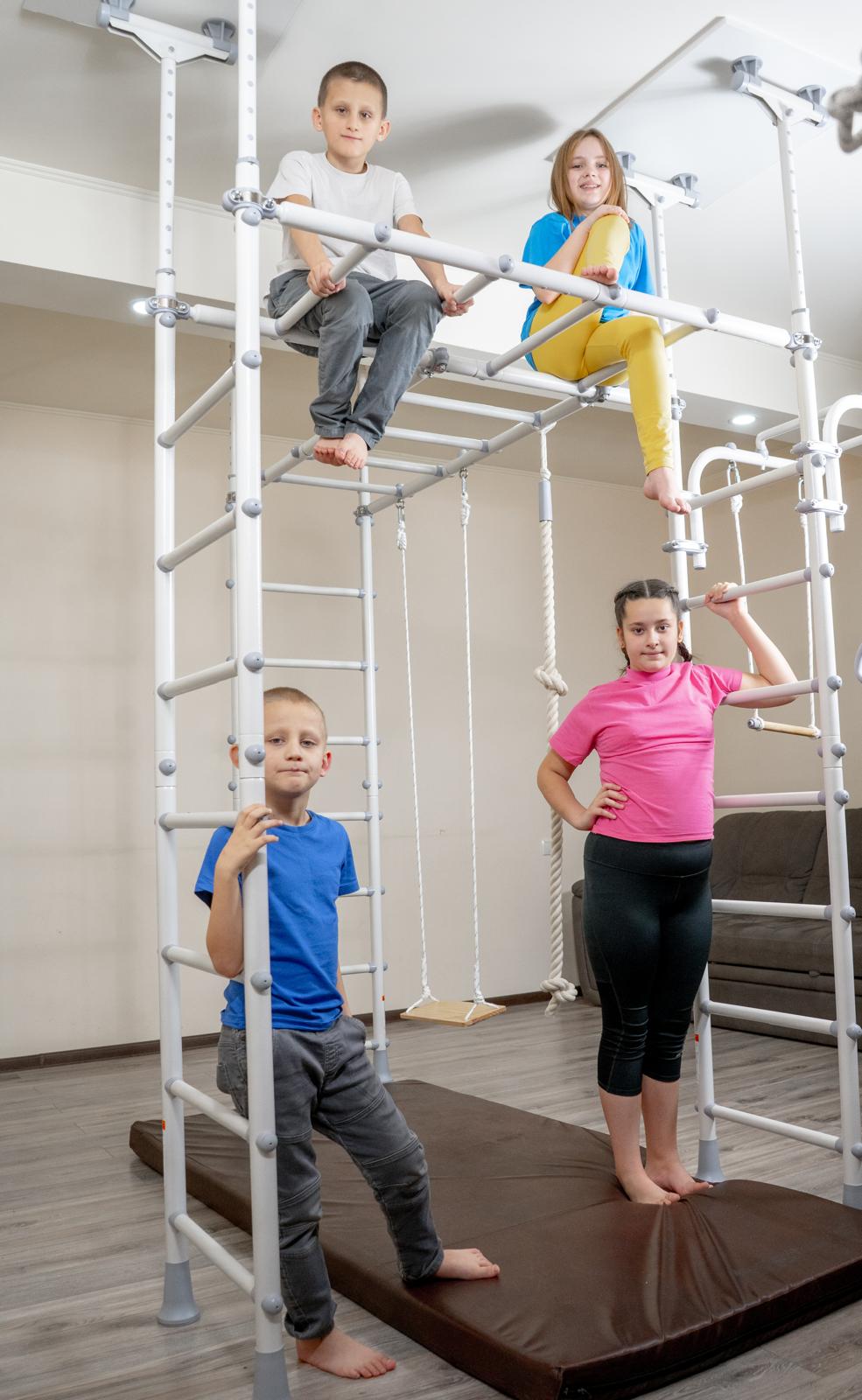
One frame for the whole childhood. Bar heights adjust in minutes, so the same gym serves a 3-year-old on low bars and a 12-year-old doing pull-ups. Younger siblings use the lowest rungs with a parent's hands close by.
Room for everyone. Rated to 220 lb and tested to 440 lb, the frame takes siblings climbing together and a parent demonstrating the monkey bars.
No drilling, and it moves. Floor-to-ceiling gyms tension-mount between floor and ceiling, from 6'9" to 10'5". The wall-mounted W3 (from $850) covers rooms outside that range and stands 9 inches off the wall.
Sensory and OT use. Hanging, swinging, and climbing are the vestibular and proprioceptive input occupational therapists build into home programs, a vocabulary that traces to A. Jean Ayres. With a Letter of Medical Necessity, eligible families can pay with HSA/FSA funds and save up to about 30%.
It holds value. Powder-coated steel still looks close to new after years of daily use, and owners in our 12,500-member community resell regularly. Pricing runs from the Model T3 at $899 to the Mega Max V3 at $2,399, with a 30-day money-back guarantee. Owner accounts are on the reviews page.
Which gym fits your family? Take the 60-Second Quiz →
Every alternative, side by side
Ratings and prices are typical published figures for each type, checked August and September 2026. Brainrich cost per year assumes 9 years of use and resale at half the new price; owners usually do better.
| Type | Load rating | Years of use | Footprint | Cost per year |
|---|---|---|---|---|
| Foldable wooden gym | 50 lb per feature to 110 lb per child | 3 to 4 | Several feet of floor open; folds | About $100 to $235 |
| Wooden wall-mounted set | About 110 to 250 lb; some unpublished | 4 to 5, fixed height | Drilled into studs, permanent | About $70 to $190 |
| Plastic toddler tower | One toddler | 2 to 3 | Bulky; most don't fold | Low, then replaced at 4 or 5 |
| Pikler set | 90 to 132 lb, one child | About 3 (ages 1 to 4) | About 31 by 52 in; folds | About $117 to $133 |
| DIY build | Untested | One height, one age | Usually bolted in place | Materials plus weekends; no resale |
| Kids' gym membership | n/a | While you pay; 1 class a week | None at home, plus the drive | About $1,200 to $2,400 per child |
| Brainrich steel gym | 220 lb rated, tested to 440 lb | Toddler to 12+, adjustable | Dresser-sized corner, no drilling (T3); 9 in off the wall (W3) | About $50 to $105 after resale (T3 to Spider Max V3) |


Still deciding? Decide with a safety net.
Every Brainrich gym ships in flat boxes, assembles in an afternoon, and carries a 30-day money-back guarantee.
Frequently asked questions
What is comparable to Brainrich? Very little on a like-for-like basis. Foldable wooden gyms, wooden wall sets, plastic toddler towers, and Pikler sets are all rated for one small child, usually 50 to 132 lb, and most are outgrown between ages 4 and 7. A Brainrich frame is steel, rated to 220 lb and tested to 440 lb, with bar heights that adjust from the toddler years to 12 and beyond. Compare any option on load rating, years of use, footprint, and cost per year, and the steel frame comes out ahead.
Is Brainrich worth it vs cheaper Amazon gyms? Count the cost per year, not the sticker. A $500 wooden climber outgrown in about 3 years costs around $167 a year and has little resale. A $899 Model T3 used for 9 years and resold at half price works out to about $50 a year. Add bar heights that grow with your child, no drilling, a 30-day money-back guarantee, and HSA/FSA savings of up to about 30% for eligible families with a Letter of Medical Necessity.
Brainrich vs Pikler triangle: which should I buy? The gym is the longer buy. A Pikler triangle covers about ages 1 to 4 and is rated for one child at 90 to 132 lb. A Brainrich frame serves toddlers on the lowest rungs with a parent's hands close by, independent climbers from about 3, and pull-ups at 12. Our guide, What Comes After the Pikler Triangle, shows why so many families end up buying the gym anyway.
Does Brainrich have a slide? No. We prototyped one, and a slide built to the home playground standard (ASTM F1148) needs side walls, a regulated exit, and about six feet of clear landing space. That floor area does more as nets, rings, and monkey bars, which keep teaching new skills for years while a slide plateaus in weeks. Our accessory roadmap focuses on hammock and sensory swings.
Can a parent use a Brainrich gym? Yes. The frame is rated to 220 lb and tested to 440 lb, so a parent demonstrating a hang or spotting a climb is well inside the rating. Most wooden and plastic climbers rate between 50 and 132 lb, the single largest structural difference between the types.
What ceiling height do I need? Brainrich pressure-fit gyms fit ceilings from 6'9" to 10'5" across Short, Standard, and Tall sizes, and the same Short and Standard sizing carries across V2 and V3. Rooms outside that range, sloped ceilings included, are served by the wall-mounted W3, from $850.
📚 Keep reading in the Decision Guide
Steel vs. Wood Climbing Gyms for Kids · The Brainrich Play Gym Review, Written by the People Who Make It · What Comes After the Pikler Triangle
New: wondering what fits a 1-to-5-year-old? See Best Indoor Play Gym for Kids Under 5.
Sources
Load ratings, age windows, and prices for each equipment type are typical figures from published product listings, checked August and September 2026; individual products vary. Membership prices are published examples from kids' fitness centers, September 2026. Slide requirements referenced from ASTM F1148, the Standard Consumer Safety Performance Specification for Home Playground Equipment, and the CPSC Outdoor Home Playground Safety Handbook. Brainrich figures: frame rated 220 lb, safety-tested to 440 lb; prices as listed on brainrichkids.com, October 2026.
Share: