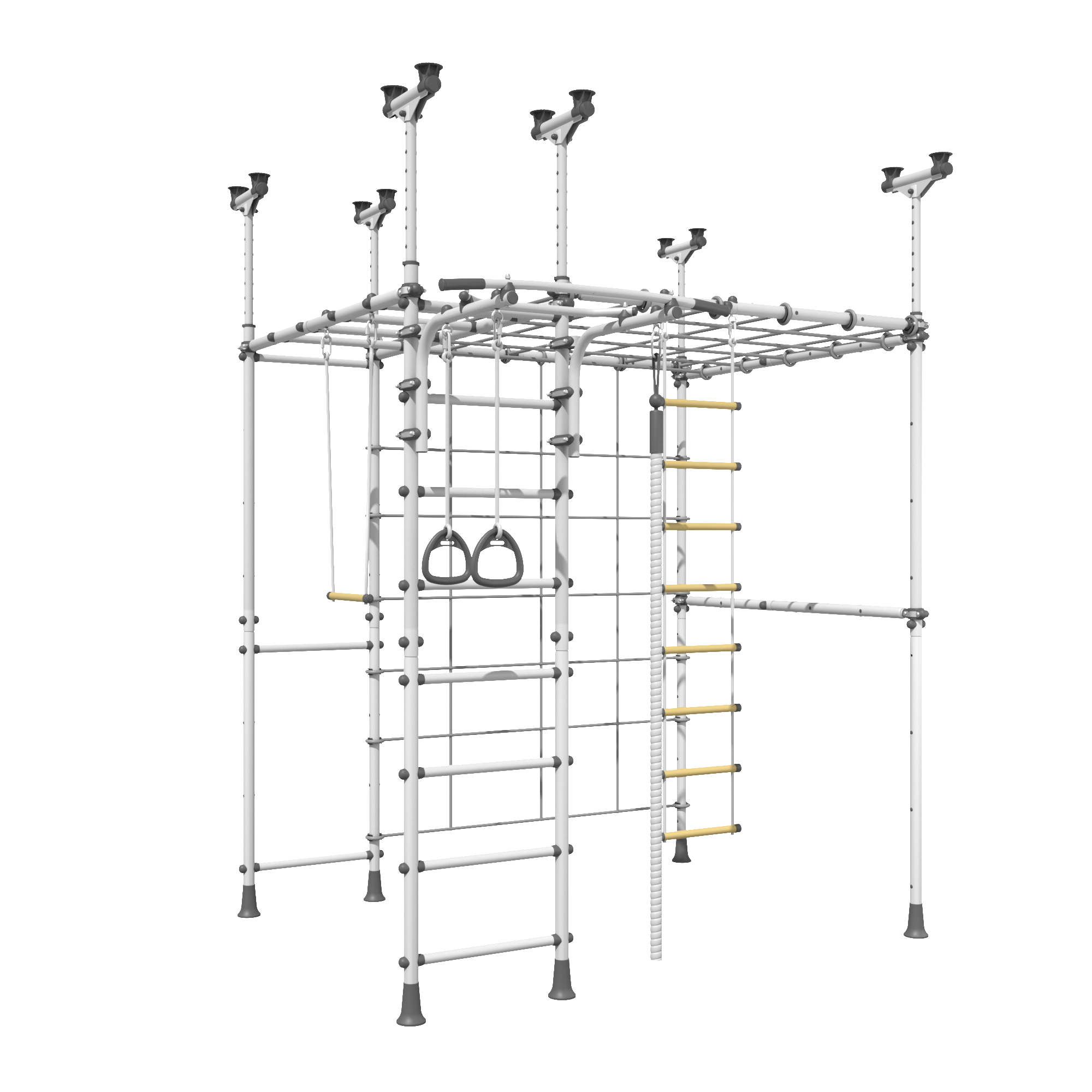
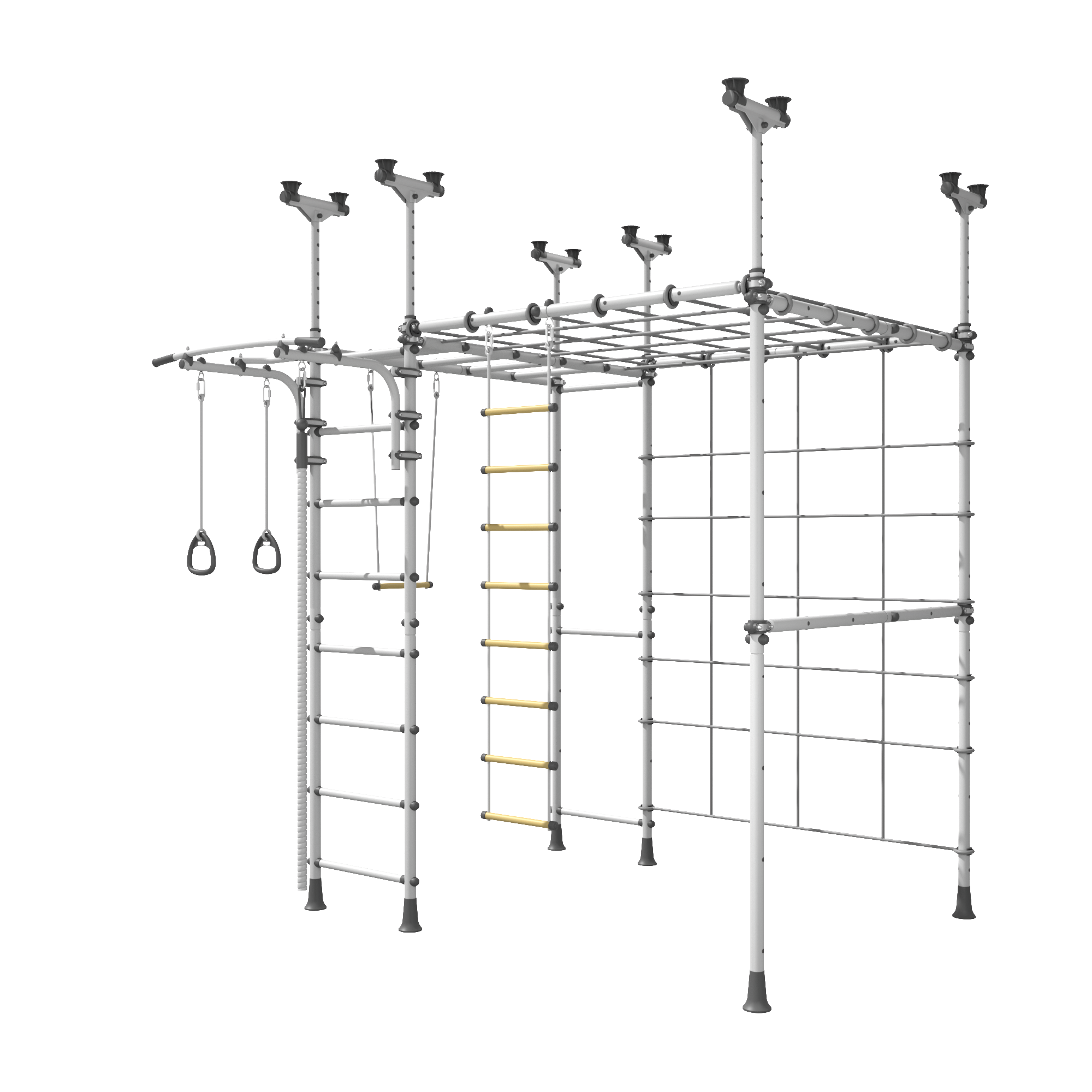
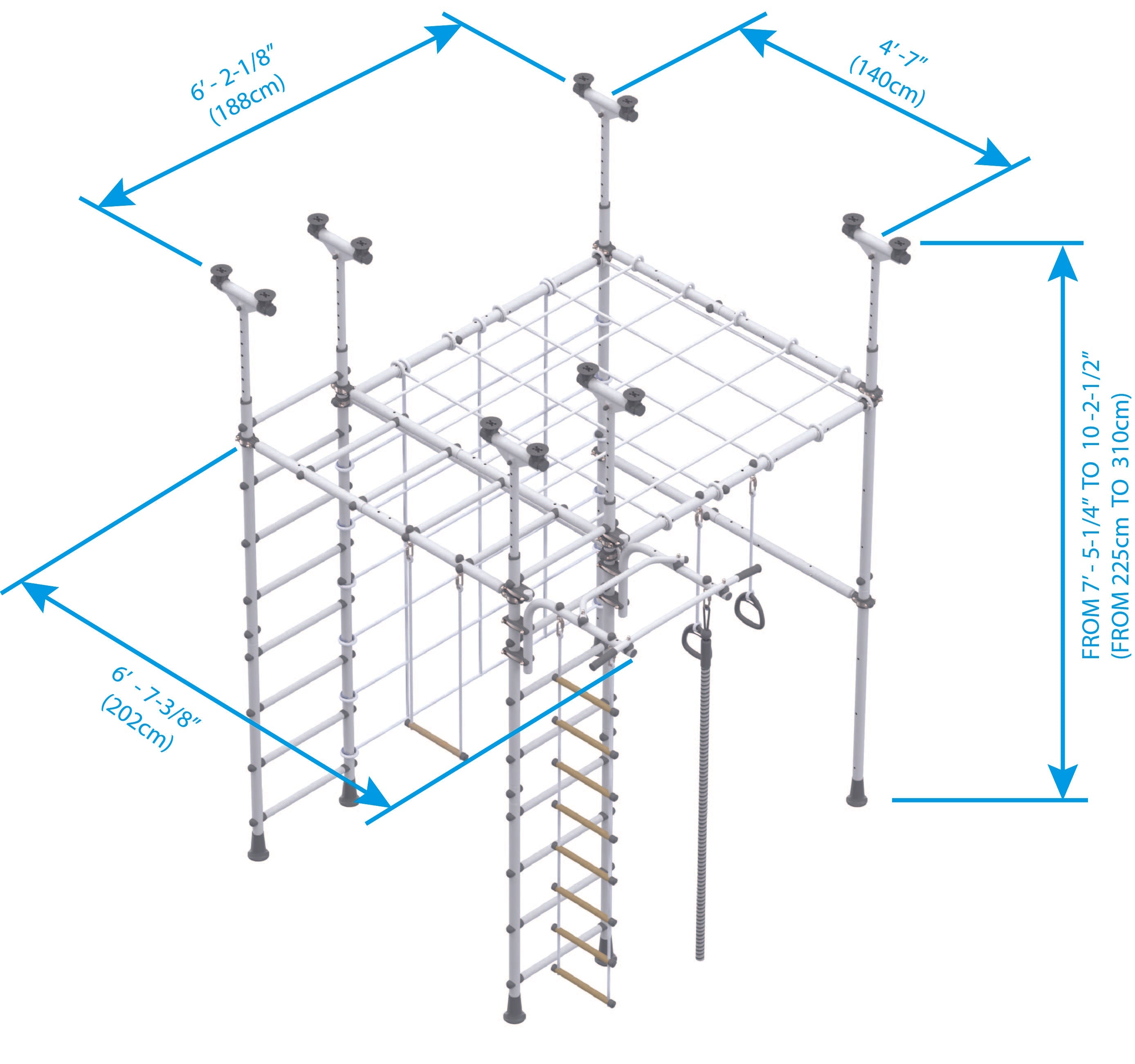
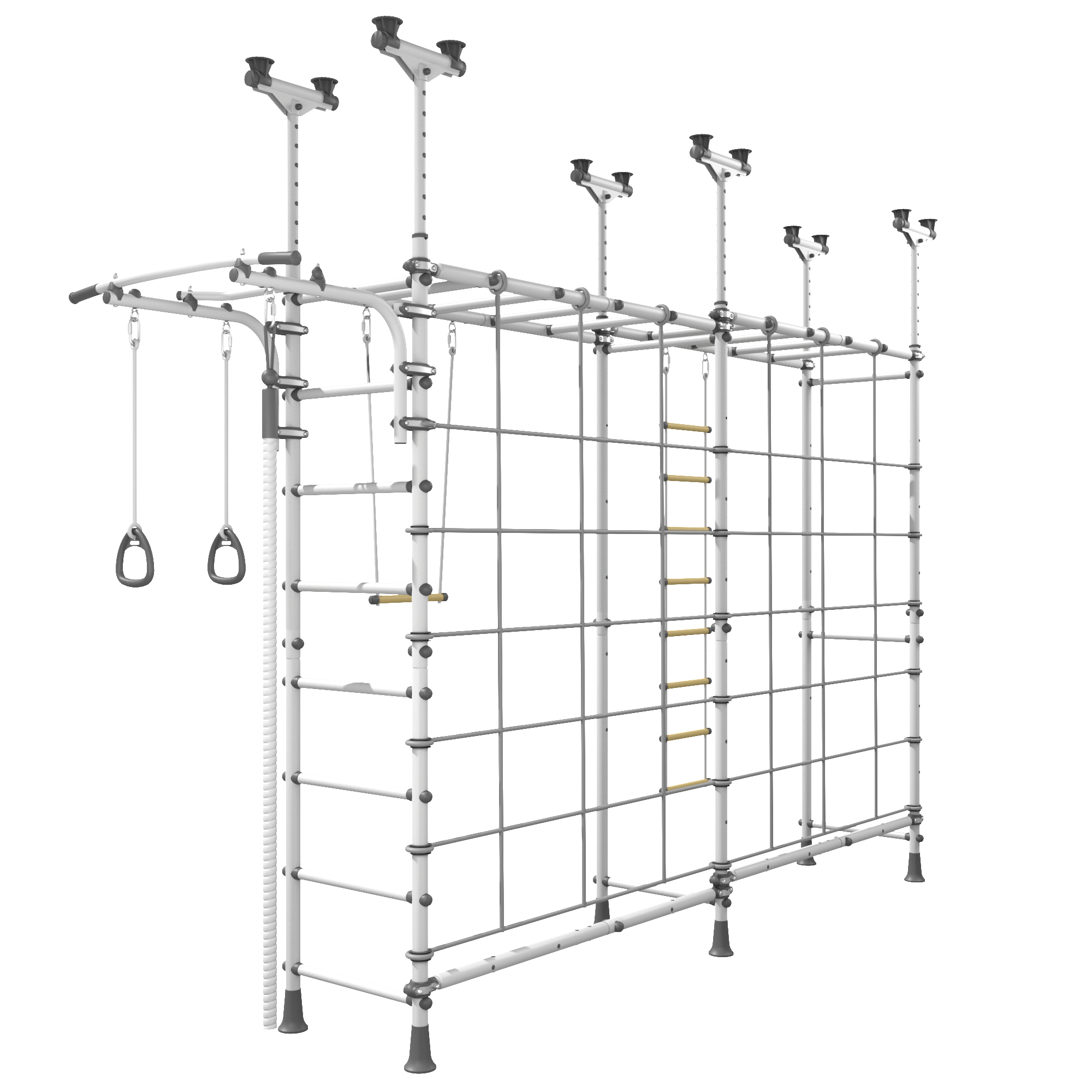
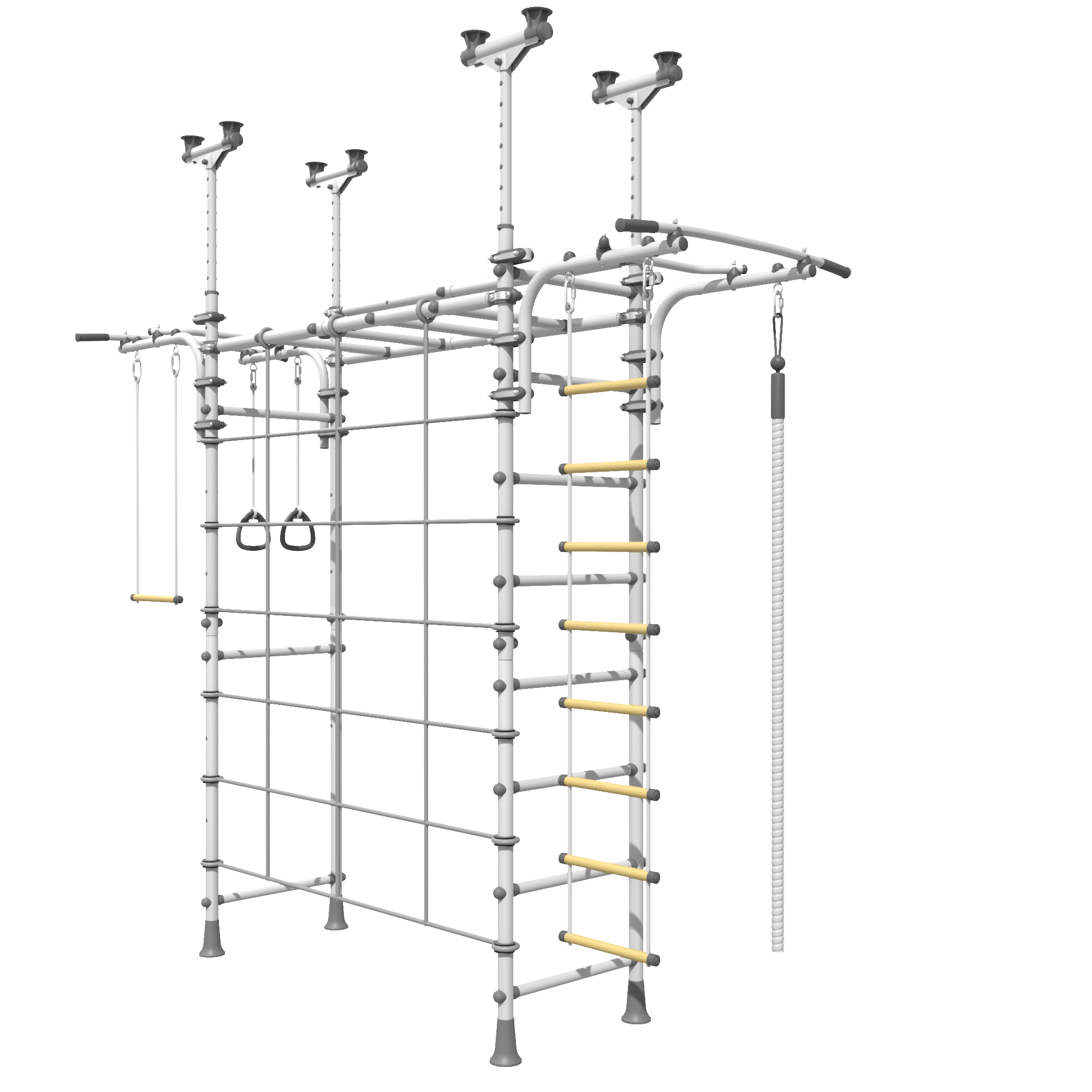
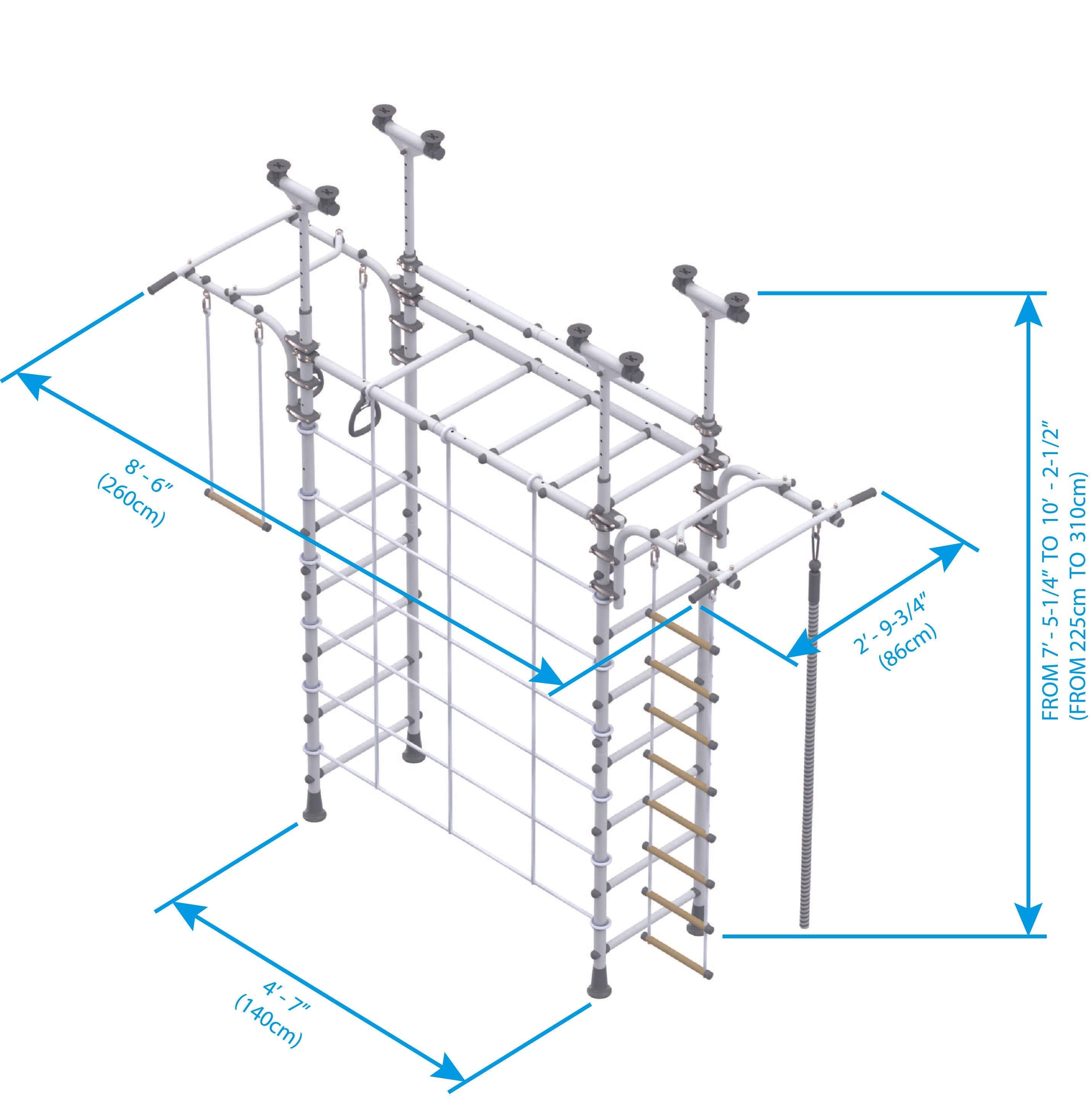
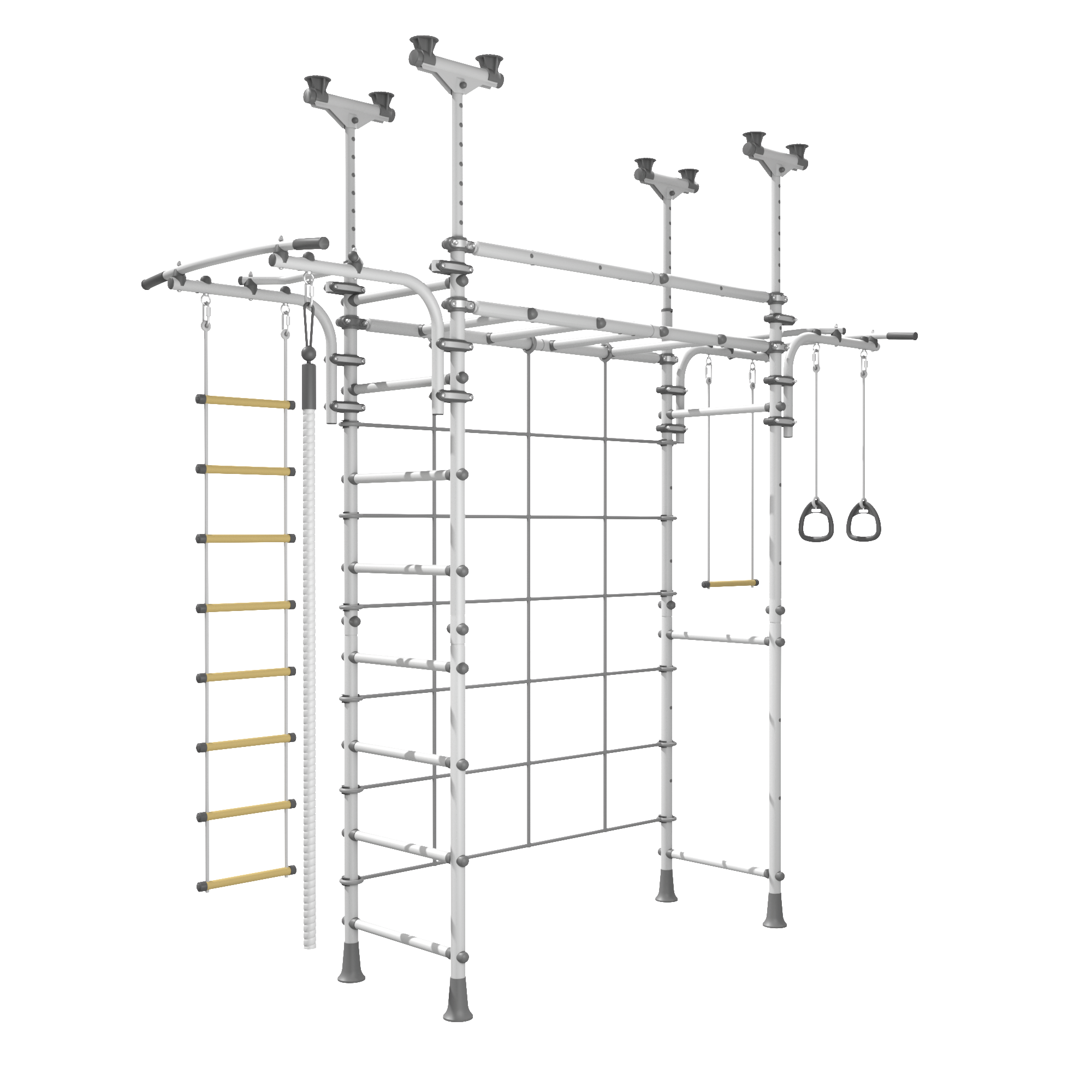
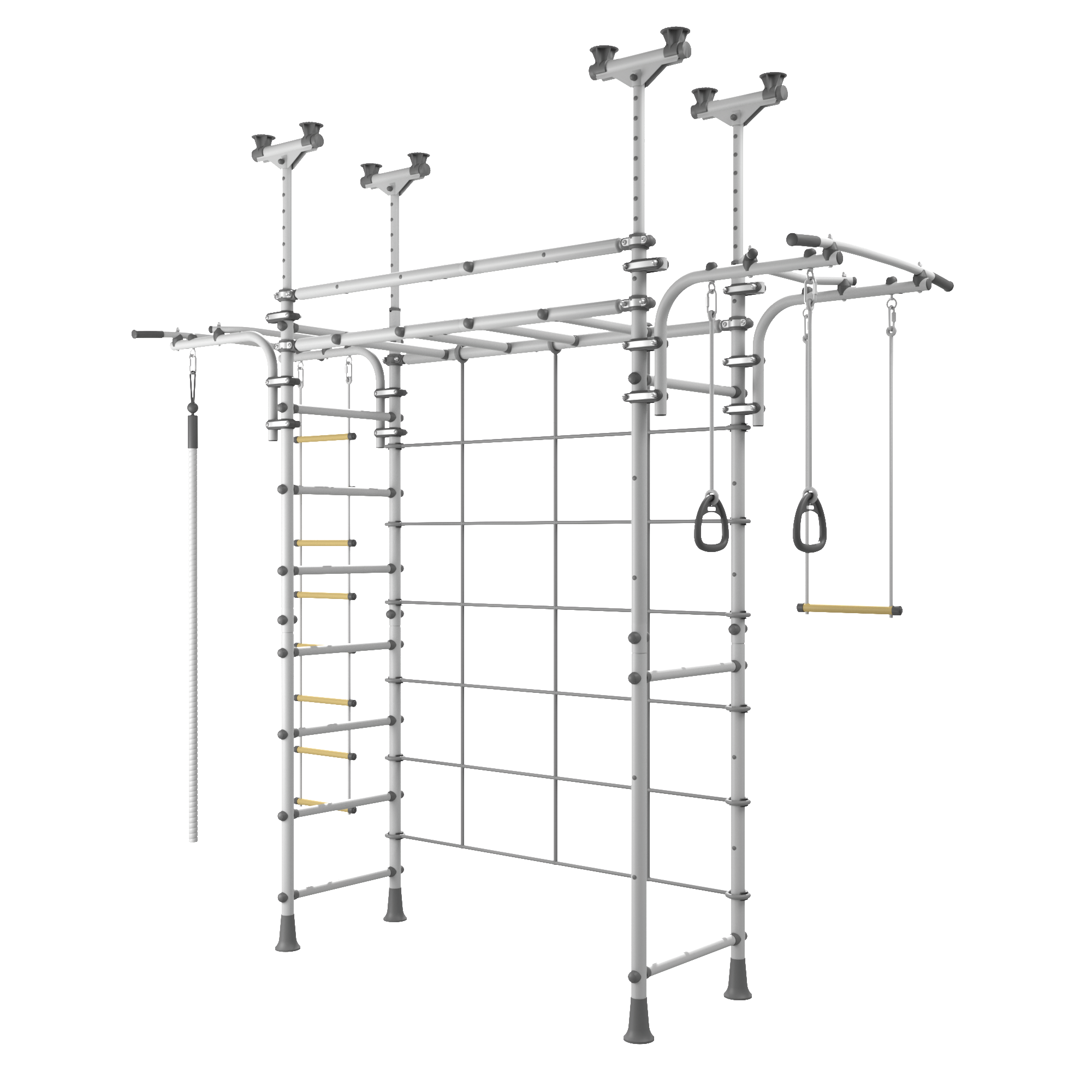
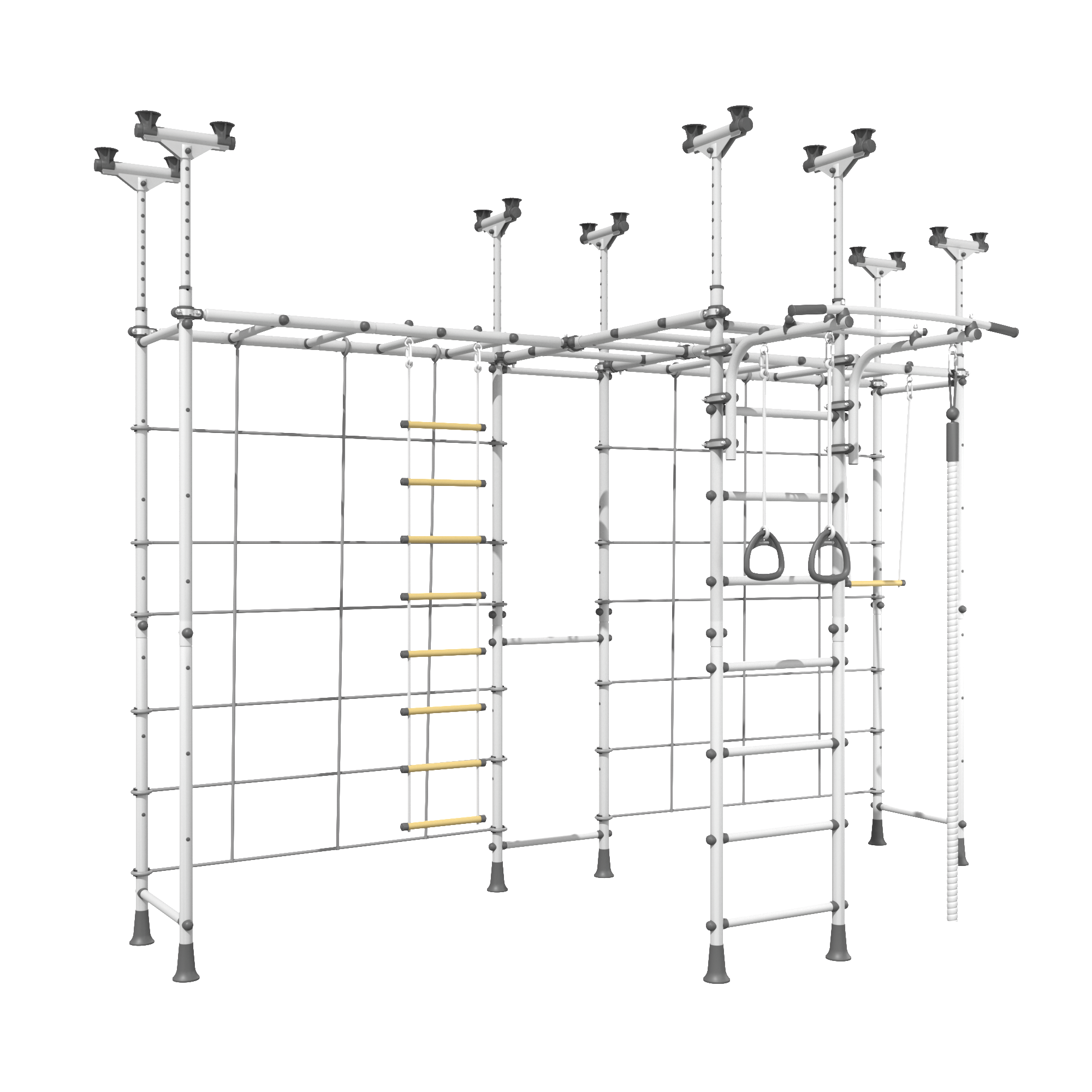
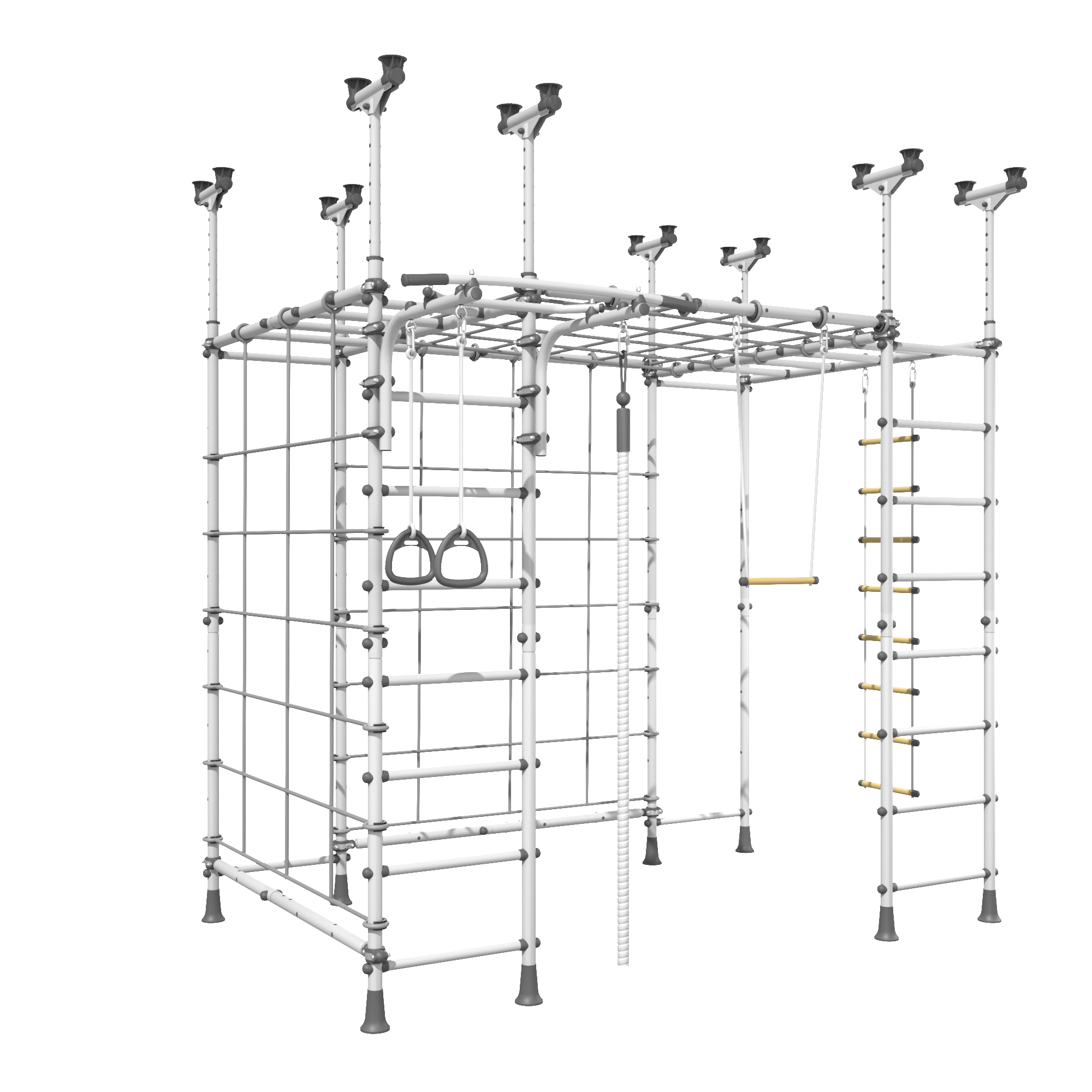
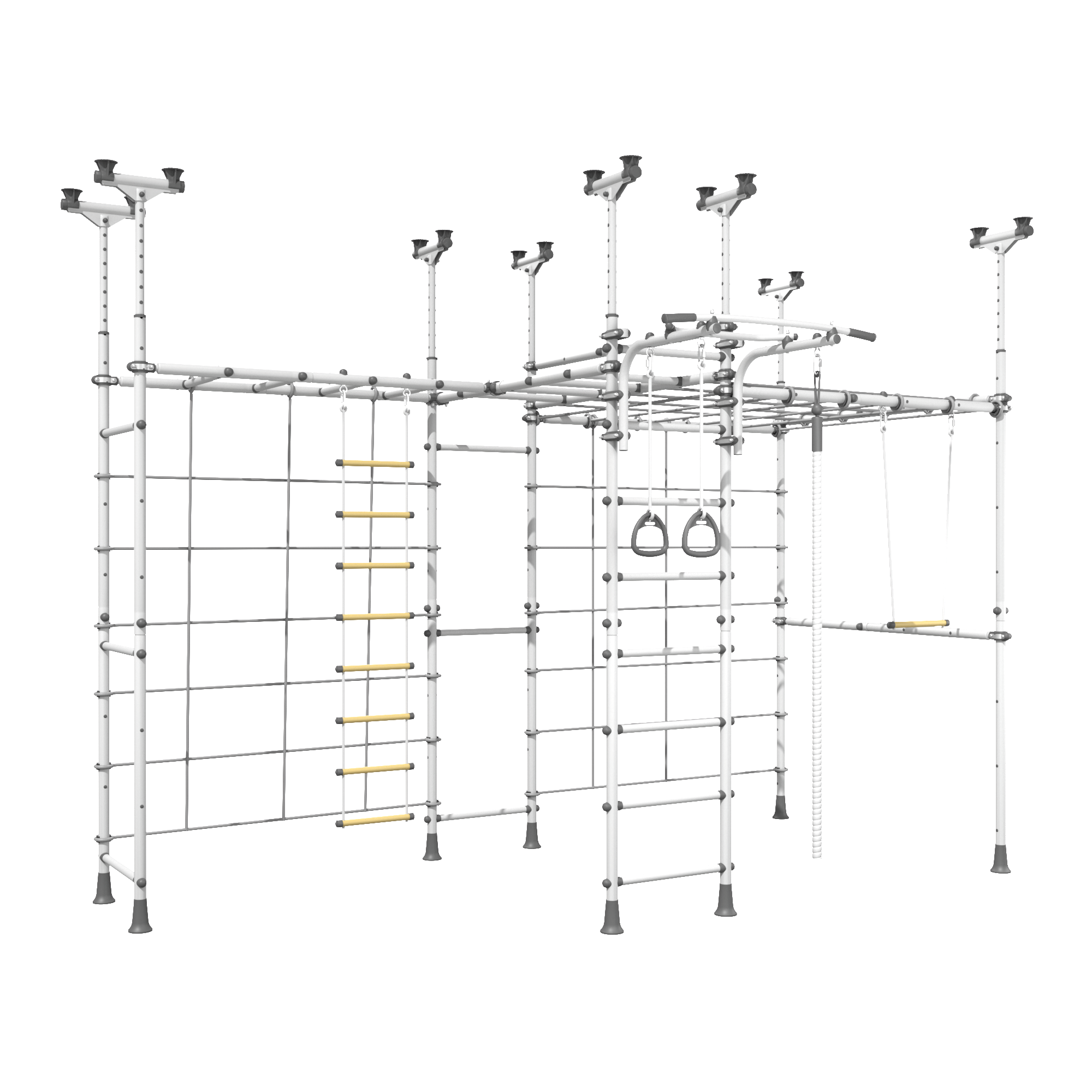
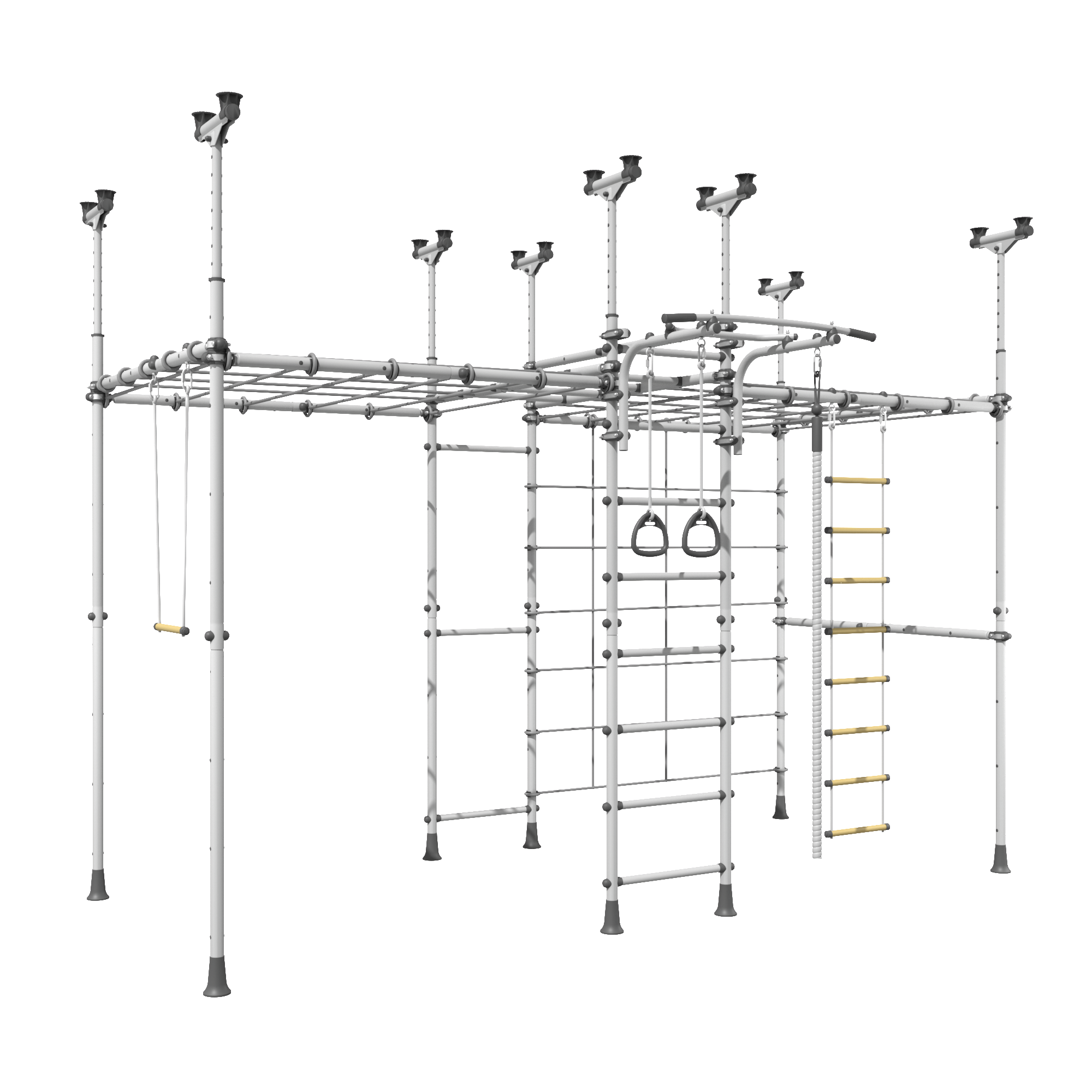
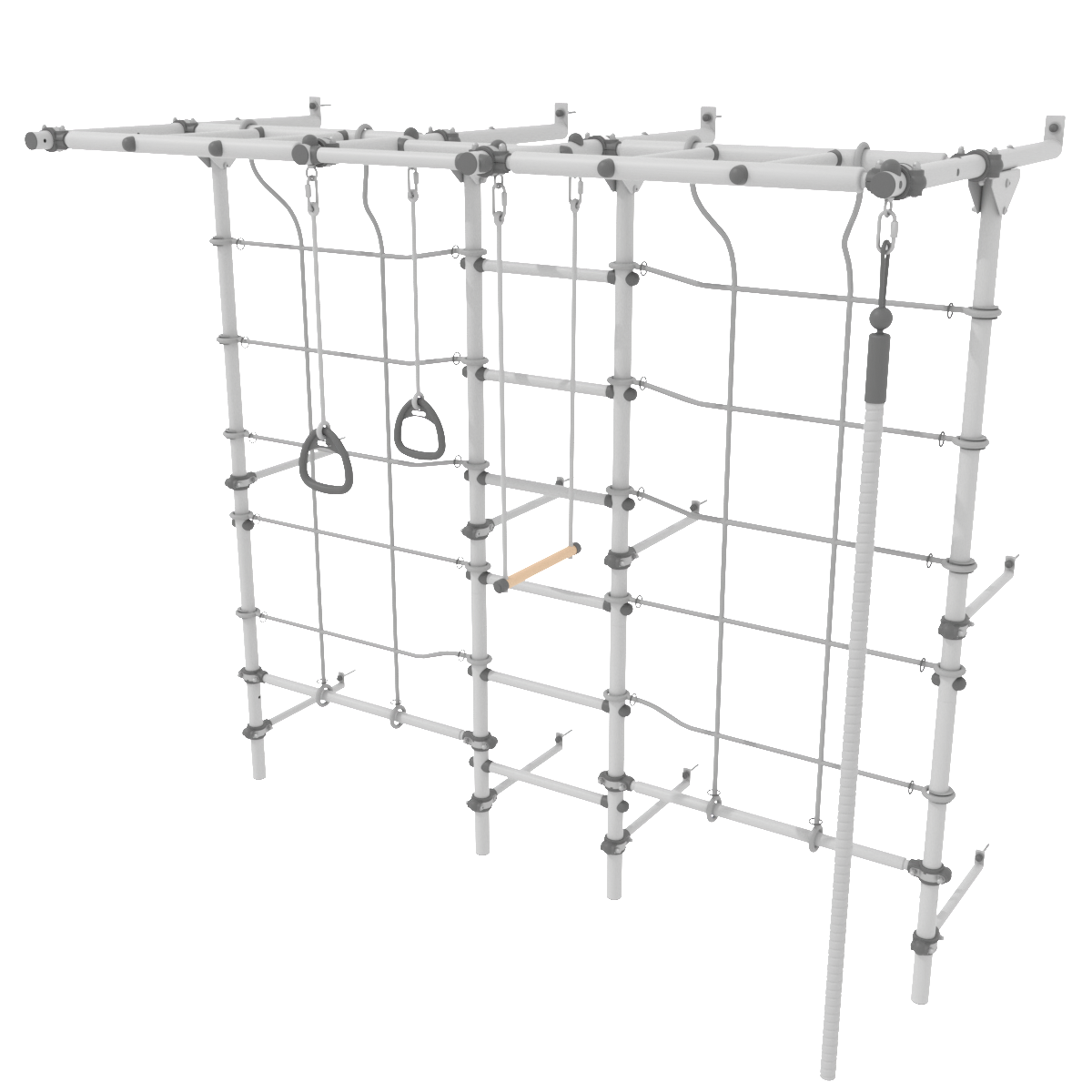
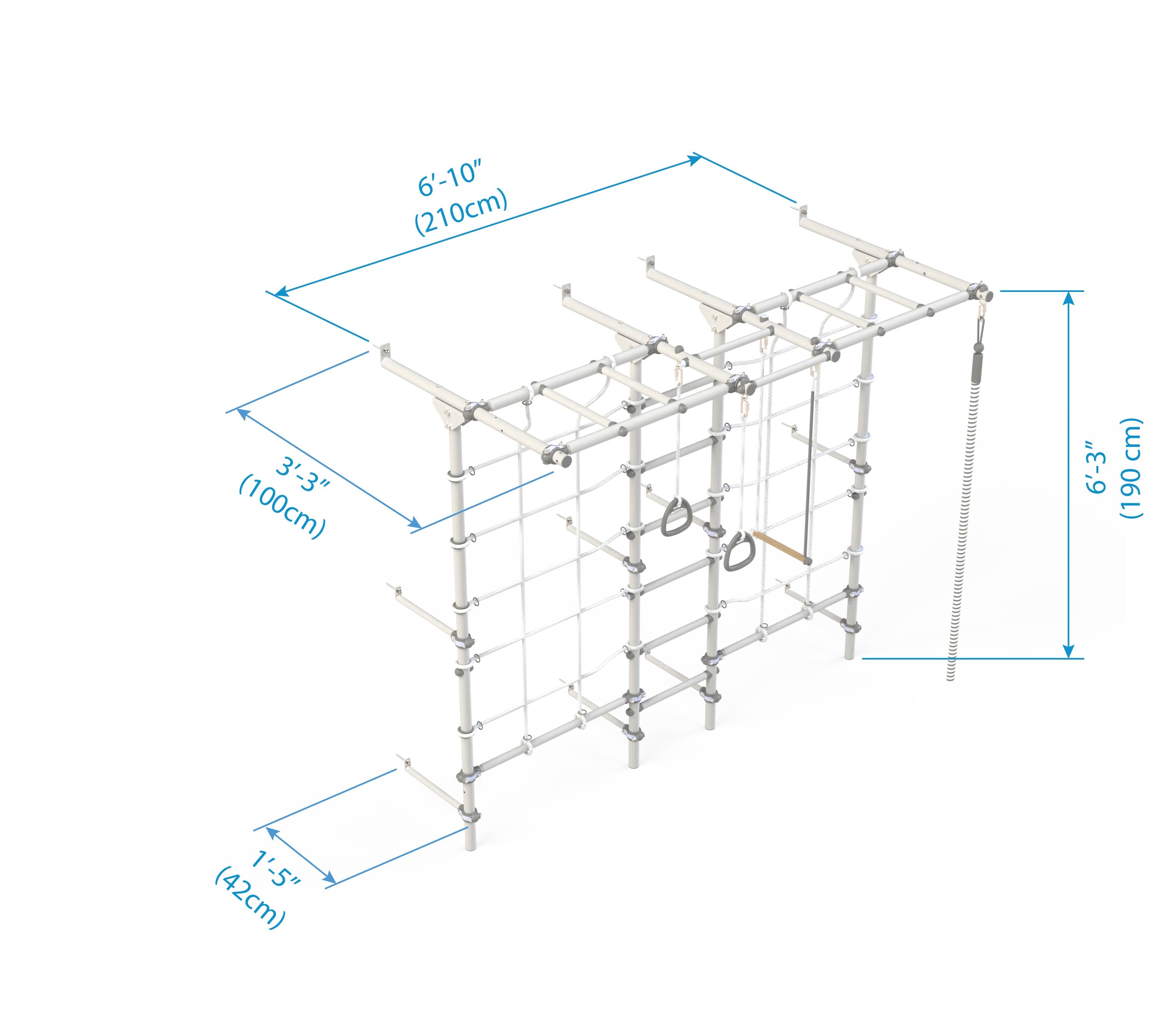
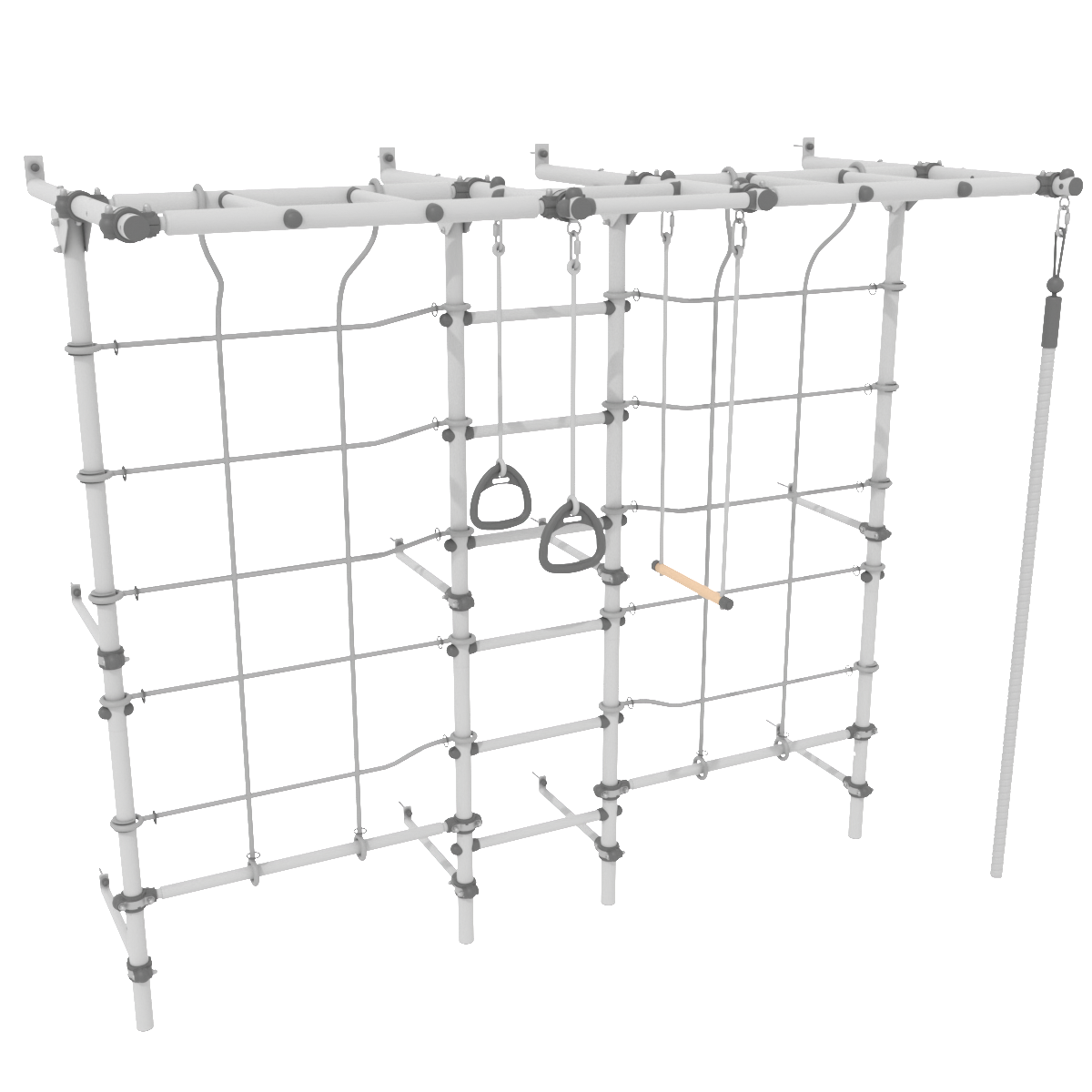
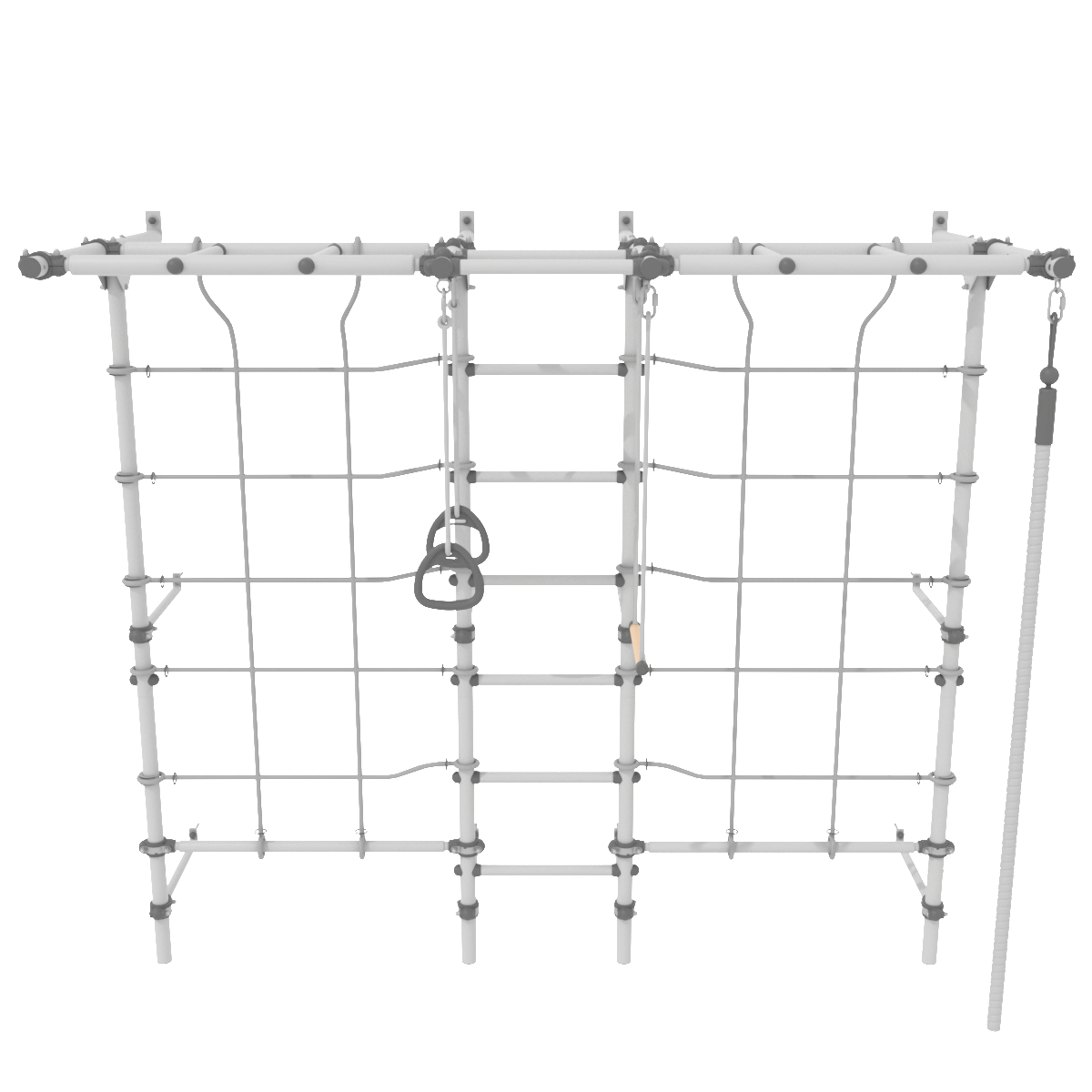
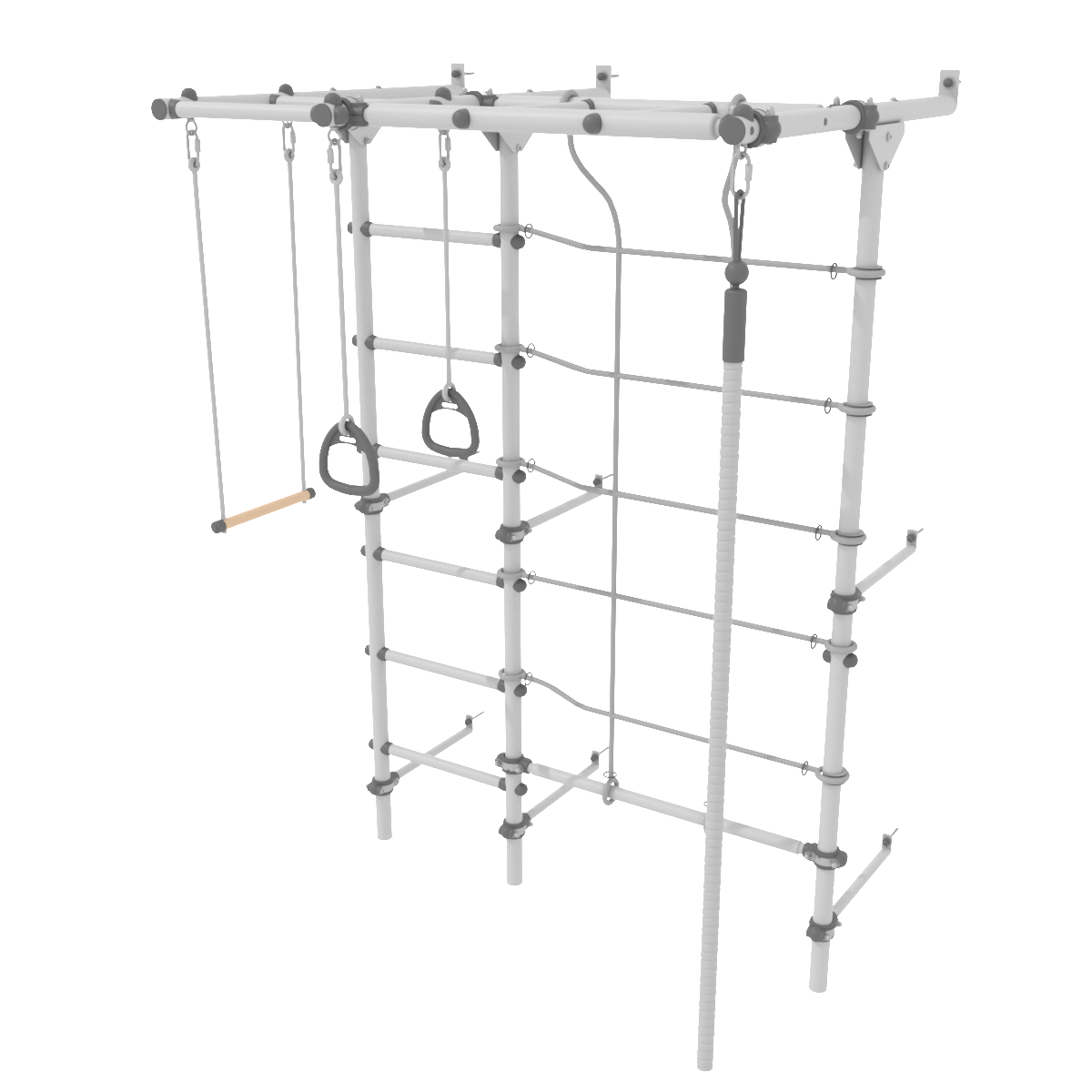
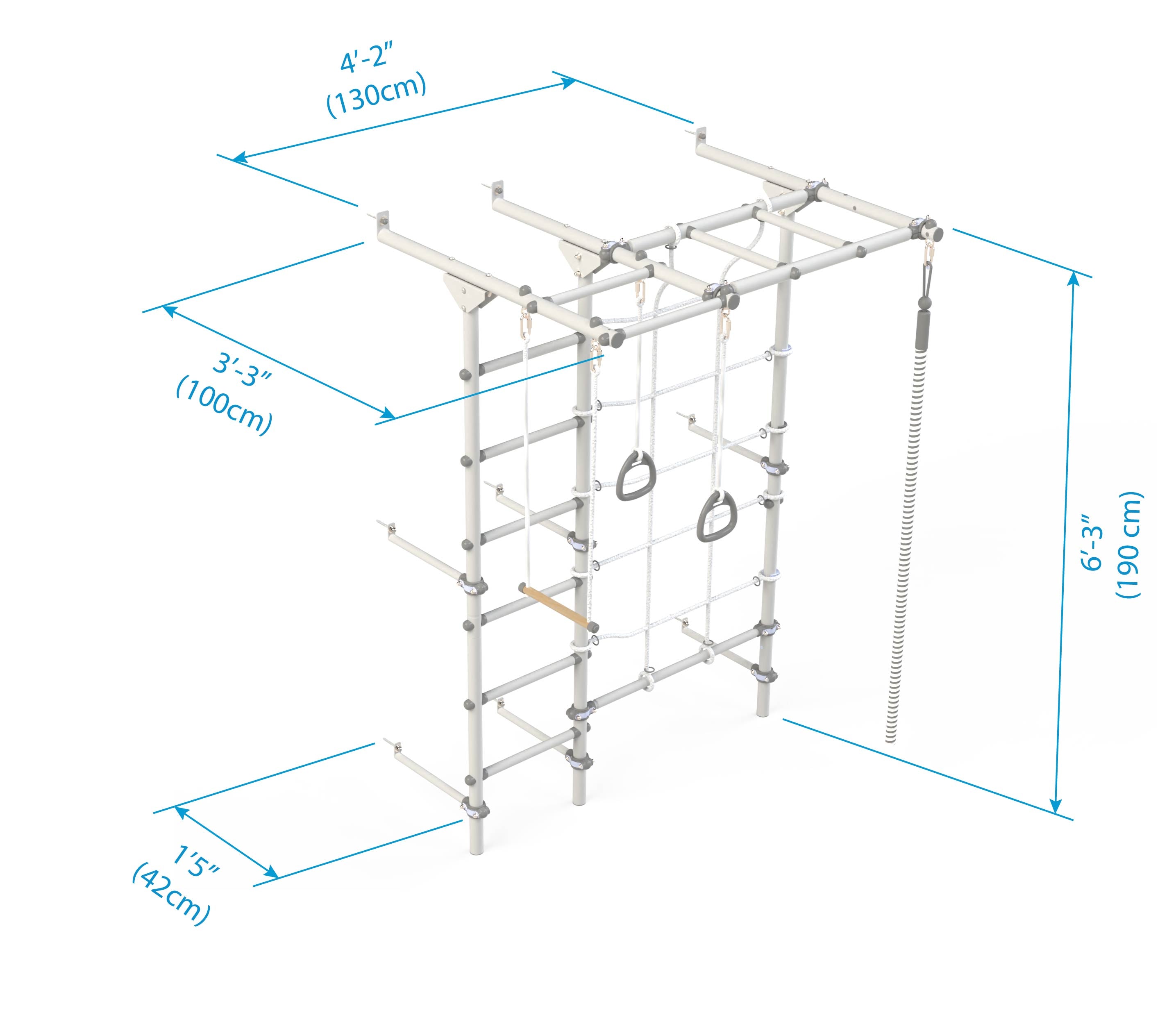
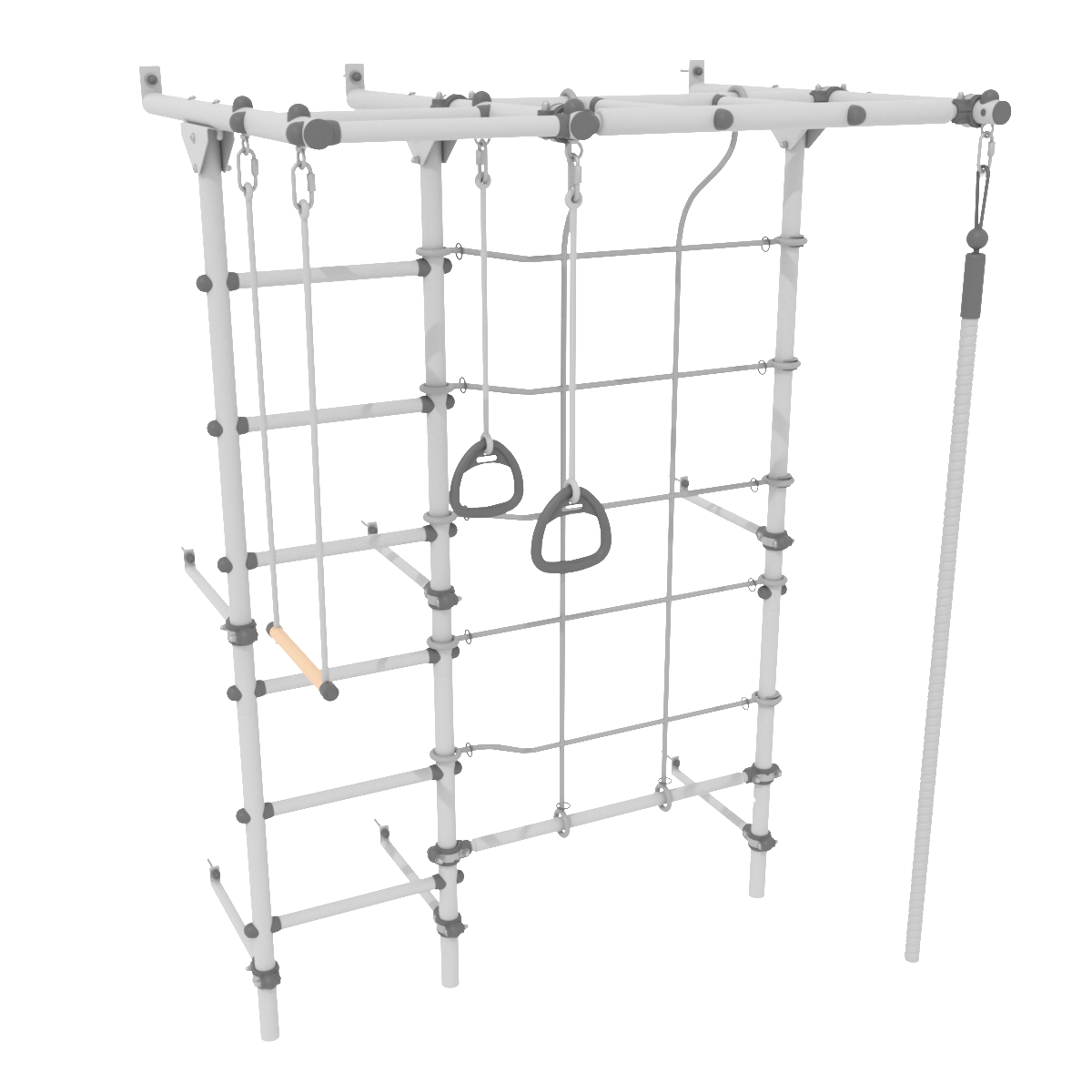
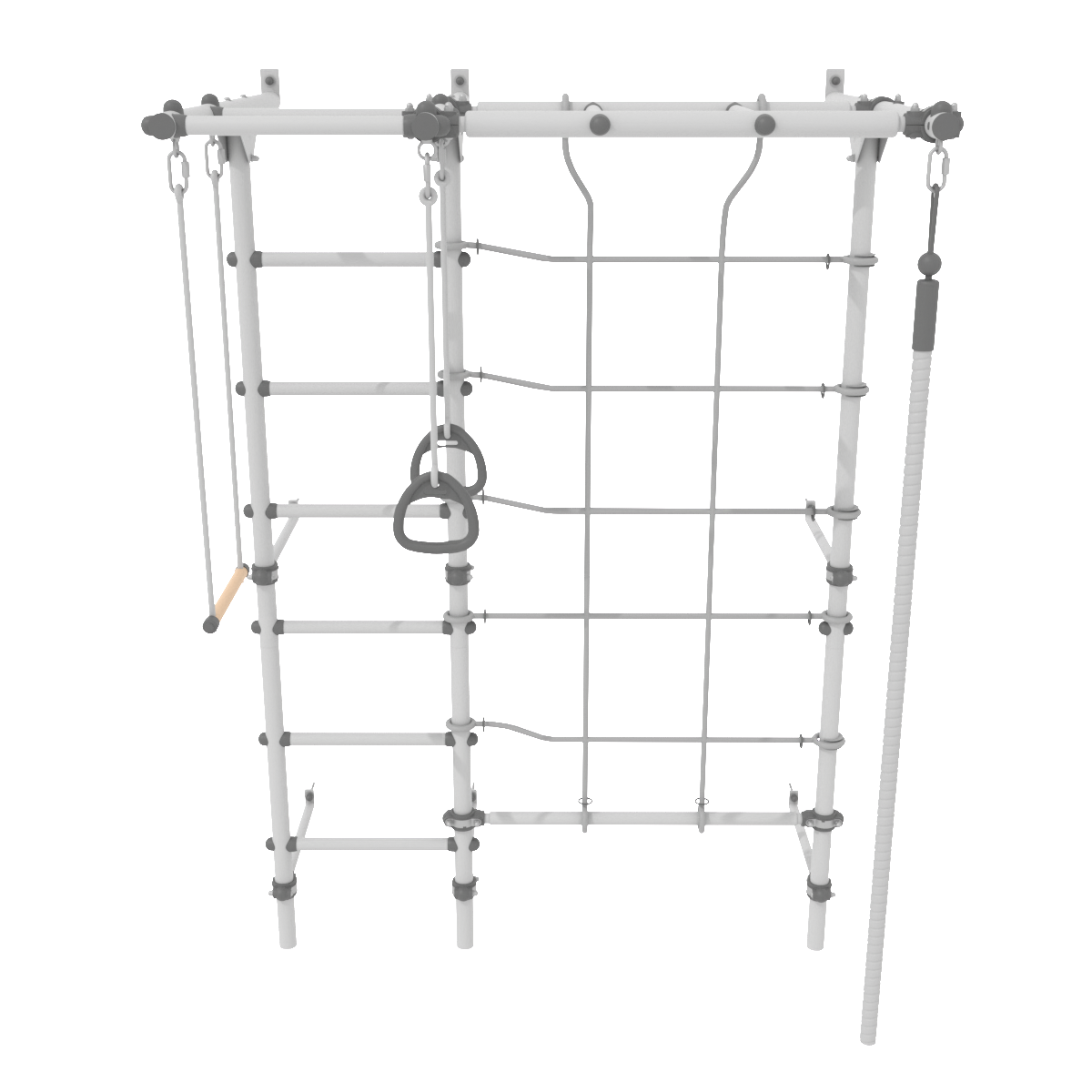
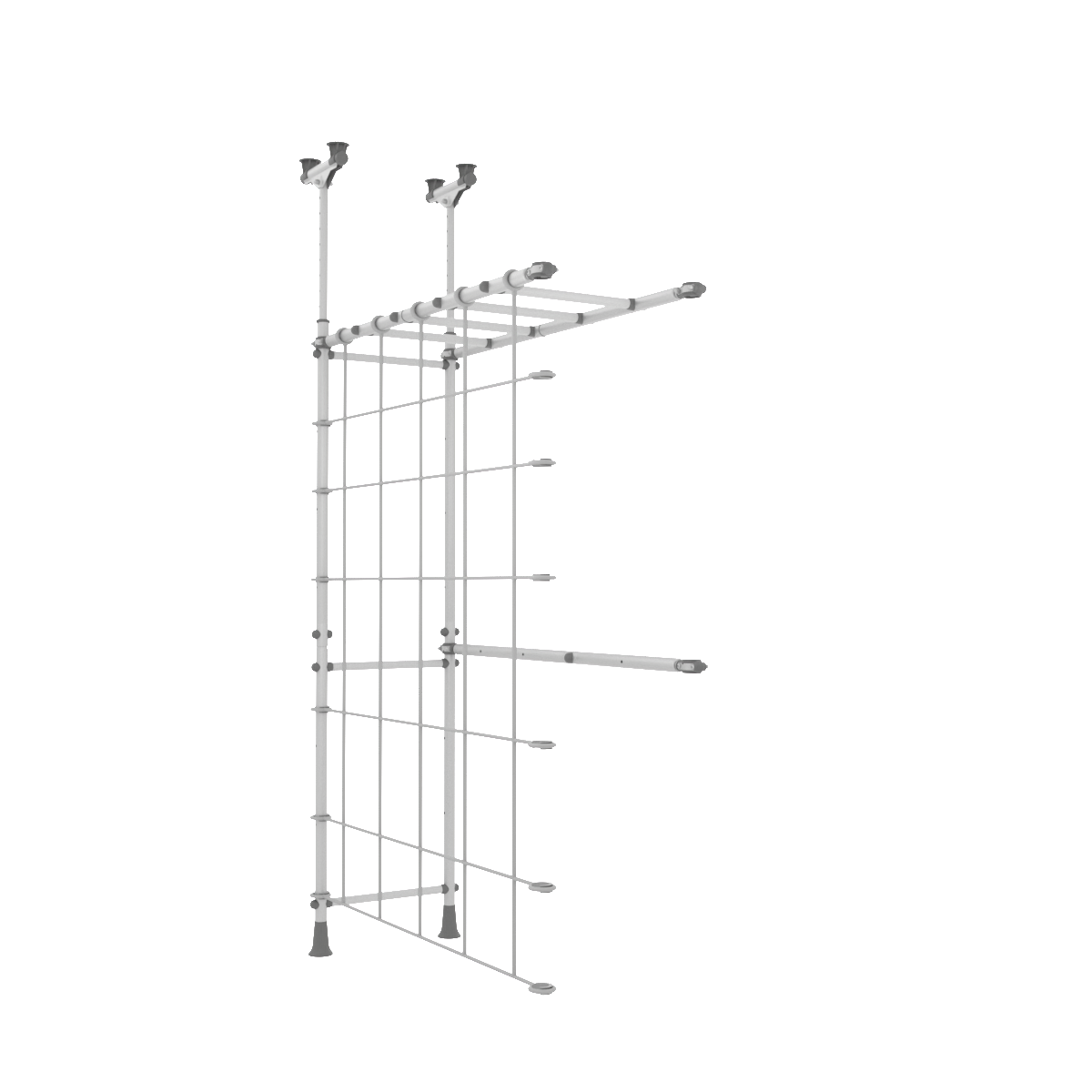
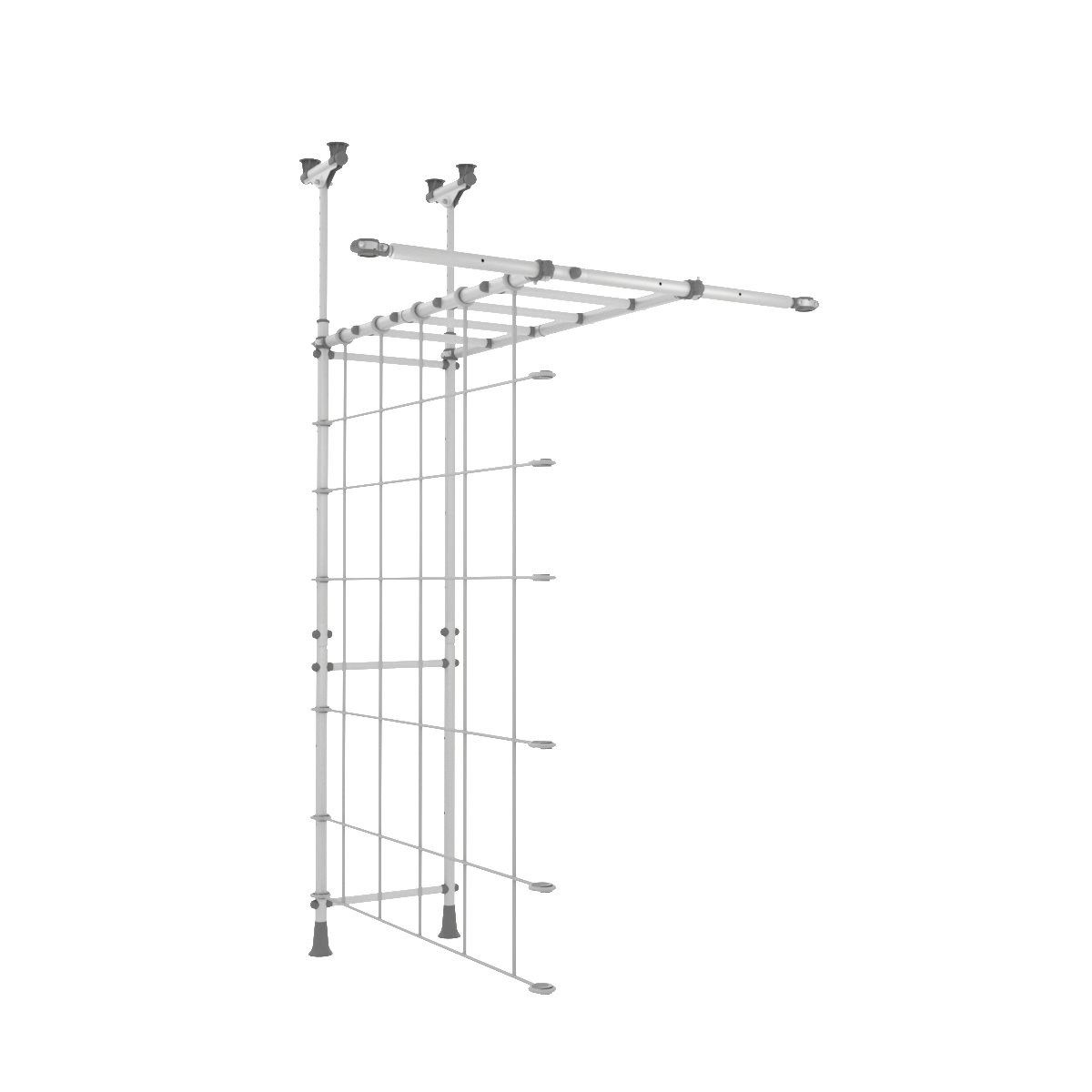
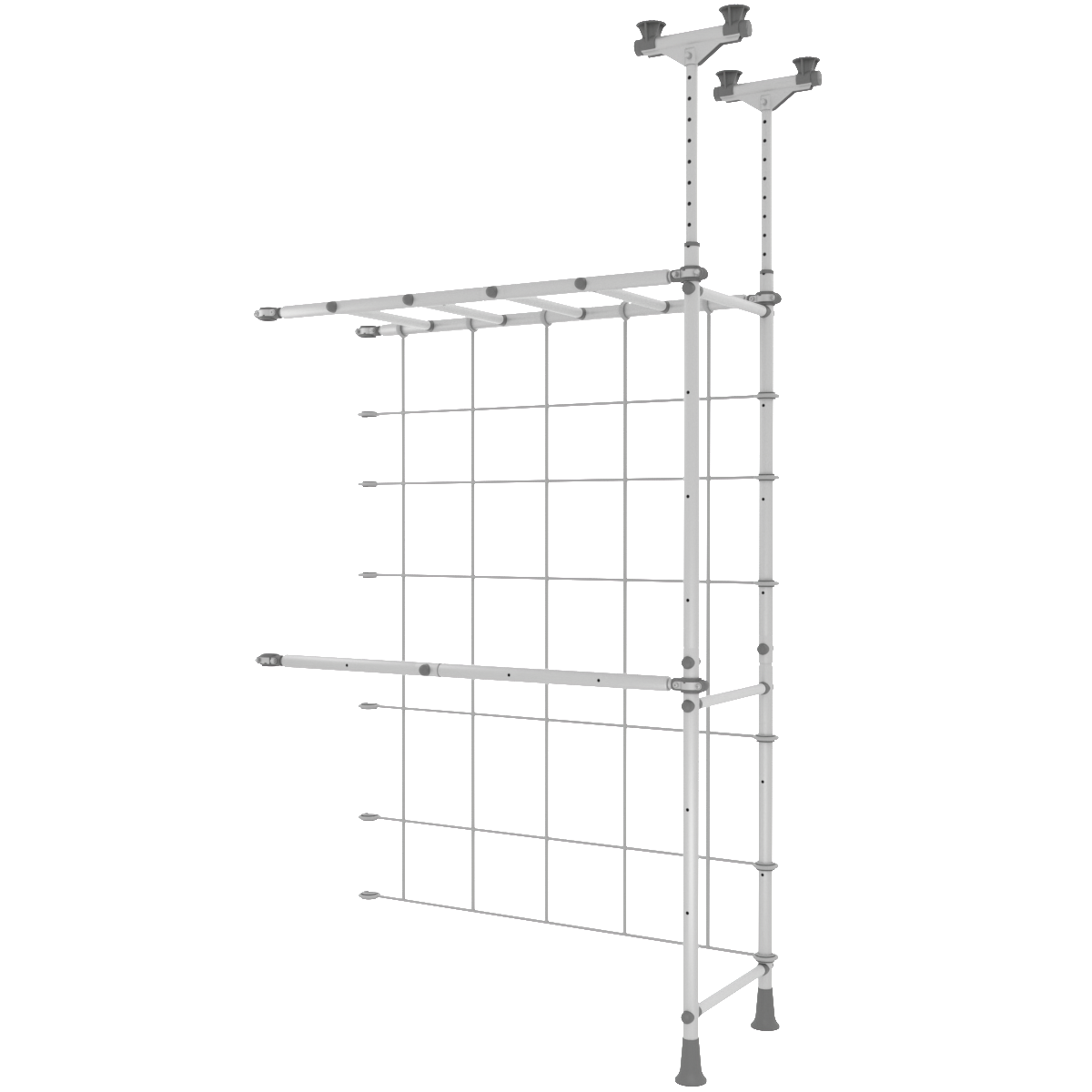
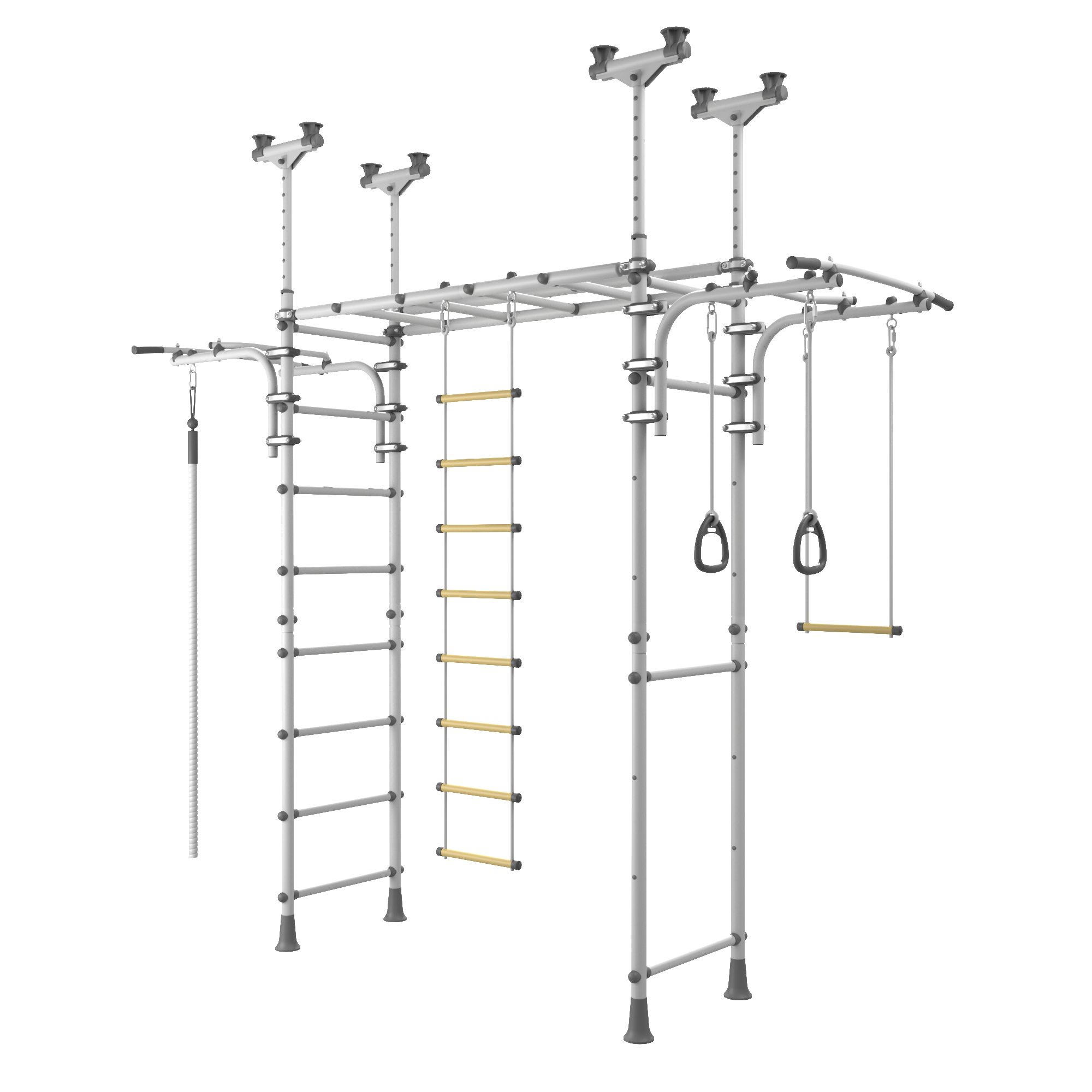
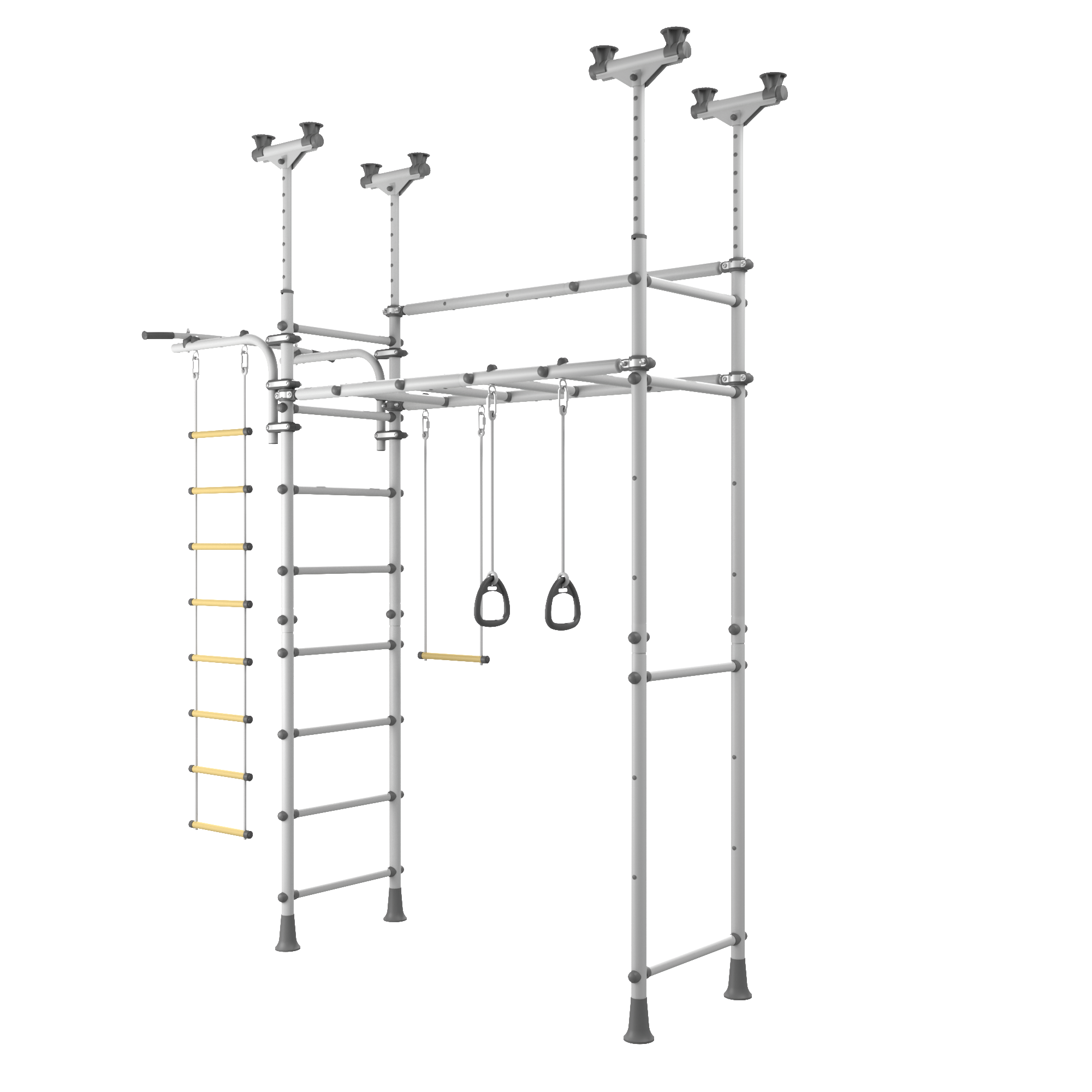
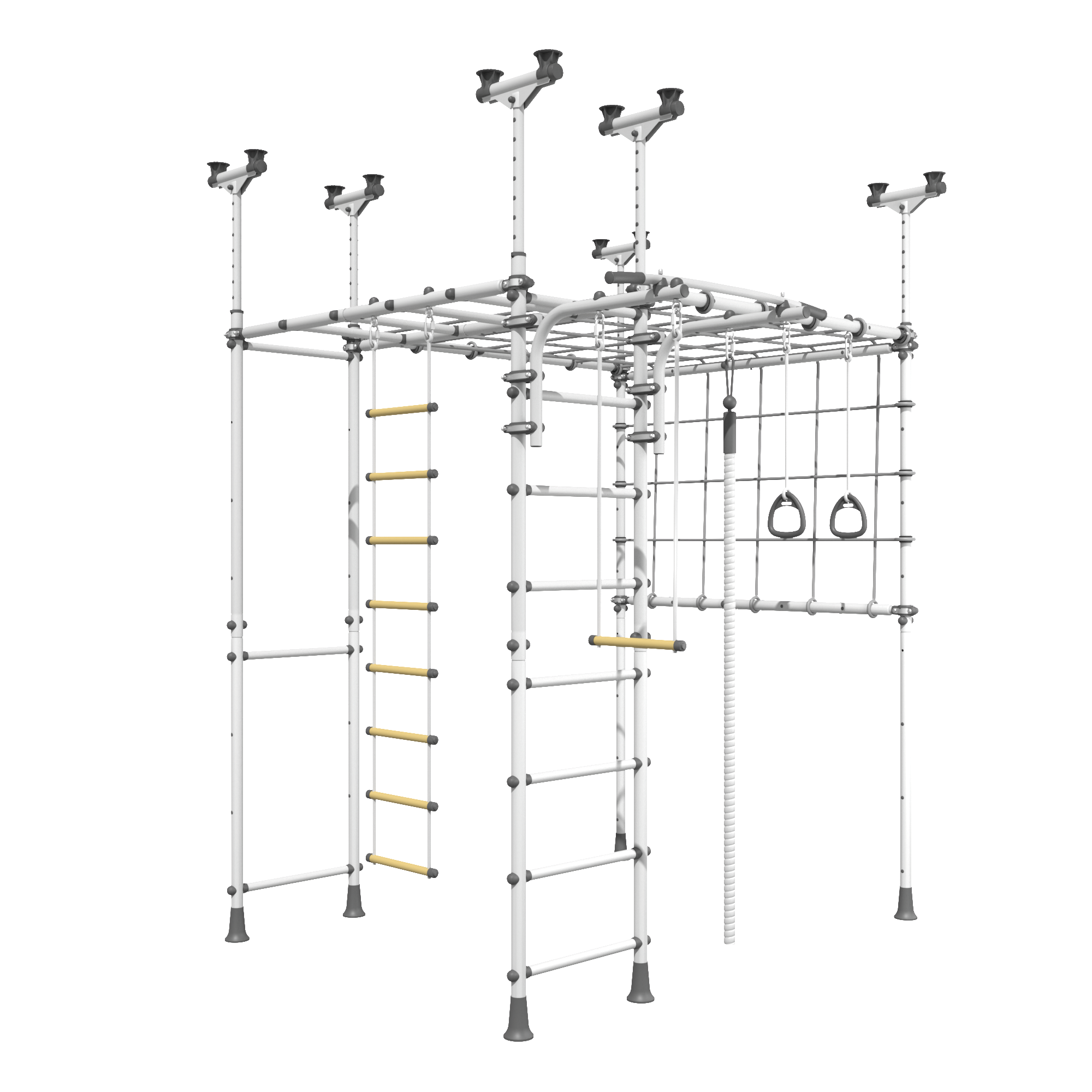
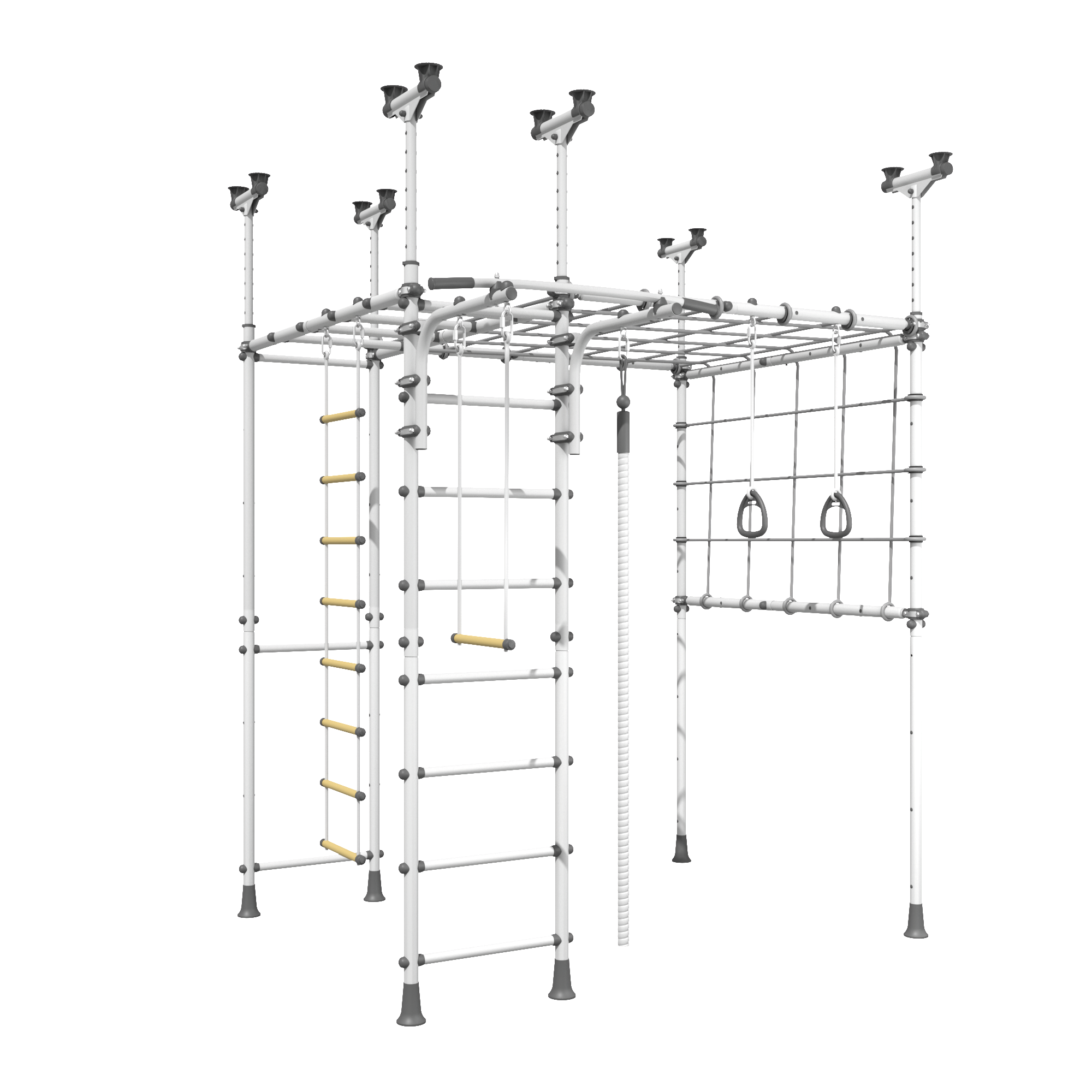
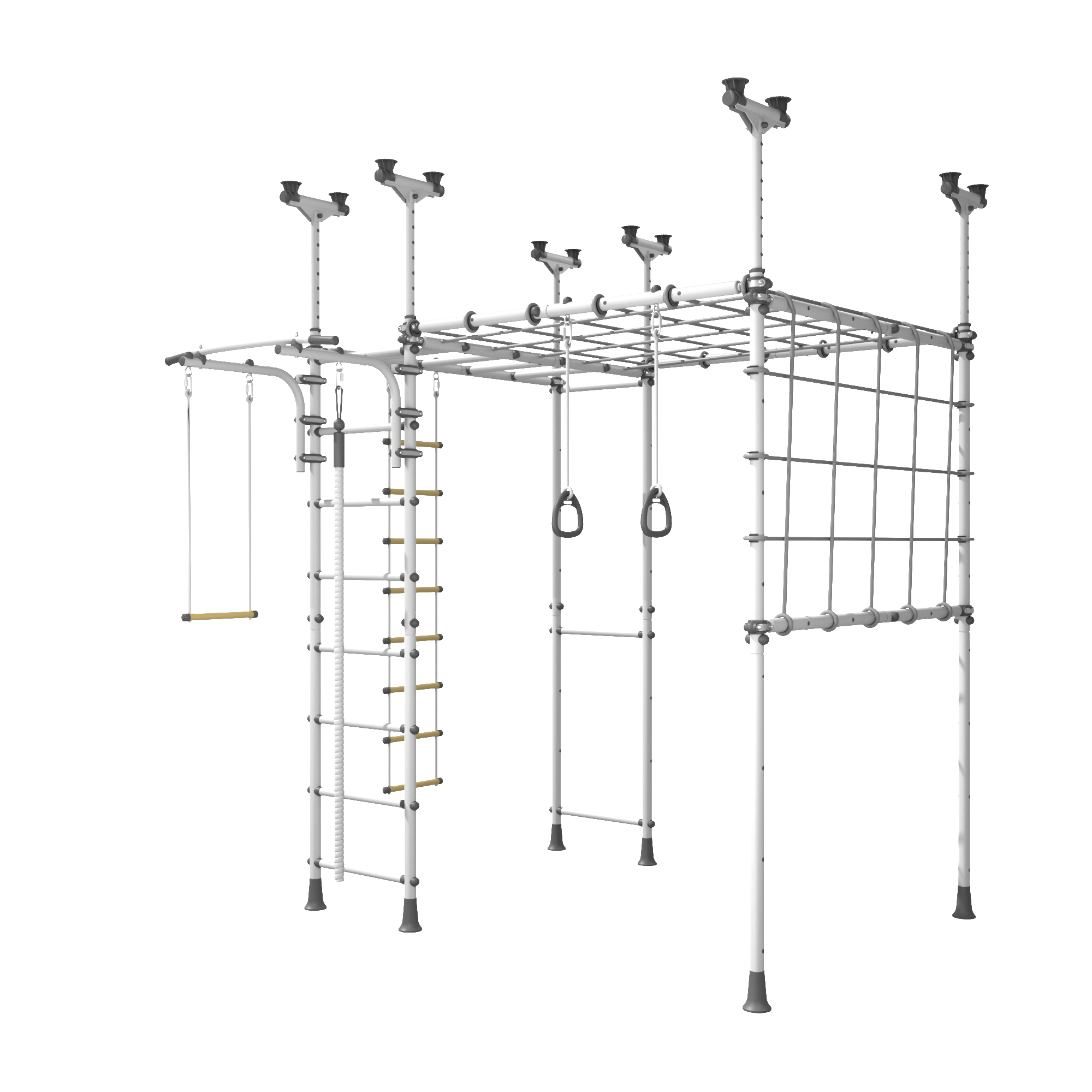
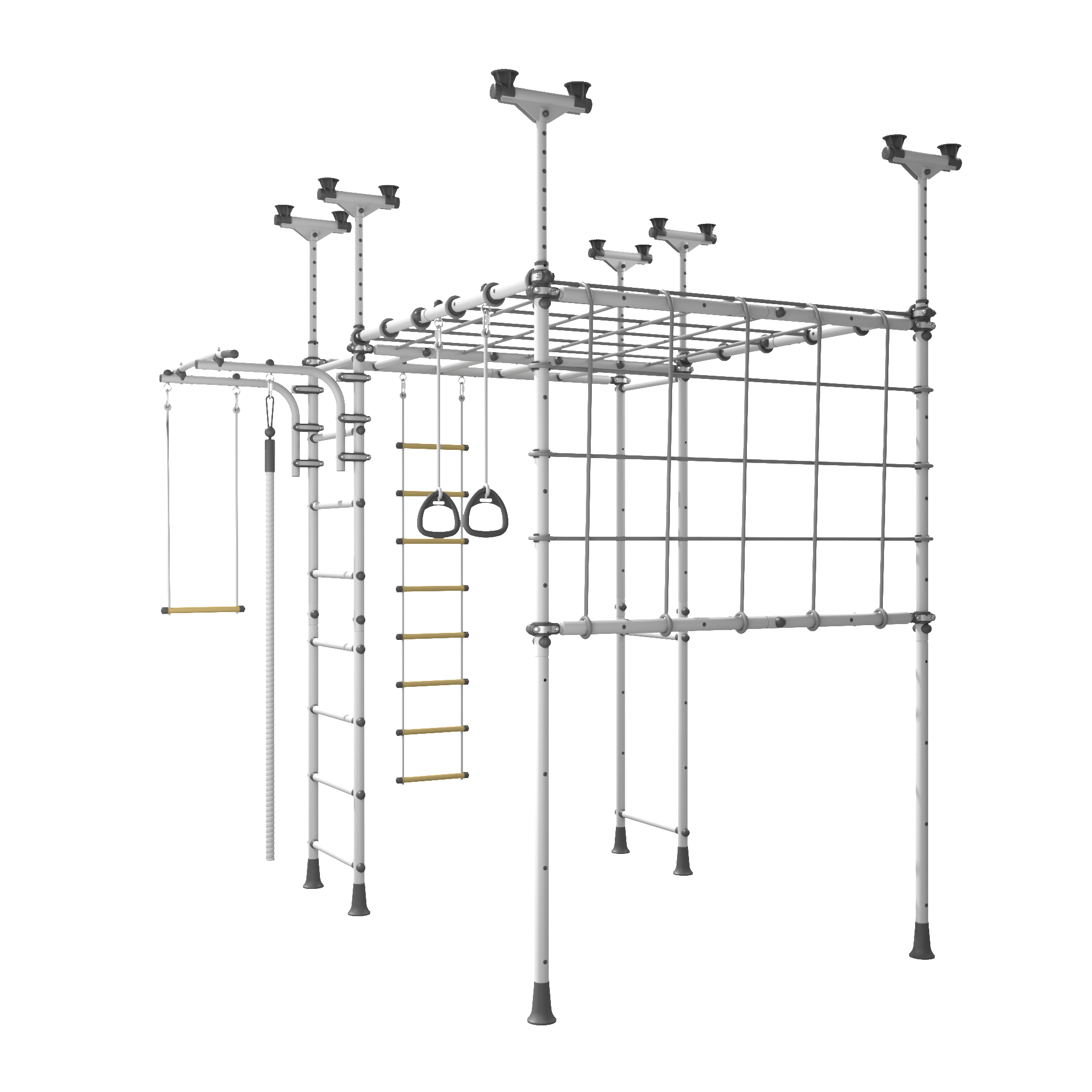
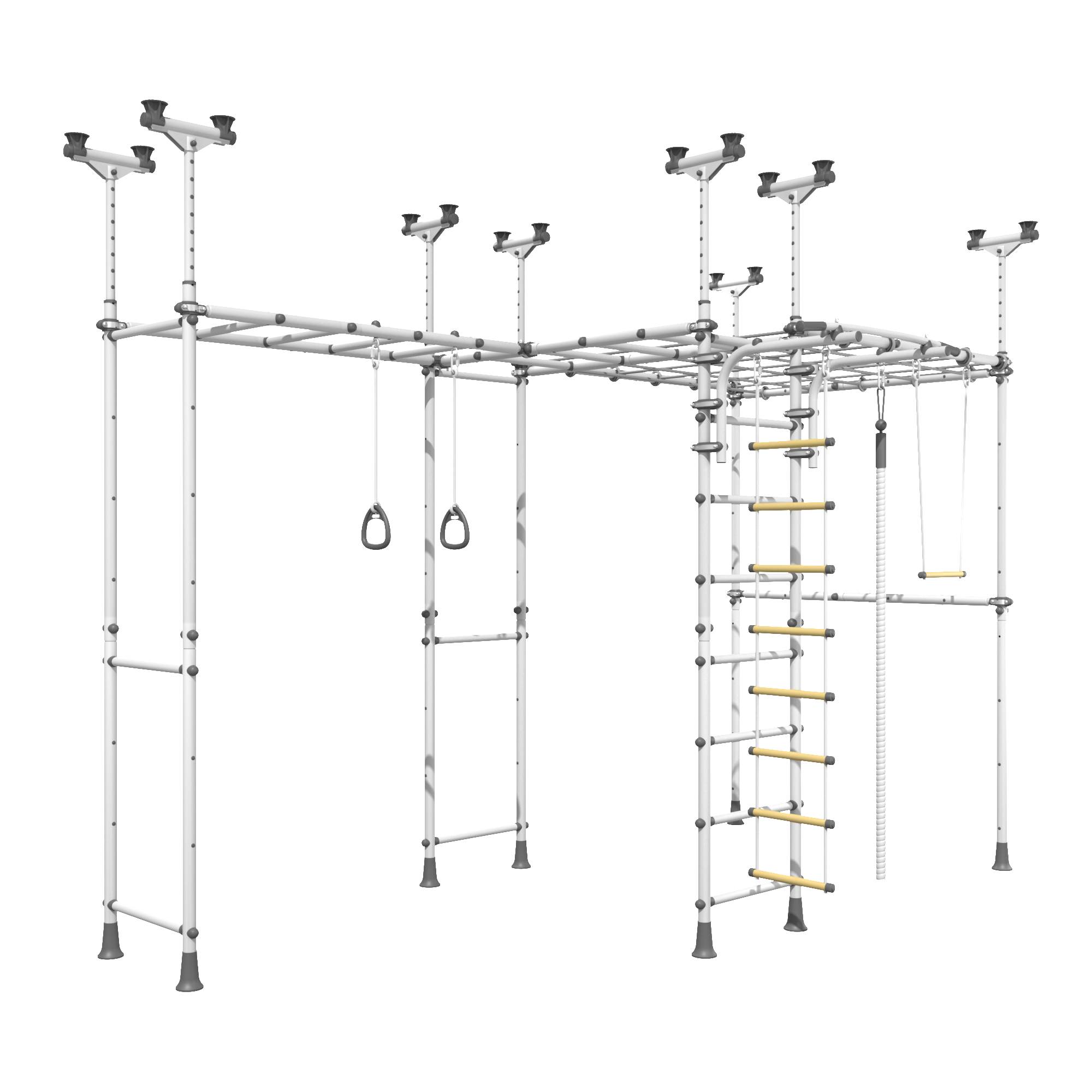
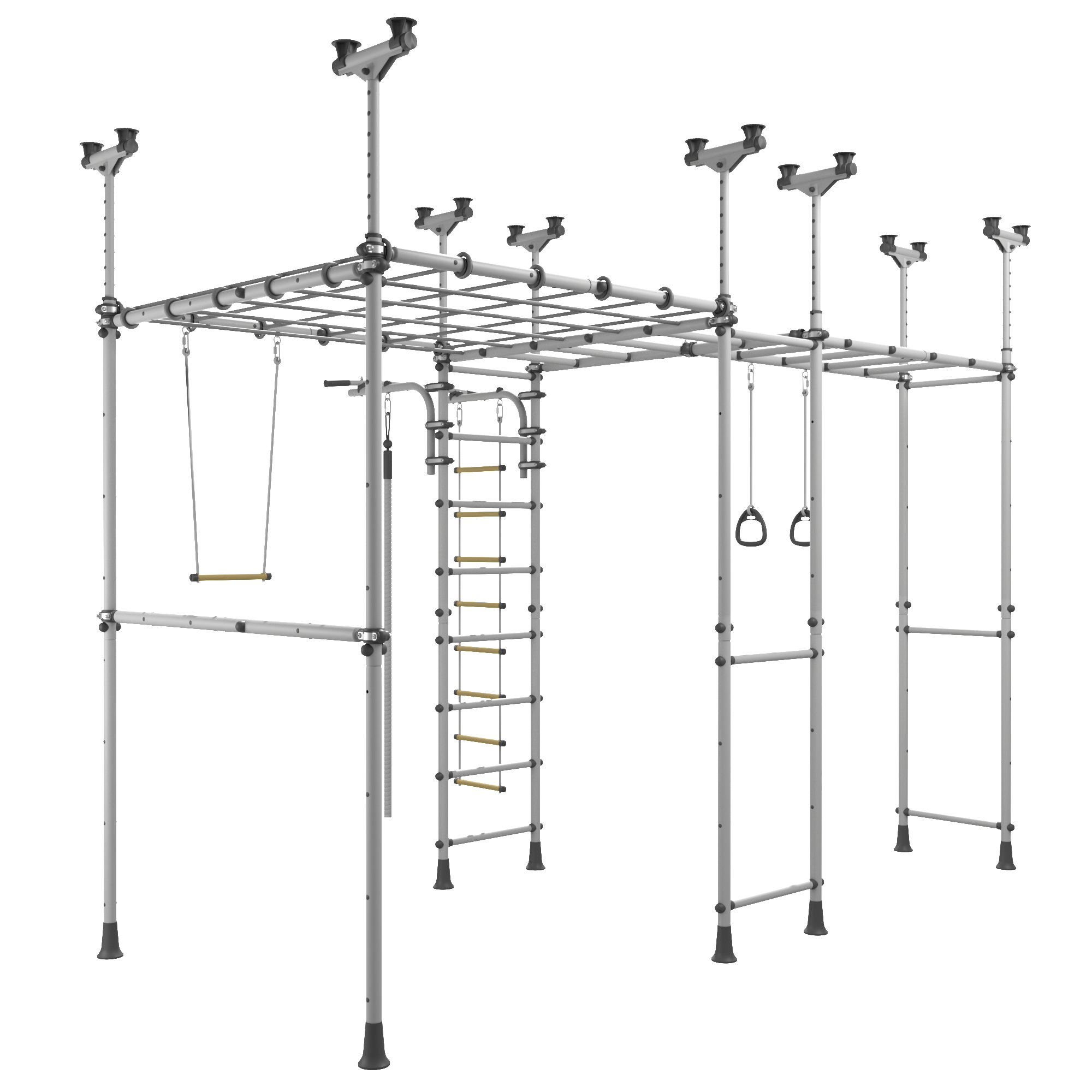
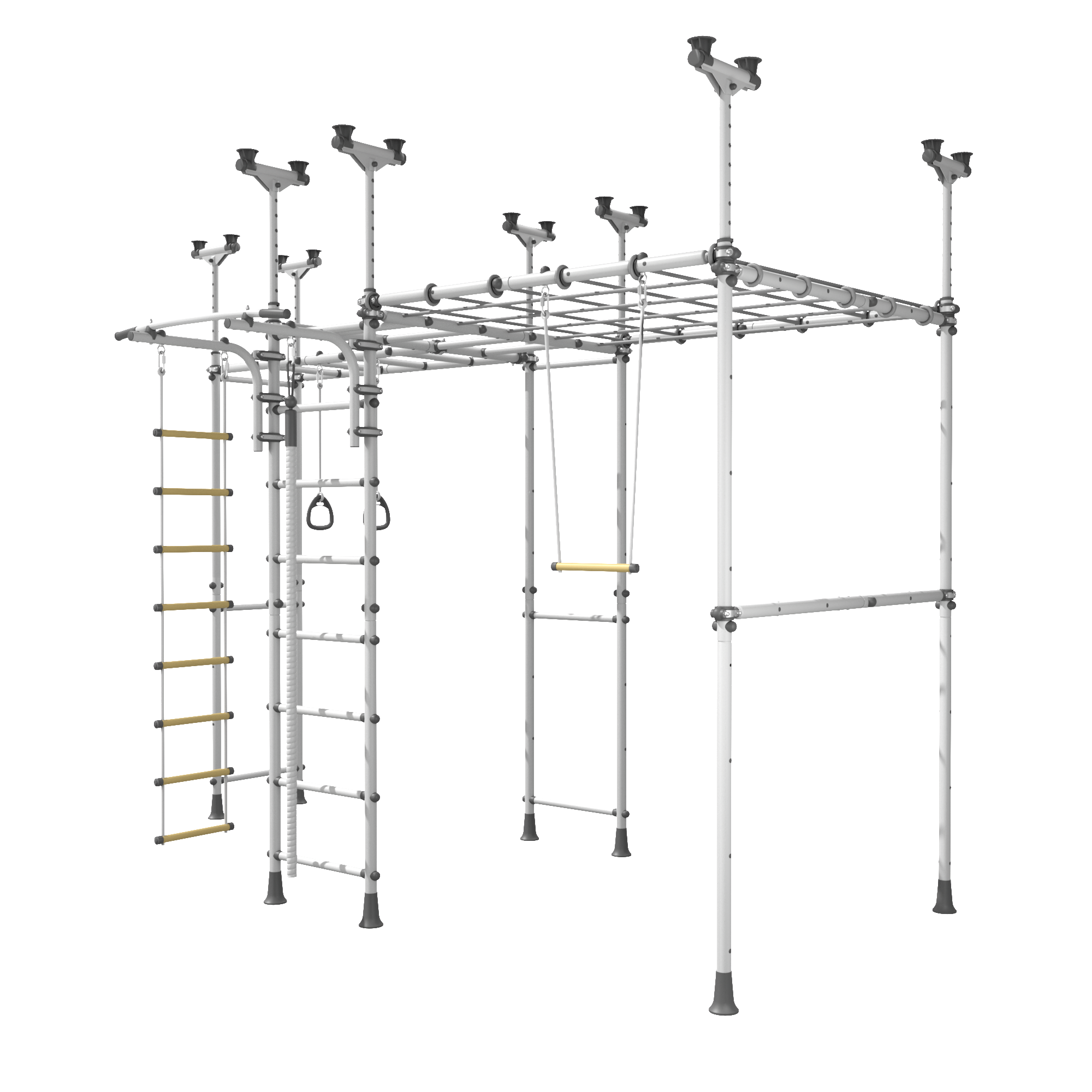
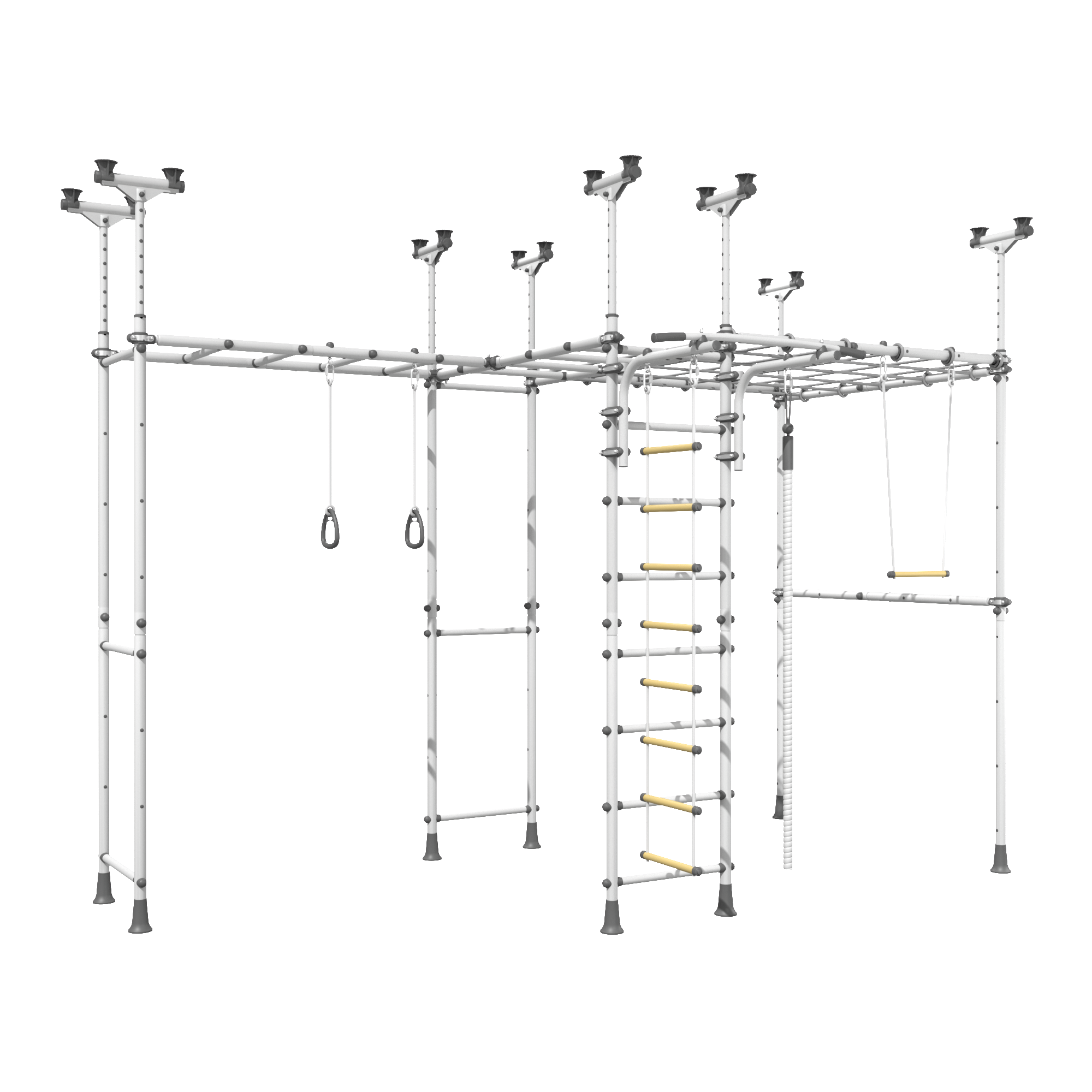
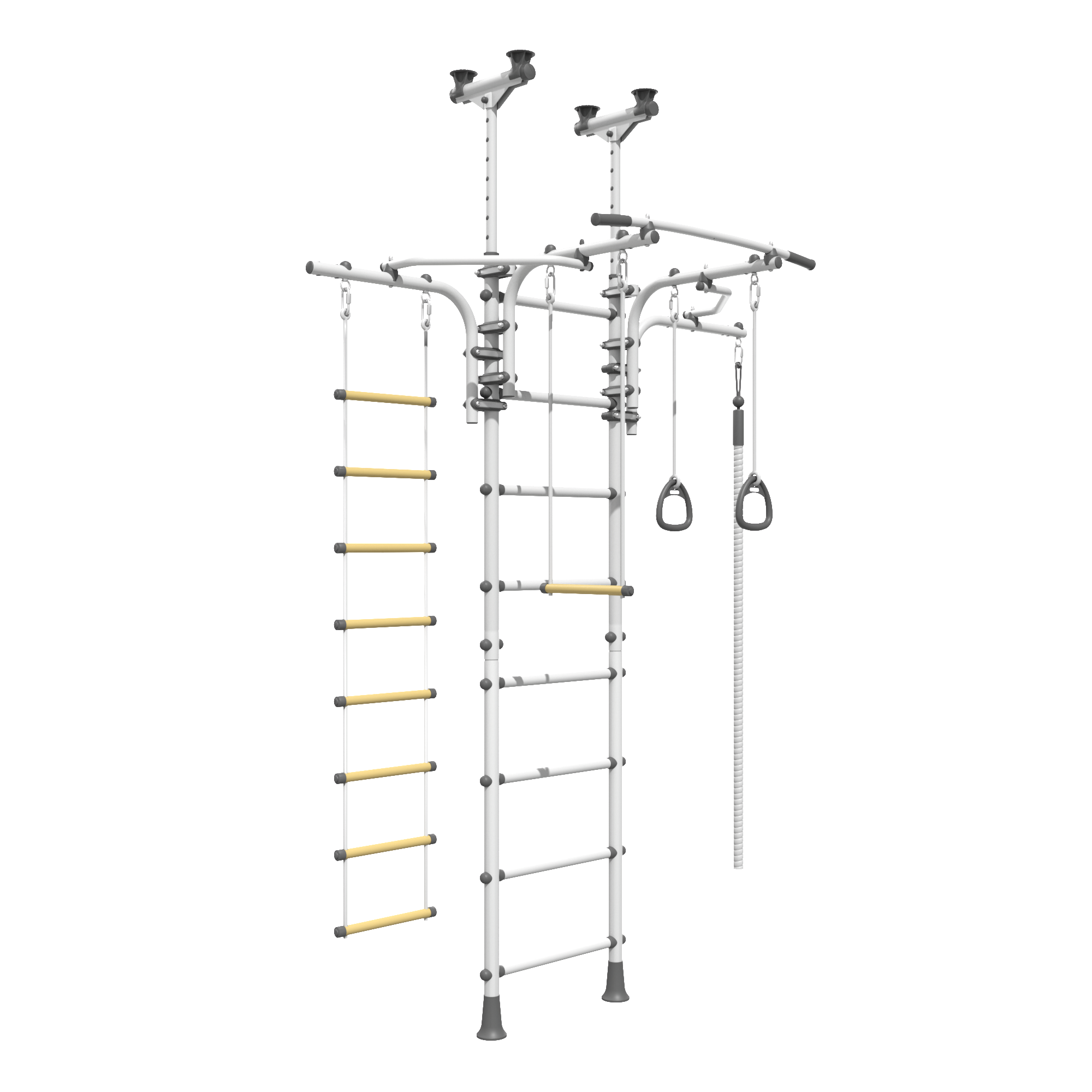
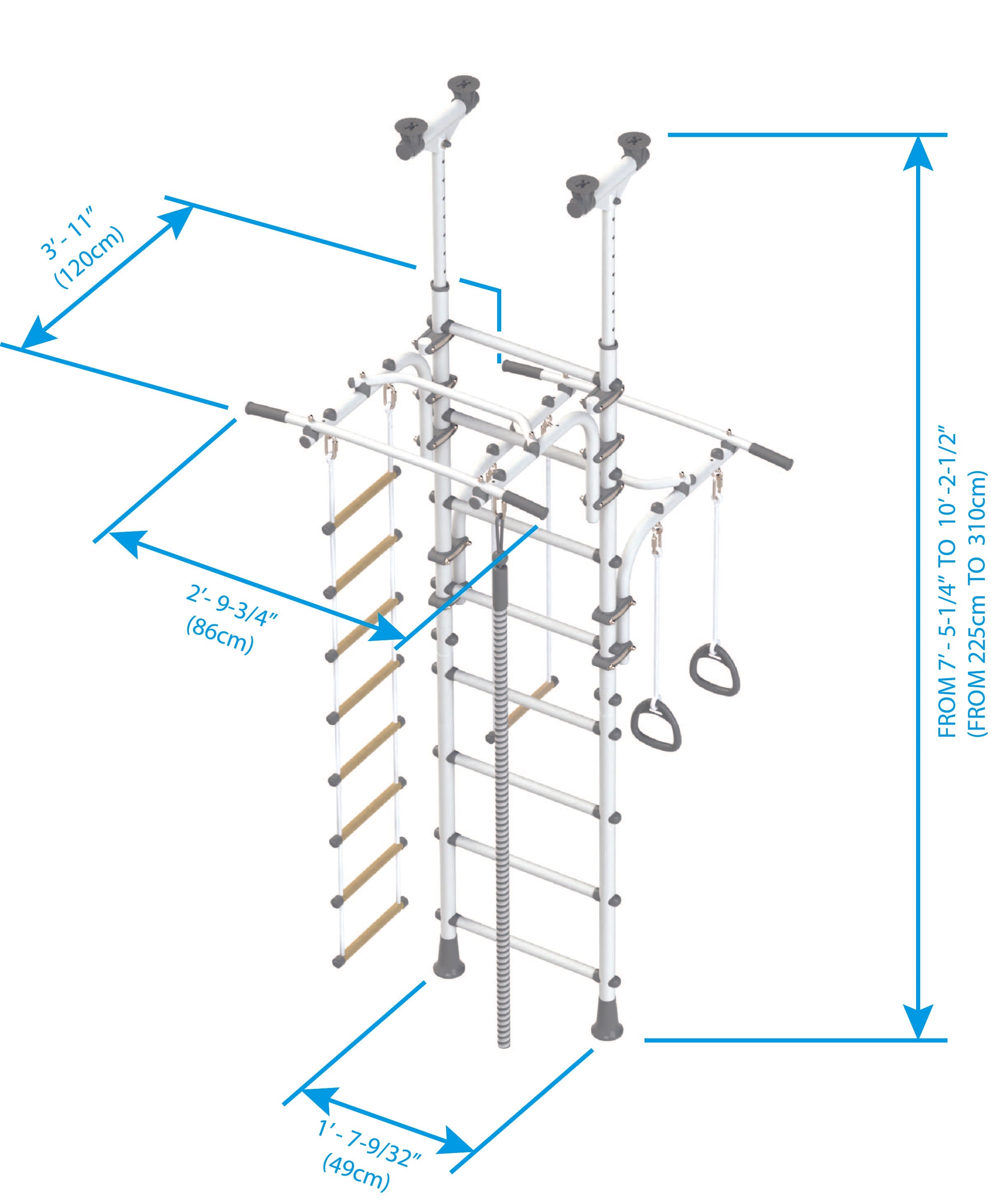
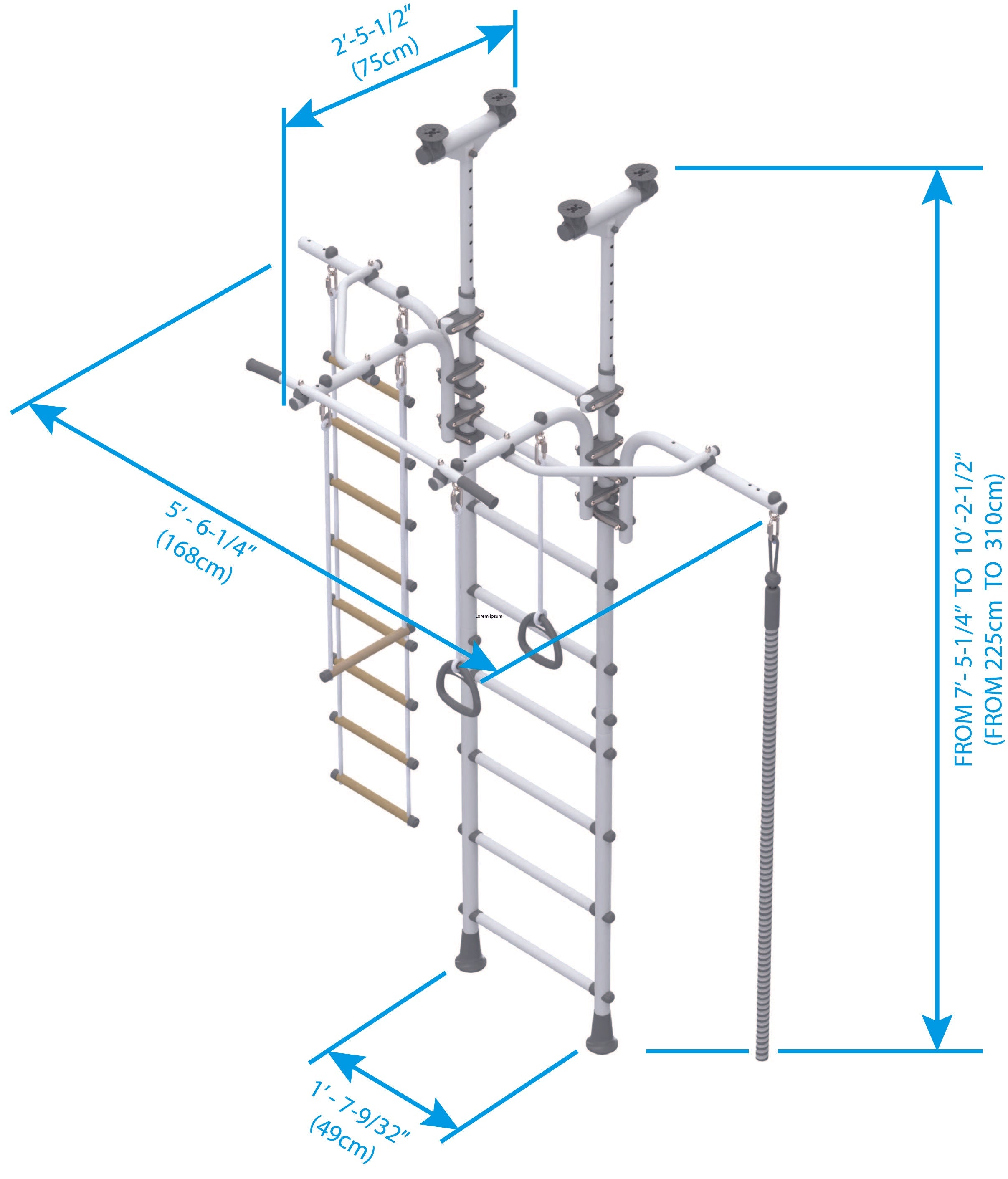
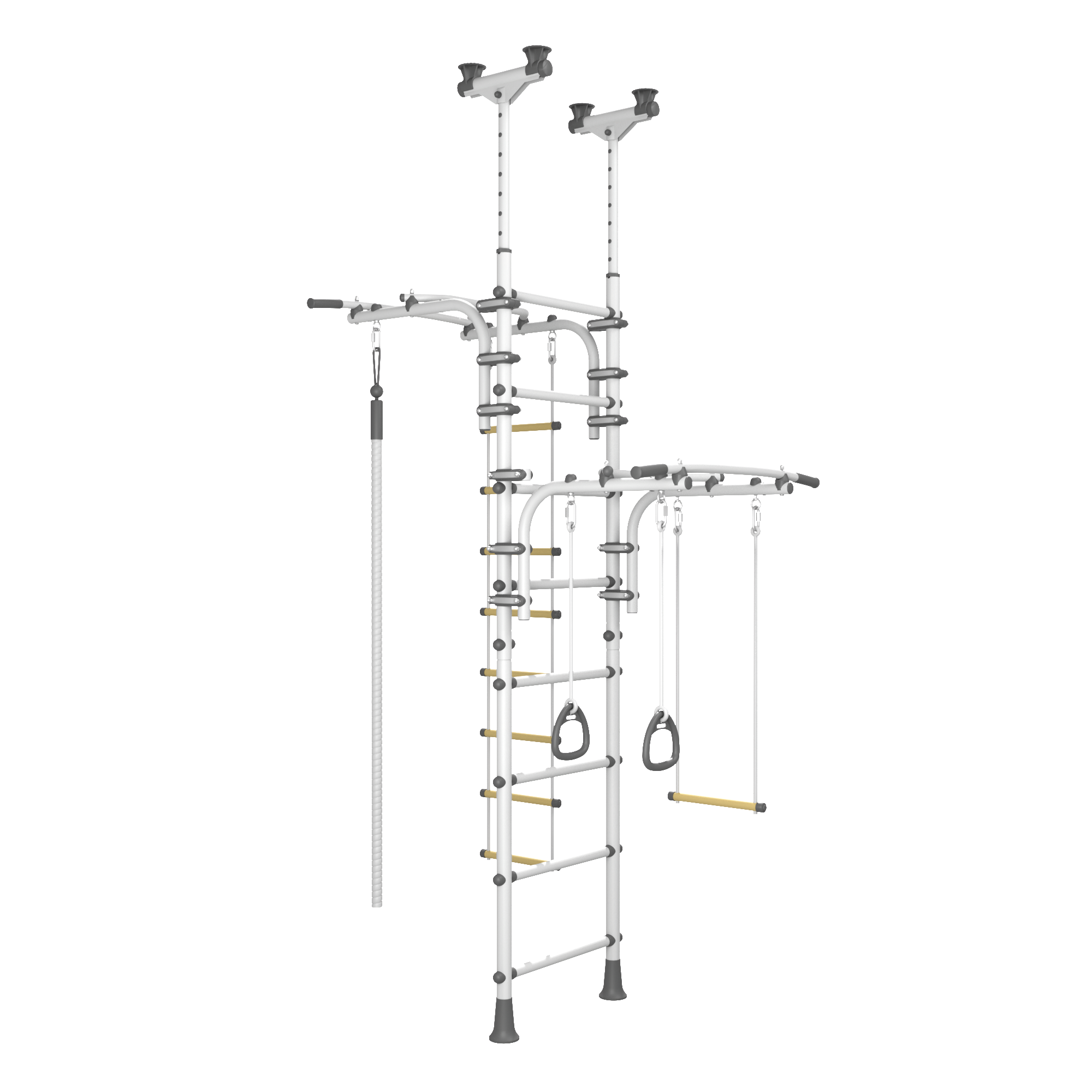
Sensory gym equipment for home is not a room full of gadgets: it is one sturdy frame that delivers the input your child's nervous system is asking for.
Quick answer: occupational therapists organize sensory gym equipment by the input it provides: climbing and hanging for proprioception (heavy work), swinging for vestibular input, ropes and rungs for grip strength and motor planning, mats for safe crashing. The gym frame is the anchor; the accessories are the rotation.
Sensory gym equipment by the input it delivers
| Input |
What it does |
Equipment |
| Proprioceptive (heavy work) |
Organizes and calms; the hardest input to overdo |
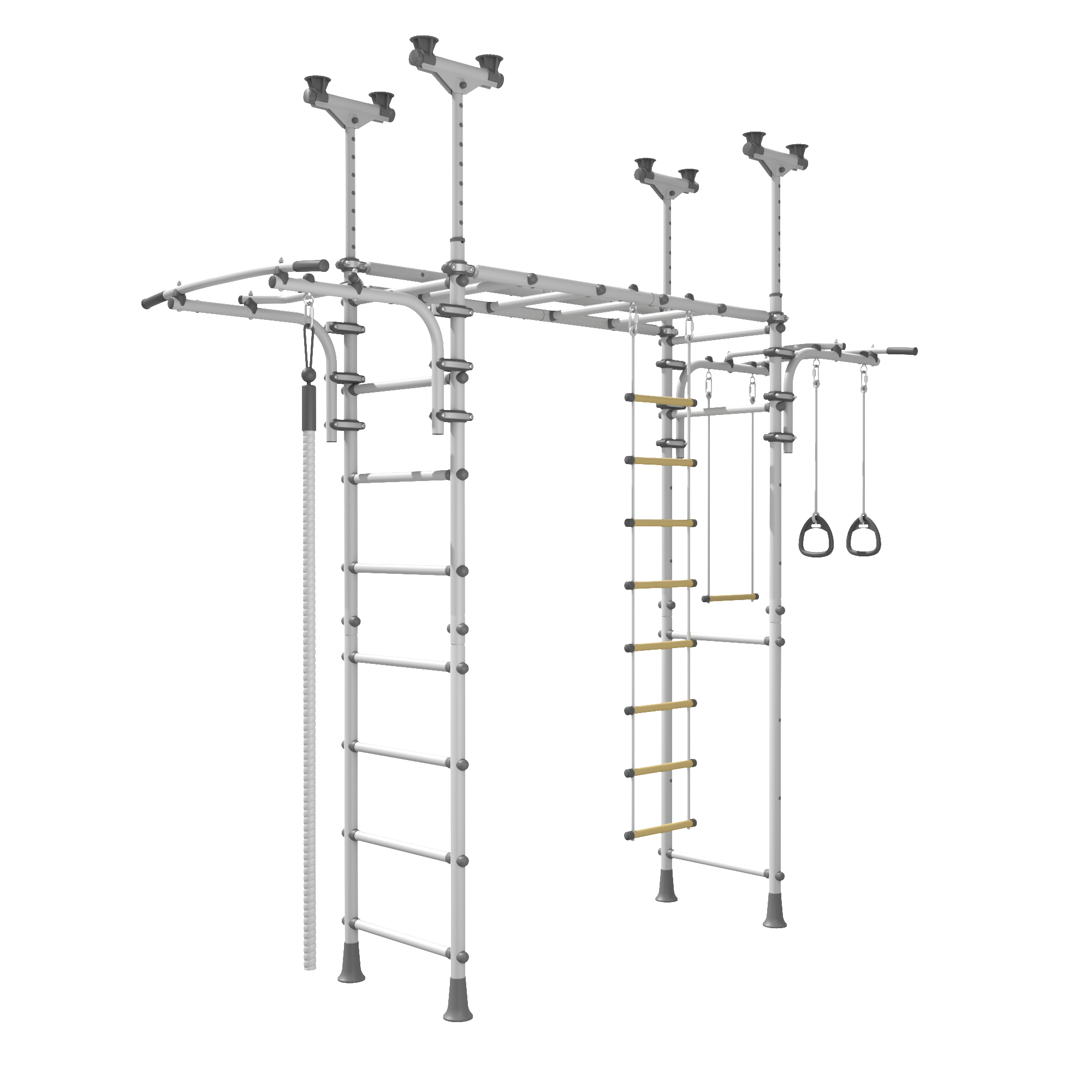
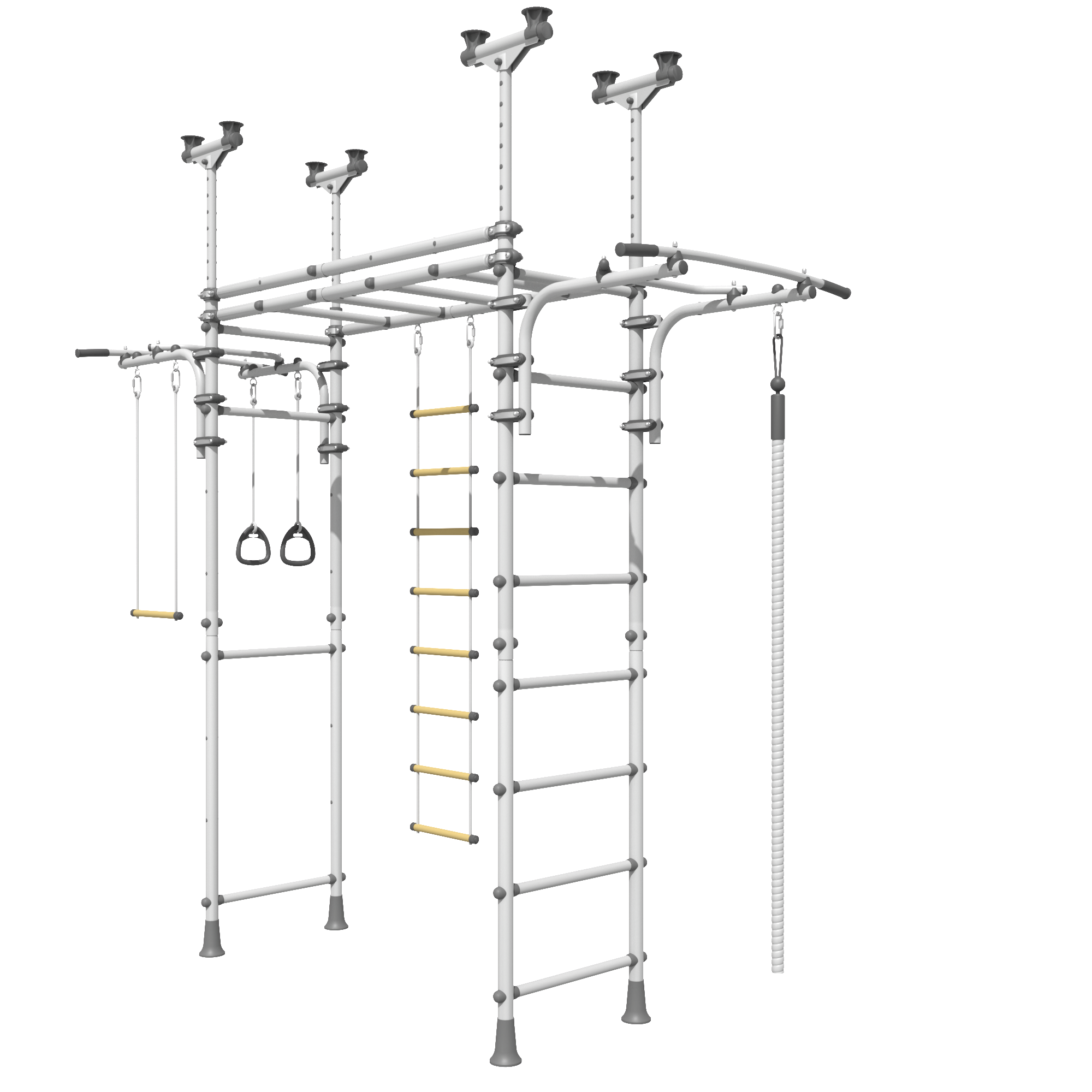
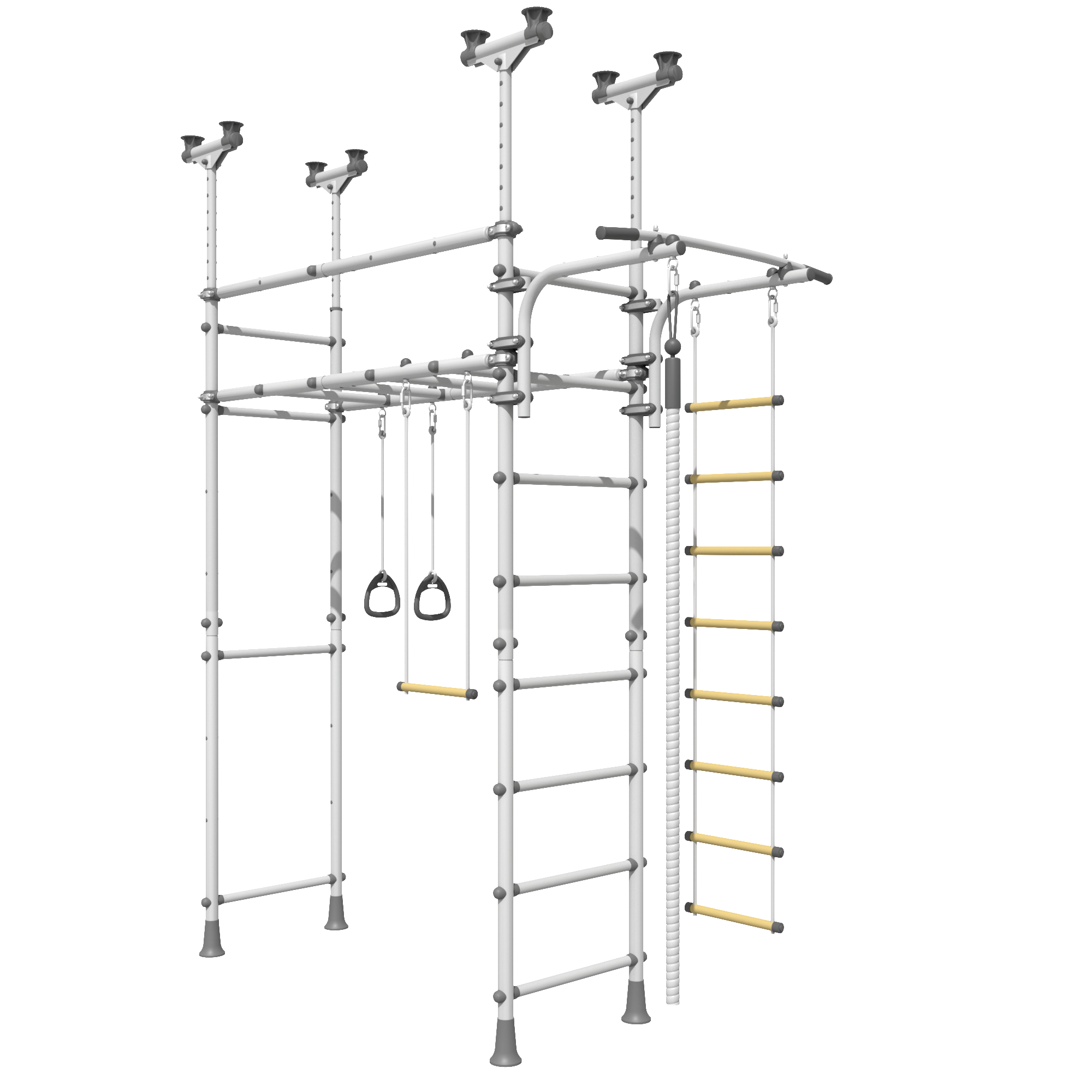
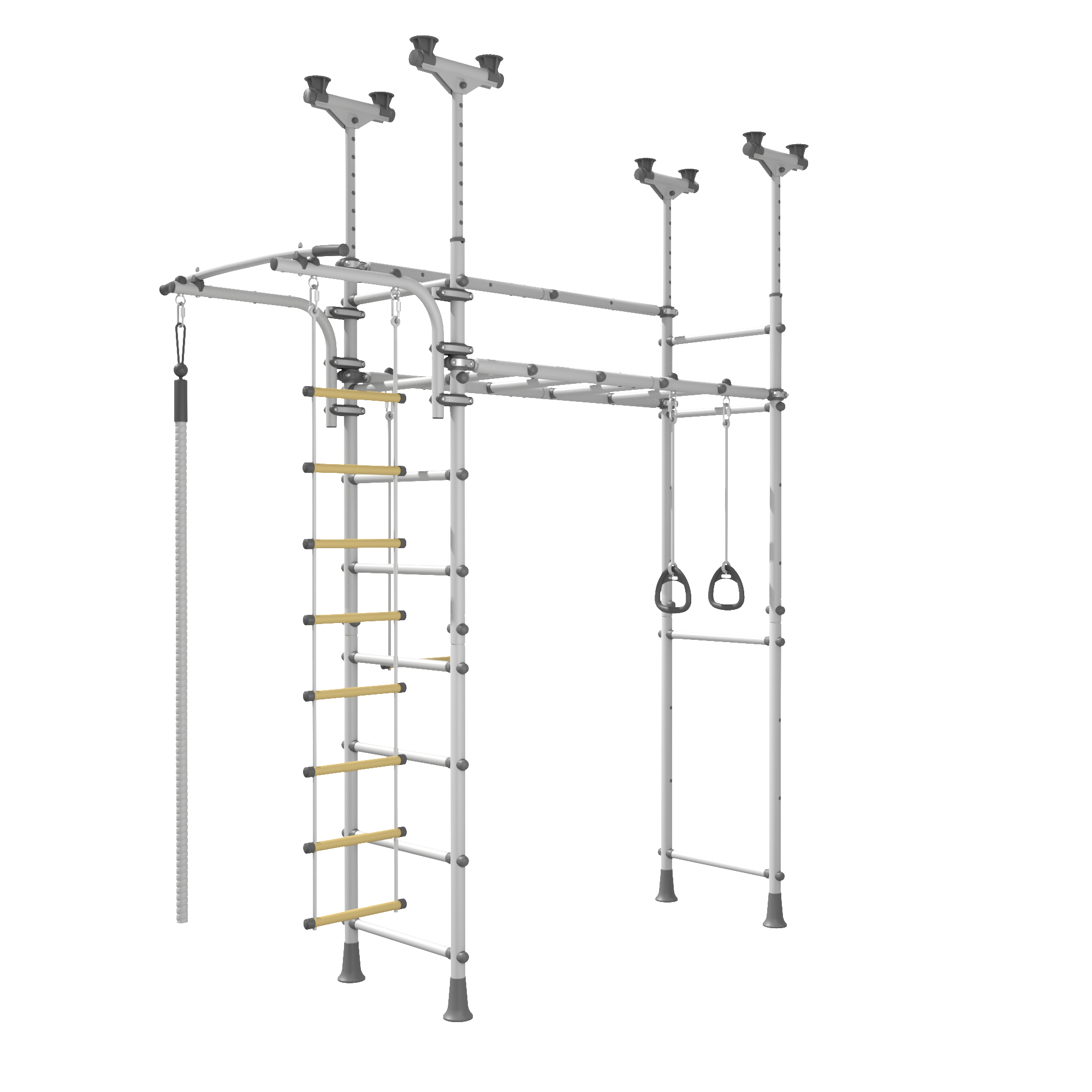
Ladders, rings, climbing rope, monkey bars (built into the Spider V3) |
| Vestibular (motion) |
Slow linear swinging calms; spinning alerts |
Sensory swings: classic seat, hammock, trapeze, disc |
| Grip and motor planning |
Builds hand strength and sequencing |
Rope ladder, curved ladder, trapeze |
| Crash and landing |
Deep pressure plus a safe exit from every climb |
Play mats sized to the V3 frames |
Climbing tops the OT heavy-work list because it loads muscles and joints in the way regulating input requires. Add a swing for vestibular work, covered type by type in Sensory Swings 101, and you have the core of a sensory diet on one frame. The V3 pull-up bars carry ring hooks so accessories clip on and off with carabiners, a detail we added for therapists who rotate equipment mid-session.
Tight on space, or working around a slanted ceiling? The wall-mounted Model W3 and W3 Max sit just 9 inches off the wall, hold a certified 220 lb, and skip the ceiling entirely, which suits narrow playrooms, slanted ceilings, and very tall ceilings. They take TRX-style resistance bands and a small hammock swing; for 360° swinging and the full accessory rotation, choose a floor-to-ceiling frame.
Funding it: with a Letter of Medical Necessity, sensory equipment may be HSA/FSA eligible, and some state disability waiver programs cover it outright. LMN template → · State waiver guide →
Sensory gym equipment: common questions
What counts as sensory gym equipment? Anything that delivers regulating sensory input through movement: climbing frames and ladders (proprioceptive heavy work), swings (vestibular), rings, ropes, and trapezes (grip and motor planning), and crash mats (deep pressure and safe landings). A single steel frame with a swing point covers all four categories.
What sensory gym equipment works best for autistic kids? It depends on the sensory profile. Seekers usually do best with climbing, hanging, and open swings; kids who overload easily do best with enclosing swings moved slowly and deep-pressure mats. Our sensory seeker guide and autism swing guide match equipment to profiles.
Do I need a full sensory room? Usually not. Most families get the regulation benefit from one well-chosen frame in a corner; a dedicated room adds calming elements (lighting, enclosure) rather than movement. The trade-offs are in Sensory Room vs Sensory Gym.