
Back to School: Movement-First Learning Essentials
Back to school hits different when school is ten steps from the kitchen. Whether you homeschool full-time or just need a homework corner for a kid who comes home wiped at 3:30, the room itself is doing more work than most parents realize. Light changes how long kids can focus. Layout changes how often they wander off. And a place to climb between subjects changes what the next lesson looks like. This guide walks through the whole setup, from window placement to the weekly shelf reset, with the research behind each piece.
Quick answer: the 5 elements of a learning-ready home space
- Light. Natural light first, desk perpendicular to the window, plus a task lamp for close work.
- Zones. Separate spots for focused work, quiet reading, and movement, even inside one room.
- Organization. Child-reachable open shelves, one activity per tray, a weekly reset ritual.
- Movement. A dedicated place to climb, hang, and swing between subjects, in view of the learning zone.
- Rhythm. Short focused blocks with movement breaks woven between them, not bolted on at the end.
Jump to: Lighting · Zones & organization · The movement zone · Daily rhythm · FAQ
1. Get the light right first
Lighting is the cheapest upgrade in this whole guide, and it may be the most consequential. In one of the largest studies ever run on classroom environments, the Heschong Mahone Group analyzed test records from over 21,000 elementary students across three districts. In the Orange County, California district, students in the classrooms with the most daylight progressed 20 percent faster on math tests and 26 percent faster on reading tests over one school year than students in the classrooms with the least daylight, after controlling for other factors. Your home almost certainly has better windows than a portable classroom. Use them.
Desk position: perpendicular to the window
Most parents push the desk against a wall or face it toward the window. Both create problems. Facing the window means squinting into brightness all morning. Back to the window means your child works in their own shadow, and any screen catches the glare. The sweet spot is desk perpendicular to the window, so daylight washes across the work surface from the side. For a right-handed child, light from the left keeps the writing hand from shadowing the page; reverse it for lefties.
Task lighting for close work
Daylight fades by mid-afternoon most of the school year, and overhead fixtures light the room, not the page. Add one adjustable-arm task lamp at the desk, aimed across the work from the side opposite the writing hand. This matters most for detail work: handwriting practice, maps, anything with small print.
Color temperature, translated for parents
Bulb boxes list a Kelvin number, and it is worth 30 seconds to read it. Lower numbers are warmer and yellower; higher numbers are cooler and bluer. A simple house rule: cooler white light (around 4000 to 5000K) at the desk for focus work, because it reads as bright, alert, daytime light. Warm light (2700 to 3000K) in the reading corner and anywhere kids wind down, because cool light late in the day works against settling. One overhead bulb cannot do both jobs, which is exactly why the zones in the next section each get their own light.
Screens and windows
Screens follow the same perpendicular rule. A monitor facing a bright window turns into a mirror; a child facing one on a video call becomes a silhouette. Put the screen at a right angle to the glass; a sheer curtain tames any remaining glare.
The 60-second lighting checklist
- Desk sits perpendicular to the brightest window
- Daylight comes from the side opposite the writing hand
- One adjustable task lamp at the desk, cool white (4000–5000K)
- Warm bulbs (2700–3000K) in the reading corner and evening spaces
- Screens at a right angle to windows, no window directly behind the child or the display
- Sheer curtain on hand for the glare hours
2. Zones and room organization: the room is the second teacher
A home learning space works when each activity has a home, and the homes do not overlap. You do not need a dedicated schoolroom. You need three zones, which can share one room or spread across the house: a learning zone, a quiet corner, and a movement zone. The first two are built here; the movement zone gets its own section below.
The learning zone
Ergonomics for kids follows three checkpoints: feet flat on the floor or on a footrest box, elbows at roughly 90 degrees when hands rest on the desktop, and for screen work, the top of the screen at eye height about an arm's length away. Most kids sitting at adult furniture fail all three, which shows up as slumping, wiggling, and heads dropped onto arms. An adjustable chair or a simple footrest fixes more focus problems than another lecture about sitting still. Beyond the desk, one principle governs the zone: child height. Hooks they can reach, shelves they can reach, a pencil cup they can refill. Every reachable thing is a task they do not need you for.
The quiet corner
Reading needs a spot that signals slow. Put it as far from the movement zone as the room allows, with soft seating, a warm-light lamp (that 2700K bulb), and a small basket holding this week's books rather than a wall of every book you own. A corner that only means reading builds the habit faster than a couch that also means screens.
Supply organization that kids can run
The Montessori logic on materials has held up for a century because it works: open shelves at child height, a limited number of materials on display, one activity per tray. A tray is a complete unit of work, with everything the activity needs and nothing else, so a child can carry it to the table, do the work, and return it without adult logistics. Rotate what is on the shelves rather than displaying everything; a shelf with six inviting choices gets used more than a shelf with forty.
Two rituals keep the system alive. The weekly reset: 15 minutes each Sunday to restock trays, swap in fresh materials, and clear the strays, ideally with the kids. And the command center: one wall spot with the week's schedule, a calendar, and a clipboard for the papers that otherwise colonize the kitchen counter. When the schedule lives on the wall, kids check the wall instead of asking you.
Declutter for focus: fewer visible materials, deeper engagement
There is direct evidence that visual clutter taxes young learners. In a 2014 Carnegie Mellon study published in Psychological Science, researchers Fisher, Godwin, and Seltman taught kindergartners the same science lessons in a heavily decorated classroom and in a sparse one. In the sparse room, children spent less time off task and answered 55 percent of test questions correctly, versus 42 percent in the decorated room. The takeaway for a home setup is not bare walls everywhere; it is a calm field of view from the desk. Keep the wall the child faces while working mostly plain, and hang the artwork and anchor charts behind them or in the hallway.
How much room does each zone need?
| Zone | Minimum footprint | Key pieces |
|---|---|---|
| Learning zone | About 4 x 6 ft per child | Desk perpendicular to window, adjustable chair or footrest, task lamp |
| Quiet corner | About 3 x 3 ft | Soft seat, warm lamp, small rotating book basket |
| Supply wall | One 5–6 ft wall run | Low open shelves, trays, command center above |
| Movement zone | About 7 x 7 ft freestanding, or one clear wall | Climbing frame or wall-mounted gym, play mats beneath |
3. The movement zone: recess on demand
This is the piece most home setups skip, and it is the piece the research argues for hardest. In a 2013 study in The Journal of Pediatrics, Pontifex and colleagues gave 8 to 10 year olds a single 20-minute bout of moderate exercise, then tested them. Children with ADHD showed better response inhibition and attention allocation afterward, and both the ADHD group and typically developing kids scored higher on reading comprehension and arithmetic following exercise than following seated reading. One bout. Twenty minutes. The CDC's guidance points the same direction: school-age kids need 60 or more minutes of moderate-to-vigorous activity daily, and its classroom physical activity resources note that short activity breaks of roughly 5 to 20 minutes can improve on-task behavior and the classroom environment.
Schools ration recess by bell schedule. At home you do not have to. A movement zone in sight of the desk turns every transition between subjects into a reset button: math ends, the timer starts, and ten minutes of climbing later a different kid sits down for reading. Parents who homeschool through long winters know exactly why this beats "go run around," which works in June and fails in January.
The 10-minute brain-break menu
- Climb: ladder loops, up one side and down the other, five rounds
- Hang: monkey bar or trapeze hangs, 10 to 20 seconds at a time; grip and shoulder work that doubles as a decompression stretch after desk time
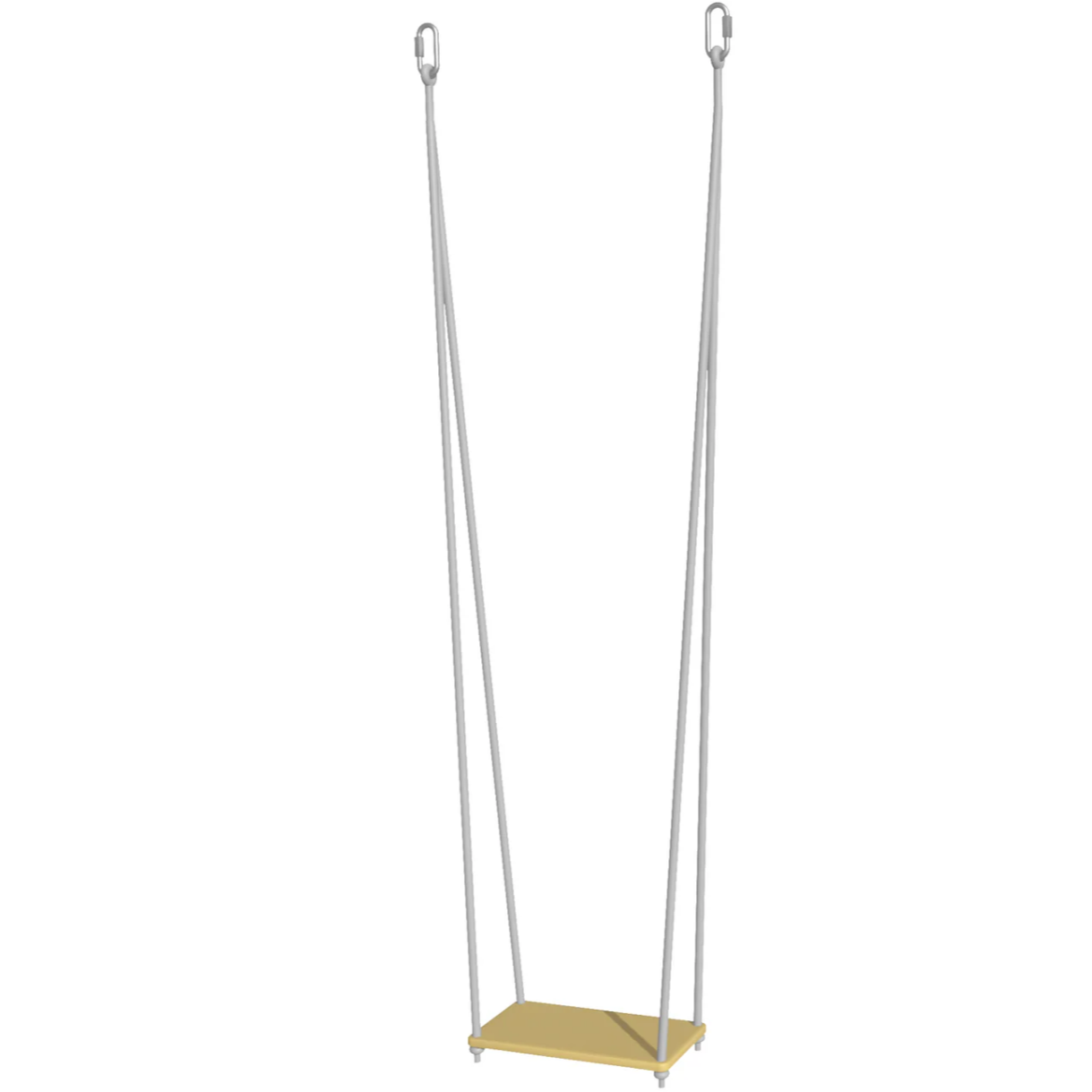
- Swing: two songs on the swing or rings; rhythmic input that many kids find settling
- Heavy work: rope climbs, rings, hauling the bean bag up the slide-free frame; the pushing-and-pulling input occupational therapists reach for first
- Circuit: string three of the above into laps and let the timer end the argument
Placement rules
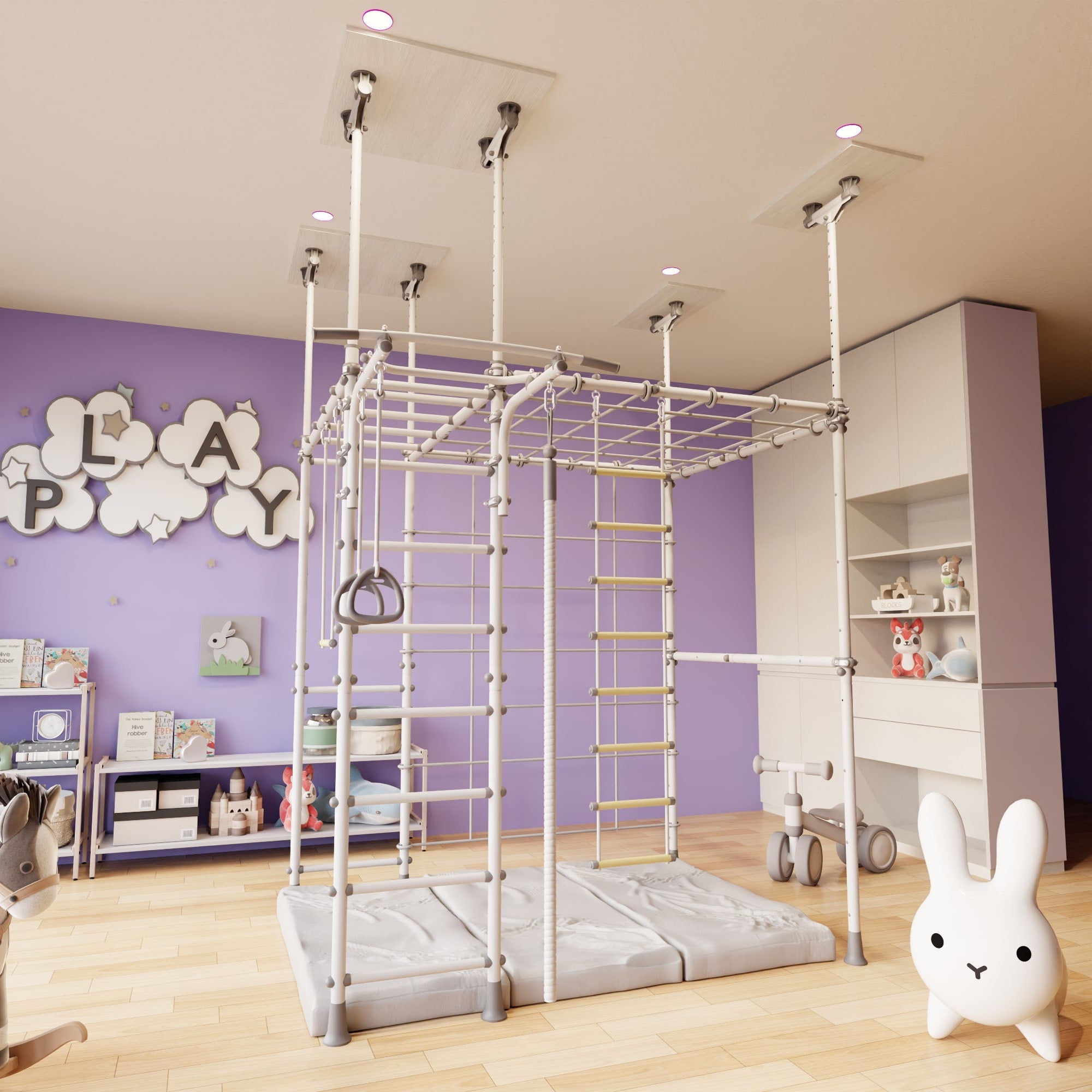
Give a freestanding frame clear space on all sides, keep the landing area free of furniture edges, and put mats underneath from day one. The most useful rule is about sight lines: place the movement zone where you can see it from the learning zone. That way one parent supervises the climber and the speller at the same time, which is the actual logistics problem of teaching multiple kids at home.
Which setup fits which room
| Your situation | The fit | Price |
|---|---|---|
| One child, one corner of a shared room | T3 corner gym | $899 |
| Siblings sharing one movement zone | Spider V3 or Spider Max V3 | $1,499 / $1,899 |
| Dedicated playroom, multiple kids, maximum routes | Mega Max V3 | $2,399 |
| Tight room or apartment, no floor to spare | W3 wall-mounted gym | from $850 |
| Already own a gym, want more routes | Monkey Bars V3 + Accessories Set | $699 + $250 |
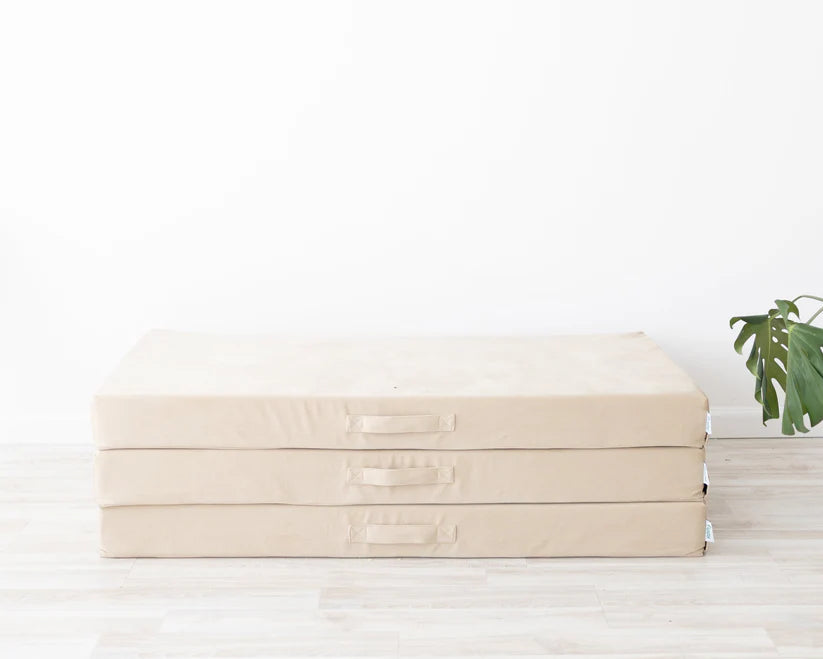
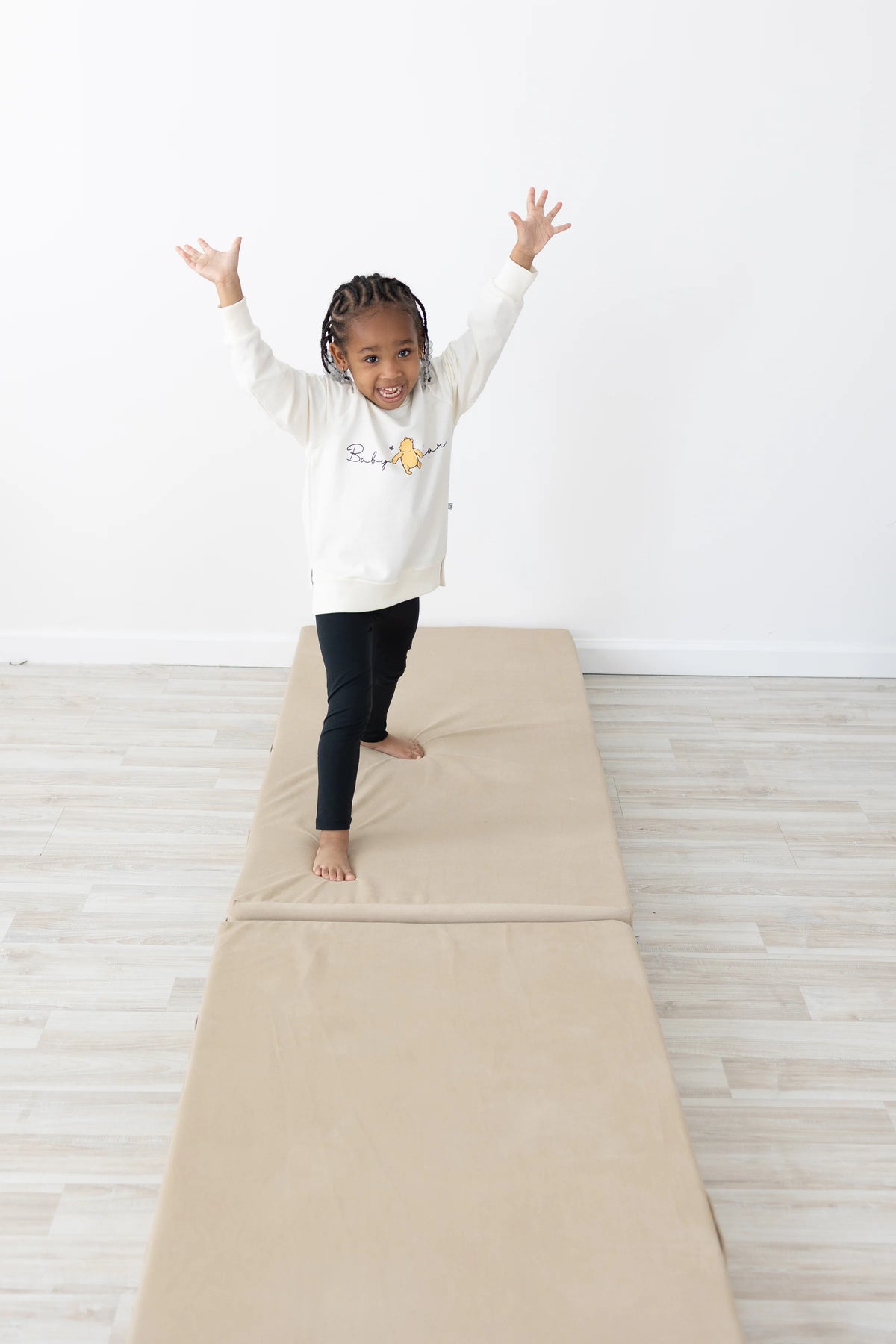
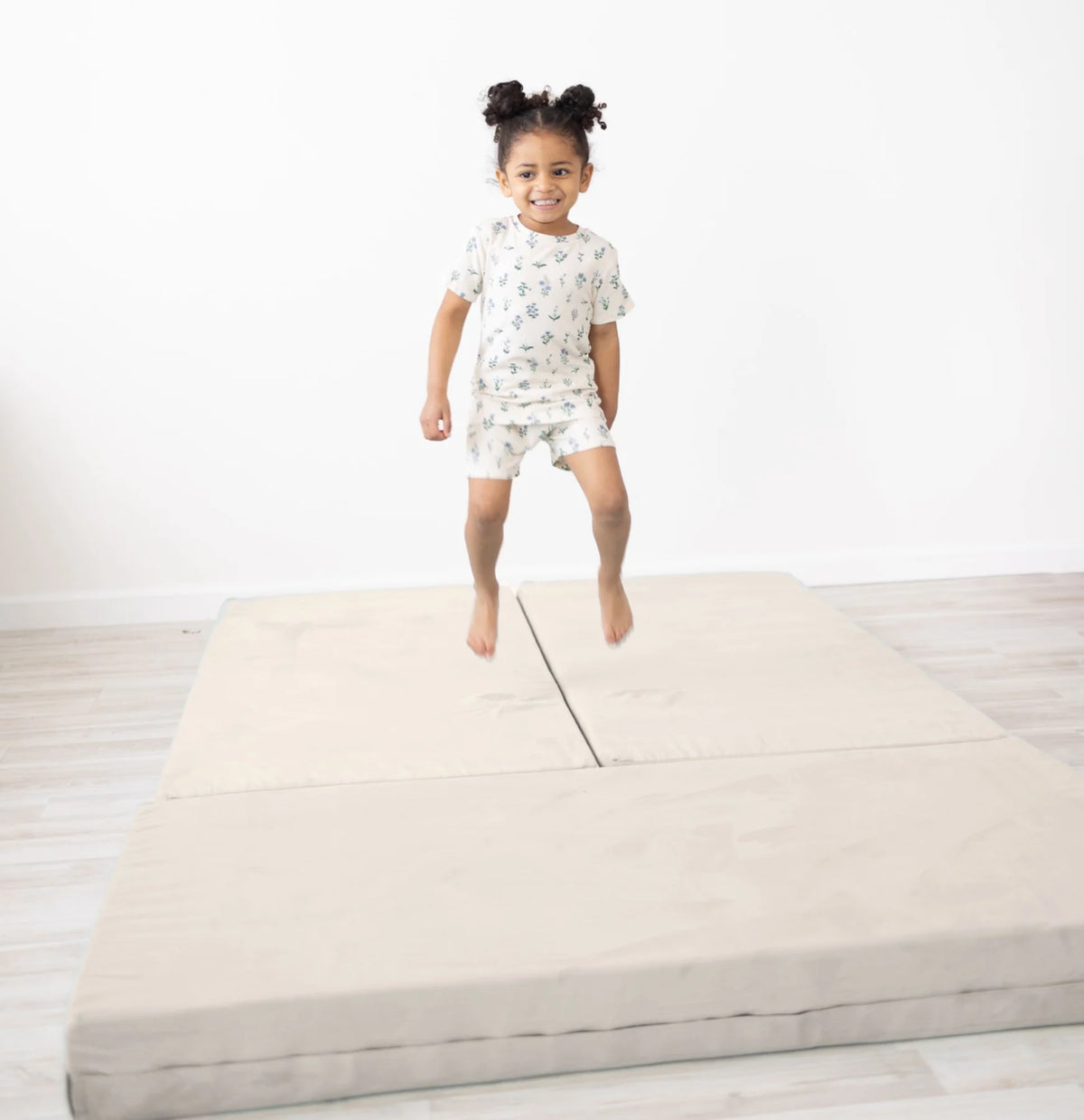
| Any of the above, softer landings | Figgy play mats underneath | from $315 |
Every frame is steel with a non-toxic powder coat, rated for 220 lb of active load and safety-tested to 440 lb, with non-toxic rubber-coated rungs and phthalate-free plastics, designed for independent climbing from age 3 and up. Ceiling fit comes in three sizes: Short for 6'9" to 9'1" ceilings, Standard for 7'8" to 9'11", and Tall for 9'4" to 10'6", so basements and lofts both work.
HSA/FSA note: with a Letter of Medical Necessity from your child's provider, many families pay for a home gym with pre-tax HSA or FSA funds, an effective saving of up to about 30%. Worth a conversation at your next checkup, especially if movement is part of a therapy plan.
4. The daily rhythm: weave movement between subjects
A good space still needs a good schedule. The pattern that survives contact with real children is short focused blocks with movement between them, hardest subject first while the tank is full. Here is a sample morning to steal and adapt:
| Time | Block |
|---|---|
| 8:30 | Movement wake-up: 10 minutes on the gym before anyone sits down |
| 8:45 | Math, the heaviest lift, while attention is freshest |
| 9:30 | Brain break: climb or circuit, 10 minutes |
| 9:40 | Reading and language work |
| 10:25 | Snack plus outdoor time when weather allows |
| 11:00 | Writing or copywork, short and focused |
| 11:30 | Brain break: hangs and swinging, 10 minutes |
| 11:40 | Science or project block, the fun one |
| 12:30 | Lunch, then quiet corner reading and free play through the afternoon |
The after-school version: for kids who spend the day in a classroom, flip the order. They arrive home at 3:30 having held it together for seven hours, and the worst possible next step is a chair. Run the 3:30 reset: 20 to 30 minutes of climbing, hanging, and swinging first, then a snack, then homework in the learning zone while the light is still decent, then warm-light reading to close the evening. The homework fight usually is not about homework; it is about a body that has not moved since lunch.
Frequently asked questions
How much space does a homeschool room need?
Less than you think. A functional setup fits in roughly 4 x 6 ft per child for the learning zone, a 3 x 3 ft reading corner, and one wall of low shelving. A full movement zone wants about 7 x 7 ft of clear floor for a freestanding frame, or just one clear wall for a wall-mounted gym. Plenty of families run everything described here inside a corner of the living room plus a basement.
What lighting is best for studying?
Daylight from the side of the desk, backed by a cool-white task lamp around 4000 to 5000K for focus work. Save warm 2700K light for the reading corner and evenings. The large Heschong Mahone daylighting study associated classrooms with the most daylight with 20 to 26 percent faster progress on math and reading tests over a school year.
How do I set up a homeschool space in a small home or a corner of the living room?
Zone it visually rather than structurally: a rug defines the learning zone, a low shelf acts as the room divider and the supply wall at once, and a rolling caddy makes the whole setup packable at dinner time. For movement, a wall-mounted gym like the W3 (from $850) folds the entire movement zone onto one wall, and it comes down to a small footprint when not in use.
When should kids take movement breaks?
Between every focused block, roughly every 25 to 45 minutes depending on age, and before the day's first lesson. Research on activity breaks points to even short 5 to 20 minute bouts helping on-task behavior, and a 2013 study found kids scored better on reading and arithmetic right after 20 minutes of moderate exercise. Practically: when the wiggles show up, the break is already overdue.
Is a home play gym a legitimate homeschool or HSA/FSA expense?
Many families fund one through an HSA or FSA when a provider writes a Letter of Medical Necessity, which typically saves up to about 30% by using pre-tax dollars. Homeschool expense rules vary by state program, so check yours; the HSA/FSA route is the more common path.
Is indoor climbing equipment safe for daily school-day use?
Built-for-it equipment, yes. Brainrich frames are steel, rated for 220 lb and safety-tested to 440 lb, with rubber-coated rungs and phthalate-free plastics, designed for independent climbing from age 3. Daily use is the point: mats underneath, clearance kept, and the frame in your sight line from the learning zone.
Set up once, benefit all year
None of this requires a renovation. Move the desk perpendicular to the window this weekend, put six trays on a low shelf, clear the wall your child faces, and give the space between subjects a job: climb, hang, swing, reset. The room starts teaching alongside you. If you want to go deeper on any piece of the setup, keep reading:
- The complete homeschool PE program
- Screen detox for kids: a realistic plan
- ADHD activities for kids
- Calming activities for ADHD
- Heavy work activities for kids
- How to set up a Montessori play room
- Kids playroom ideas
- Find your gym with the 60-second quiz
For US and Canadian families: Labor Day and Labour Day both land on September 7, 2026, and the first weeks of school are exactly when the afternoon-energy problem shows up. Gyms ship in 5 to 7 days in multiple clearly marked boxes and assemble like a big Lego set in an afternoon, and the 30-day money-back guarantee stays valid after assembly, so the movement zone can prove itself during real school weeks.
Sources
Heschong Mahone Group (1999). Daylighting in Schools: An Investigation into the Relationship Between Daylighting and Human Performance. Analysis of 21,000+ student records; see also the Alliance to Save Energy summary.
Fisher, A. V., Godwin, K. E., & Seltman, H. (2014). Visual Environment, Attention Allocation, and Learning in Young Children. Psychological Science; summary at Carnegie Mellon University.
Pontifex, M. B., et al. (2013). Exercise Improves Behavioral, Neurocognitive, and Scholastic Performance in Children with Attention-Deficit/Hyperactivity Disorder. The Journal of Pediatrics, 162(3), 543–551.
Centers for Disease Control and Prevention. Classroom Physical Activity. CDC guidance on activity breaks and the 60-minute daily recommendation.
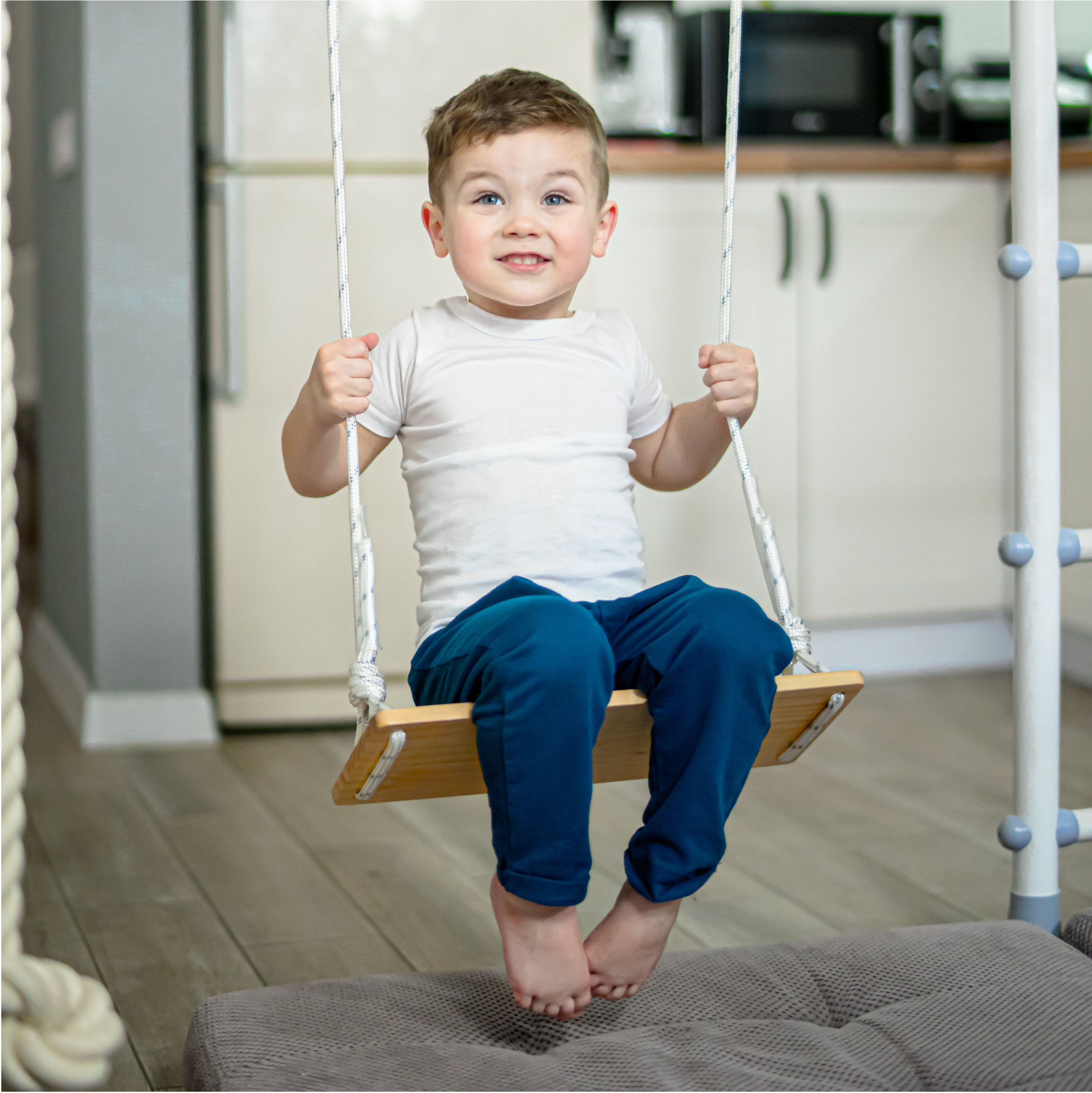
Classic Wooden Indoor Swing for Kids