

Published September 2026 · 10-minute read · by Yegor Nadvornyy, founder of Brainrich Kids
Close your eyes and touch your nose. You just used a sense that has no organ you can point to, never appears on the kindergarten five-senses poster, and quietly runs your child's entire physical life: proprioception. When an occupational therapist says your child "needs more proprioceptive input," this article is the translation, and the home manual.
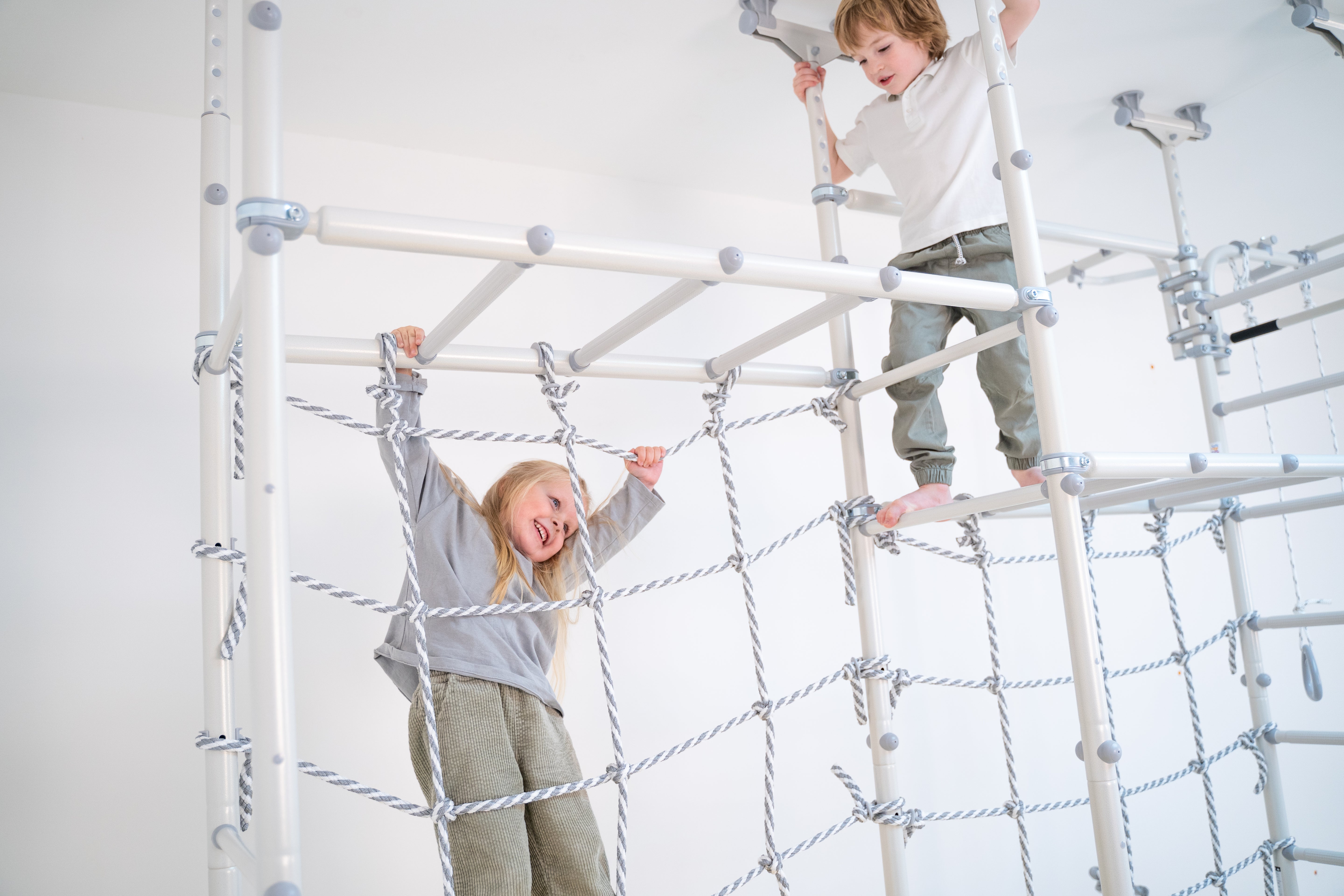
The quick answer: proprioception is the body-position sense: receptors in muscles, joints, and tendons continuously tell the brain where every limb is and how much force it's using. Proprioceptive input is anything that works muscles and joints against resistance: pushing, pulling, hanging, climbing, carrying, jumping, chewing, deep pressure. OTs prize it because it's the great regulator: it calms an overloaded nervous system and organizes an under-alert one, with almost no risk of overdoing it. Kids who crash into couches, hug too hard, break crayons, and lean on everything are asking for it. The richest home delivery systems: hanging from bars or rings, climbing, and daily heavy work.
Jump to: What it is · Signs a child needs more · Why it calms · Proprioceptive vs vestibular · Activities by age · The autism note · FAQ
What proprioception actually is
Buried in every muscle, tendon, and joint capsule are mechanoreceptors that fire as tissue stretches and loads. The brain fuses those millions of signals into a live, continuous map of the body: where each part is, how it's moving, and how much force it's producing. That map is why you can climb stairs while reading a phone, why a child can catch a ball without watching their own hands, and why handwriting doesn't require staring at your knuckles.
When the map runs blurry, life gets harder in ways that look like personality: the child presses too hard or too soft (broken crayons, torn paper, bruising hugs), trips over nothing, sprawls across the desk, judges every doorframe wrong. And when the brain under-registers this input, it does the logical thing: it orders more. The crashing, squeezing, stomping child is running a supply operation for their own body map. Occupational therapists have organized treatment around this insight since Dr. A. Jean Ayres founded sensory integration in the 1960s.
Signs a child is seeking proprioceptive input
- Crashes into furniture, walls, floors, and people, on purpose, smiling
- Hugs and grips too hard; pets the dog like kneading dough
- Chews shirt collars, sleeves, pencils; loves crunchy food
- Stomps instead of walks; slams instead of closes
- Loves being squeezed, rolled in blankets, or buried under cushions
- Constantly leans, drapes, and props against people and furniture
- Breaks crayons and toys from force misjudgment, not anger
- Seeks tight spaces: under beds, behind couches, inside forts
- Is visibly calmer after hard physical effort: swimming, climbing, wrestling
The signature: after intense muscle work, this child settles. That response is diagnostic gold, and it's also the treatment.
Why proprioceptive input calms (when other input revs)
Here's the property that makes OTs reach for it first. Most sensory input is a two-way dial: sound, light, and motion can soothe or overload depending on dose. Proprioceptive input is the exception: deep muscle-and-joint work reliably organizes the nervous system in both directions, settling an anxious, overloaded child and grounding a scattered, under-alert one, with very little risk of tipping into overstimulation. It's the reason weighted blankets exist, the reason therapists prescribe wall push-ups before circle time, and the reason a kid who just fought through twenty minutes of climbing walks away regulated rather than wired. This is also the input behind heavy work, the OT-prescribed activity category, and half the story of movement stims like crashing and hard hugging, covered in our stimming guide.
Proprioceptive vs vestibular: the pair, side by side
| Proprioception | Vestibular | |
|---|---|---|
| Answers | "Where is my body and how hard is it working?" | "Which way is up and how am I moving through space?" |
| Lives in | Muscles, joints, tendons | Inner ear |
| Fed by | Pushing, pulling, hanging, climbing, carrying, chewing, deep pressure | Swinging, spinning, rolling, hanging upside down, jumping |
| Effect profile | Organizing in both directions; very hard to overdose | Powerful both ways; can overstimulate, dose with care |
| Deep dive | You're reading it | Vestibular input explained |
The two are a system, and the best children's activities feed both at once. Climbing is the textbook example: every reach and pull loads muscles and joints (proprioceptive) while height changes and body tilts fire the inner ear (vestibular). Swinging a child powers by pumping their own legs, monkey-bar traverses, and hanging upside down all double-dip the same way.
Proprioceptive activities by age
| Age | Free, today | Equipment that automates it |
|---|---|---|
| 3-4 | Animal walks, cushion mountains, carrying groceries, wheelbarrow walks, play dough | Low rungs and first hangs on a play gym (independent climbing at 3+), crash mat underneath |
| 5-7 | Tug of war, wall push-ups before homework, raking, hauling the laundry basket | Rope climbs, rings, trapeze, monkey-bar traverses: grip-and-shoulder heavy work at its densest |
| 8-12 | Swimming, biking uphill, yard work with real tools, kneading bread dough | Pull-up bar progressions, climbing rope challenges; an adult-rated frame (220 lb working load) keeps pace with athlete-sized kids |
The full 40-item list, organized by setting and situation, is in our heavy work activities guide. For structuring input across a whole day, see the sensory diet guide.
The autism and ADHD note
Proprioceptive differences are extremely common in autistic and ADHD kids, in both directions: seeking (the crasher) and under-registering (the child who seems floppy, clumsy, or unaware of their body in space). Both profiles benefit from the same prescription of regular, intense muscle-and-joint input, which is why proprioceptive activities anchor most autism sensory diets and why deep pressure shows up in nearly every OT plan. For seekers specifically, our sensory seeker guide is the companion read; for equipment funding, sensory equipment for a diagnosed child may be HSA/FSA eligible with a Letter of Medical Necessity.
The proprioception machine in the corner
Hanging, climbing, pulling, swinging: a steel floor-to-ceiling gym turns the OT homework into the thing your kid does anyway. No drilling, 30-day money-back guarantee.
Frequently asked questions
What is proprioceptive input? Any activity that works muscles and joints against resistance, sending position-and-force signals to the brain: pushing, pulling, hanging, climbing, carrying heavy things, jumping, chewing, and deep pressure like tight hugs or weighted blankets. Occupational therapists prescribe it because it reliably organizes the nervous system, calming overloaded kids and grounding under-alert ones.
What are examples of proprioceptive activities? Free ones: wheelbarrow walks, animal walks, wall push-ups, tug of war, carrying groceries, couch-cushion crashing, kneading dough. Equipment-based ones: hanging from a bar or rings, rope climbing, monkey-bar traverses, and climbing a play gym, which deliver the densest input because the child moves their whole body weight against gravity.
What does proprioceptive seeking look like? Crashing into furniture on purpose, overly hard hugs, chewing on clothes, stomping, leaning on everything, loving tight spaces and being squeezed, and settling noticeably after hard physical effort. It reads as "rough" or "wild" but it's a nervous system ordering the input it needs.
Is proprioception the same as vestibular? No, they're partners. Proprioception lives in muscles and joints and answers "where is my body and how hard is it working." The vestibular sense lives in the inner ear and answers "which way is up and how am I moving." Climbing, hanging, and active swinging feed both at once, which is why they're such efficient regulation activities.
Can you give a child too much proprioceptive input? It's the hardest sensory channel to overdose: deep muscle-and-joint work tends to organize rather than overstimulate, in both directions. Follow the child's lead, keep effort age-appropriate, and let rest happen. The caution belongs to vestibular input (spinning especially), which is powerful enough to need deliberate dosing.
📚 Keep reading in the Decision Guide
Vestibular Input: The Partner Sense · Heavy Work Activities for Kids · Sensory Diet 101 · Kids Jumping on the Couch? What Helps
Sources
Ayres, A.J. (1972). Sensory Integration and Learning Disorders. Western Psychological Services. · Kranowitz, C. (2005). The Out-of-Sync Child. Perigee. · STAR Institute for Sensory Processing. sensoryhealth.org. · Hanscom, A. (2016). Balanced and Barefoot. New Harbinger. · Brainrich Kids engineering specification: frame working load 220 lb, safety-tested to 440 lb.
Share: