

Published September 2026 · 10-minute read · by Yegor Nadvornyy, founder of Brainrich Kids
Every jungle gym is a bet on a material. Plastic bets on price and speed. Wood bets on looks. Metal bets on load, and on still being tight at the joints nine years in. We build in steel, so this is not a neutral article and we are not going to pretend it is; what we can do is show the physics, the failure modes, and the honest cases where each material wins, so the choice is yours with the numbers in front of you.
The quick answer: for an indoor jungle gym used from age 3 to 12, metal (powder-coated steel) is the material that lasts: highest load per pound of frame, joints that do not loosen under years of dynamic swinging, a wipe-clean finish, and the smallest footprint for the strength. Wood wins on warmth and looks and is a fine choice when the frame will be lightly used and never left outdoors uncovered; its joinery is the lifespan variable. Plastic wins the toddler years (ages 1 to 3) on price and softness and loses everything after, because its load ratings and height stop where a preschooler starts. Outdoors, treated wood or galvanized steel; an indoor steel frame is not built to live in the rain.
Jump to: The comparison table · Why metal wins indoors · Where wood wins · Where plastic wins · Indoors vs outdoors · The 5-point check · FAQ
Metal, wood, and plastic jungle gyms, side by side
| Metal (steel) | Wood | Plastic | |
|---|---|---|---|
| Typical load | Adult-rated; ours 220 lb working, tested to 440 | Wide range, 100-250 lb; depends on joinery and species | 50-100 lb, often unpublished |
| Age span | 3 to 12+, then adults on the pull-up bar | 2 to 8 typically | 1 to 4 |
| Joints over time | Bolted steel connectors stay tight; no seasonal movement | Wood moves with humidity; screws in end-grain loosen under swinging loads | Snap-fit; wears at the clips |
| Footprint for the strength | Smallest: thin tube, floor-to-ceiling bracing, a corner | Larger members for the same load; freestanding units need a wide base | Large footprint, low height |
| Upkeep | Wipe down; check bolts twice a year | Sand splinters, re-tighten, re-oil or seal | Wipe; replace when brittle or cracked |
| Grip | Rubber-coated rungs (ours) for small hands | Bare dowels; good grip when dry, slick with sweat | Molded texture; fine for toddlers |
| Outdoors | Only galvanized outdoor-rated frames; indoor steel stays indoors | Treated lumber, yes; untreated indoor wood, no | Yes, but UV makes it brittle in a few seasons |
| Resale | Strong; steel frames change hands for years | Moderate; condition-dependent | Low |
Why a metal jungle gym wins indoors
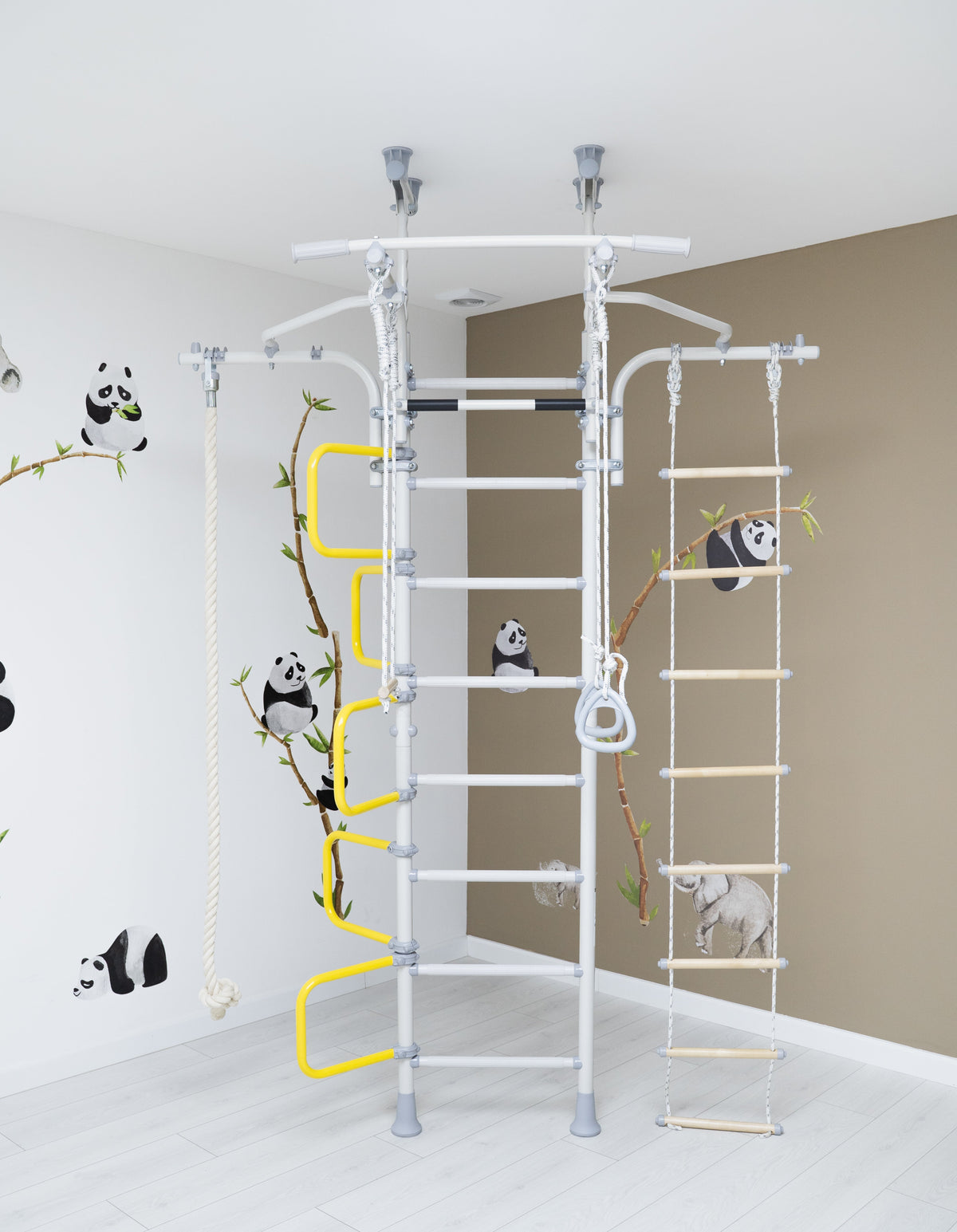
The case for steel is a case about dynamic load. A static load is a child standing on a rung. A dynamic load is that child swinging from monkey bars, dropping from the top, or two siblings racing across a span at once, and dynamic loads are what loosen joints. Steel tube with bolted connectors handles that for a decade without the seasonal expansion and contraction that works screws loose in wood. It is why our frames carry a 220 lb working rating and are safety-tested to 440: the number is not there for a 40 lb four-year-old, it is there for the 12-year-old plus a friend plus momentum that the same frame will meet later.
The second argument is strength per square foot. Steel tube is thin for what it holds, so a floor-to-ceiling frame braced with telescopic poles takes a corner instead of a room, and a wall-mounted model like the W3 stands just 9 inches off the wall. The same load in wood needs thicker members and a wider base. Indoors, where floor is the scarce resource, that is the whole game.
The details that make steel livable are the ones parents notice at week three: powder-coated frames that wipe clean and do not splinter, rubber-coated rungs that small hands actually grip, non-toxic paint, and plastic parts free of phthalates and other substances prohibited by child safety standards. Our designs descend from the Swedish-ladder tradition of gymnastics wall bars, refined over nine years and 12,500 families; the whole lineage is in our Swedish ladder collection and the steel vs wood deep dive.
Where wood wins
Wood is beautiful, and a well-joined wooden frame in a living room is furniture in a way steel is not. Wood is the right choice when the gym will be used gently (a triangle for a toddler, a low climber for a preschooler), when the look matters more than the load, and when the owner is willing to do the maintenance: re-tightening, sanding, and sealing. The lifespan variable is entirely the joinery; a frame joined with through-bolts and cross-dowels outlives one held together with screws into end grain by years. Ask any wooden-gym maker one question: what is the rated load, and how is the joint that carries it built?
Where plastic wins
The toddler years, cleanly. From about 1 to 3, a molded plastic climber is soft-edged, light enough to move for vacuuming, cheap enough to hand down, and exactly as tall as it should be. What plastic cannot do is grow: the height stops where a preschooler starts, the load ratings are low and often unpublished, and sun makes it brittle. Buy it for the season it is made for and plan the graduation; our guide to climbing toys by age maps the hand-off.
Indoors vs outdoors: the question that decides the material
An indoor steel jungle gym is not an outdoor product. Powder coat resists scuffs and wipes, not months of rain; outdoor metal frames are galvanized and built with drainage, and they are a different category. Outdoors, treated lumber and galvanized steel are the materials that last, and plastic loses to UV. Indoors, the ranking flips: steel first for load and footprint, wood second for looks with upkeep, plastic for the toddler years only. If the plan is a backyard set now and an indoor frame for winter, that is two purchases with two right answers, not one compromise.
The 5-point check for any jungle gym, any material
- A published load rating. Working load and, ideally, a tested load. No number means a low number.
- How the joint is made. Bolted steel connectors, through-bolted wood, or snap-fit plastic tell you the lifespan before the price does.
- The fastening to the room. Floor-to-ceiling tension bracing or wall mounting holds a frame still; a freestanding unit relies on its base width and tips when kids swing.
- Materials you can read. Non-toxic coatings, phthalate-free plastics, rung surfaces small hands can grip.
- A growth path. Can you add monkey bars, a net, or a second swing point later? The only jungle gym that is not a season is one you add to.


Steel, because the joints have to hold at twelve
Powder-coated steel frames, rubber-coated rungs, 220 lb working load tested to 440. No drilling, 30-day money-back guarantee.
Frequently asked questions
Is a metal jungle gym better than wood? For an indoor frame used hard from age 3 to 12, yes: steel handles dynamic loads (swinging, dropping, two kids at once) without the joint loosening that humidity and end-grain screws cause in wood, and it delivers more strength per square foot of floor. Wood wins on looks and is a fine choice for gentle use with regular maintenance.
Are metal jungle gyms safe for kids? A steel frame with a published load rating, bolted connectors, rubber-coated rungs, non-toxic coatings, and a mat underneath is among the safest climbing equipment a home can have, because it does not sway or tip. Brainrich frames are rated for independent climbing at age 3 and up, with a parent in the room, at a 220 lb working load tested to 440.
Can an indoor metal jungle gym go outside? No. Powder coat resists scuffs and wipes, not months of rain. Outdoor metal frames are galvanized and drained; they are a separate product category. Indoor steel stays indoors.
What is the best material for a toddler climbing toy? Plastic or dense foam, for ages 1 to 3: soft edges, low height, light weight. Its load and height stop where a preschooler starts, so plan the graduation to a rated frame at age 3.
How long does a steel play gym last? A decade of daily use is the design target: the same frame from preschool climbing to teenage pull-ups. Owners routinely resell frames after years of use, which is the practical measure of a material that holds.
📚 Keep reading in the Decision Guide
Steel vs Wood Climbing Gyms · Indoor Playset vs Indoor Play Gym · DIY vs Buying an Indoor Play Gym · What Is a Jungle Gym?
New: comparing a geodesic climber to a vertical gym? Read Climbing Dome for Kids vs Indoor Climbing Gym, with sizes, weight ratings and the age-out curve.
The big picture: Jungle Gym Guide covers every type, sizes by age and room, safety standards, and what each kind costs.
Sources
ASTM International. ASTM F1148, Standard Consumer Safety Performance Specification for Home Playground Equipment. · CDC. Physical Activity Guidelines for Children and Adolescents. · Brainrich Kids engineering specification: frame working load 220 lb, safety-tested to 440 lb.
Share: