

Updated August 2026 · 12-minute read · by the Brainrich Kids team
This is an article by a play gym company about buying somebody else's play equipment. We write it anyway, because families ask us the same question every week: "what else should I be looking at?" The useful answer depends on your child's age, your space, and what you want the equipment to do, not on our logo. There are use cases we deliberately do not serve, and pretending otherwise would waste your afternoon. So here is the map: five buyer situations, real named alternatives with verified prices and weight ratings, and a plain statement of where each option, including ours, actually wins.
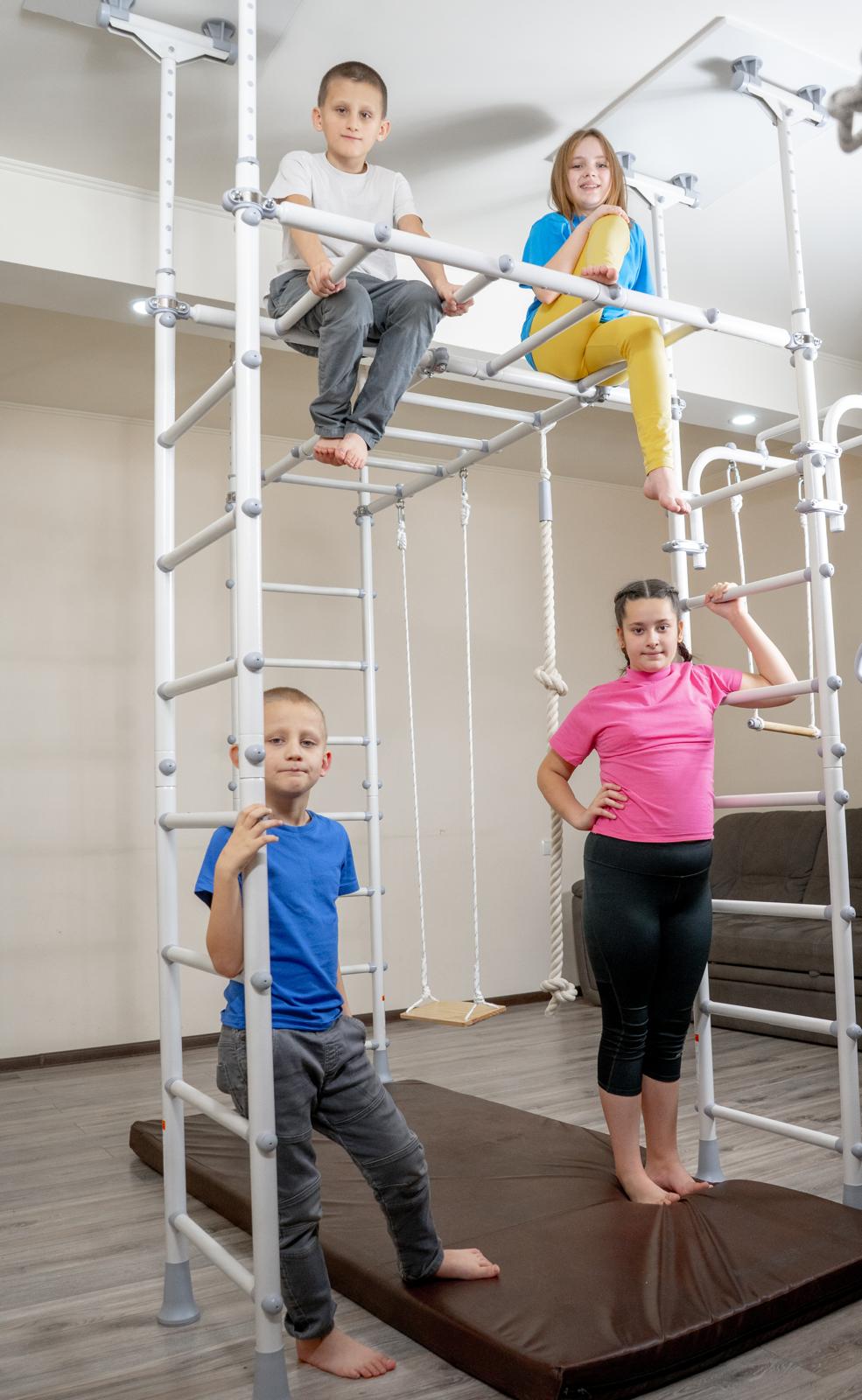
The quick answer: Brainrich builds steel indoor play gyms for children ages 3 and up, rated to 220 lb and tested to 440 lb, with adjustable challenges that grow with the child. That makes us the strongest pick for daily climbers, multi-age families, and sensory or OT use. It also makes us the wrong pick for three real situations: a child under 3 (buy a Pikler triangle), a family that wants a slide (buy a wooden playset that has one), and soft-foam play for babies and young toddlers (buy a play couch). Below, we name specific products in each category and tell you who each is right for.
Jump to: Under 3: Pikler triangles · You want a slide · Soft-foam play · The wooden aesthetic · When Brainrich is right · Comparison table · FAQ
"My child is under 3 and I want a wooden climber under $400"
Buy a Pikler triangle. Do not buy a Brainrich. Our gyms are designed for independent climbing at ages 3 and up, and an 18-month-old needs equipment scaled to a body that is still learning to walk, kneel, and pull up. The Pikler category exists for exactly this window, and it is a genuinely good category with several well-made options:
Piccalio Climber Pikler Triangle Set, currently $349 on the brand's site, is recommended for 6 months to 6 years or up to 132 lb, built from FSC-certified birch plywood and New Zealand pine with a 0-VOC finish, and ships with a reversible rock wall and slide ramp. It folds for storage, which matters in an apartment.
Goodevas Montessori climbing sets run roughly $129 to $259 for their 4-in-1 through 6-in-1 configurations, cover ages 6 months to 7 years, and list a maximum dynamic load of 60 kg (132 lb) per element. They are the value pick of the category and fold flat.
Lily & River Little Climber, sold through the brand plus Pottery Barn Kids and Dillard's, is a birch or bamboo hardwood triangle rated to 90 lb for ages 6 months to 5 years, with reversible rock wall, ladder, and slide accessories. It folds to about 7.5 inches deep.
Little Partners Learn 'N Climb Triangle is a solid hardwood triangle that locks open at multiple heights and is rated to hold up to 200 lb, unusually stout for the category.
Any of these is a better purchase for a 1-year-old than anything we make, and we mean that without a wink. The trade-off, stated in numbers, is the window: most Pikler triangles top out developmentally around age 4 to 5, when the child has extracted every challenge the geometry offers. When that day comes, we wrote a whole guide to the handoff: What Comes After the Pikler Triangle. Many of our owners ran exactly this sequence: triangle at 1, Brainrich at 3 or 4, and the triangle handed down to a younger sibling or a neighbor.
"We want a slide"
Brainrich does not make a slide, and here is the full story rather than the short version: we tried to design one. Built to the safety standard for home playground equipment, ASTM F1148, a slide needs proper side walls, a regulated exit region, and roughly six feet of clear landing space at the exit. Build all of that in, and the slide's footprint rivals the gym itself. Most of our customers do not have unlimited floor space, so a compliant slide would spend their square footage on a passive ride whose skill plateaus in weeks, while the same area holds nets, rings, and bars that keep teaching for years. The slide project sits shelved for now (we may revisit it; the current accessory roadmap prioritizes hammock and sensory swings), and meanwhile it remains true that kids love slides, some families have the room, and a parent who wants one should buy from a brand that builds one:
Avenlur Magnolia 7-in-1, listed at $549 at time of writing (list $639), is a wooden playset for ages 2 to 6 with a Swedish slide, monkey bars, rock wall, rope ladder, and swing, rated 110 lb per child and 220 lb total. It is one of the more complete wooden sets in the under-$600 bracket.
EZPlay Panda Playground, currently $399 (list $549), is a foldable European ash structure for 18 months to 4 years with a wooden slide, swing, ladder, climbing net, and rings, rated 50 lb per feature. Its older sibling, the EZPlay Koala Adventure at $699 (list $949), covers ages 4 to 10 with two height settings (57 and 73 inches), wall-mounts with four screws, and is rated 70 lb per activity, 120 lb total.
If the slide is the point, these are the category to shop. Two buying notes that apply to any slide, from any brand. First, check the per-feature weight numbers against your heaviest climber plus a few years of growth, because that is the line item where wooden sets and steel part ways, as the next two sections show. Second, run the ASTM F1148 checklist before you buy: real side walls, a proper exit region, and a clear six-foot landing zone at the bottom — the standard exists because slide exits are where injuries concentrate. And if you are one of the owners who attaches a third-party slide to a climbing frame (it happens in our community more often than you would guess), the same checklist applies, plus keep the slide's landing zone clear of the gym's own traffic.
"We want soft-foam play for a baby or young toddler"
Under age 2, the best "gym" is often not a gym at all. Foam play couches and blocks let a crawler and new walker climb, tumble, build, and fall without a hard edge anywhere, and the category leader is a reasonable default: the Nugget play couch, $249, four modular foam pieces with CertiPUR-US certified foam, GREENGUARD Gold certification, washable covers, and no added flame-retardant chemicals, recommended for ages 1 and up.
We would only add a framing note: a foam couch is not a competitor to a climbing gym, it is the stage before one, and later the landing zone under one. A large share of our owner families run both, with the foam pieces migrating under the gym as crash padding once the child graduates to vertical play. Buy the foam early without hesitation; just know it builds softness tolerance and imagination more than it builds grip, hang strength, or climbing judgment, which is the job the next category and ours compete over.
"We want the full wooden aesthetic"
Wooden indoor gyms photograph beautifully, match the playroom, and carry the Montessori association many parents are shopping for. We chose steel anyway, and since this article is about giving you the real trade, here it is in numbers rather than adjectives:
Weight rating. Across the wooden products we verified for this article, ratings run from 50 lb per feature (EZPlay Panda) through 70, 90, and 110 lb (EZPlay Koala per activity, Lily & River, Avenlur per child) up to 132 lb (Piccalio, Goodevas). A Brainrich frame is rated to 220 lb and tested to 440 lb. The difference is not academic: it is whether two kids can swing at once, whether a 10-year-old still fits the rating, and whether you can climb up to demonstrate a move yourself.
Age window. The wooden sets above list windows like 18 months to 4, 2 to 6, and 4 to 10. A steel frame rated for adult body weight has no developmental ceiling short of the actual ceiling: the same Brainrich gym serves a 3-year-old on low bars and a 12-year-old doing pull-ups, because the bars adjust and the rating never becomes the constraint.
Joints and lifespan. Wood is a living material: joints work loose with humidity cycles and daily load, finishes wear, and the fix is periodic re-tightening and eventually retirement. Powder-coated steel with rubber-coated rungs holds its geometry; the structure a child memorizes in month one is the identical structure in year five. Where wood wins, and it does win things: price of entry (most wooden sets cost less than our $899 starting point), portability (nearly every wooden set above folds; a pressure-fit steel frame does not), under-3 suitability, and, for many eyes, looks. We wrote the long version of this comparison, with the engineering detail, in Steel vs. Wood Climbing Gyms, and if you are tempted to build wooden yourself, read DIY vs. Buying an Indoor Play Gym first: the lumber math is less friendly than it looks.
When Brainrich is the right call
Having sent you elsewhere three times, here is the buyer we built for, stated with the same directness:
Your child is 3 or older and climbs daily. Daily use is where the 220 lb rating, the tested 440 lb margin, and joints that never loosen stop being spec-sheet trivia and start being the reason the gym still feels new in year four. Multiple kids, growth spurts, and visiting cousins are all inside the envelope.
You want one purchase for ages 3 to 13, not a ladder of replacements. Adjustable bar heights and swappable accessories mean the challenge is re-tuned in minutes as the child grows, on the same frame. Families who priced out a toddler set, then a mid-size set, then a "big kid" set often find the single steel purchase cheaper across the decade.
Sensory and OT use. Occupational therapists use hanging, swinging, and climbing for vestibular and proprioceptive input, and a frame rated for adult supervision loads, with rubber-coated rungs and a phthalate-free, non-toxic powder coat, is equipment they can lean on. This is also why Brainrich qualifies for the HSA/FSA route: with a Letter of Medical Necessity, eligible families effectively save up to about 30% by paying with pre-tax dollars.
The practical wrapper. Gyms fit ceilings from 6'9" to 10'6" across Short, Standard, and Tall sizes, with the wall-mounted W3 (from $850) covering rooms outside that range. Pricing runs from the Model T3 at $899 to the Mega Max V3 at $2,399. Everything ships in several flat boxes and assembles like a big Lego set, and the whole thing is covered by a 30-day money-back guarantee that still applies after assembly and use, which is the strongest claim we can make about our own confidence. If you want unfiltered owner accounts rather than our word, the reviews page aggregates them, and our owner community is 12,500 members strong.
Which gym fits your family? Take the 60-Second Quiz →
The fair comparison table
Prices and ratings below were verified on each brand's live site in August 2026; where a brand publishes a range, we give the range. Every category wins somewhere, which is the point of the table.
| Category | Typical price | Weight rating | Age window | Where it wins |
|---|---|---|---|---|
| Pikler triangles (Piccalio, Goodevas, Lily & River, Little Partners) | $129–$349+ | 90–200 lb | 6 mo–6 yr | First climber for babies and toddlers; folds away |
| Wooden playsets with slides (Avenlur, EZPlay) | $399–$699 | 50–110 lb per child | 18 mo–10 yr | The slide itself; variety per dollar; portability |
| Foam play couches (Nugget and similar) | $249+ | Not structural | 1 yr+ | Softest landing for the youngest; later doubles as crash padding |
| Brainrich steel gyms | $899–$2,399 | 220 lb rated, 440 lb tested | 3 yr–teen | Daily use, multiple kids, adjustability, OT/sensory work, HSA/FSA eligibility |


Still deciding? Decide with a safety net.
Every Brainrich gym ships in flat boxes, assembles in an afternoon, and carries a 30-day money-back guarantee, even assembled, even used.
Frequently asked questions
What is comparable to Brainrich? It depends on the job. For toddlers under 3, Pikler triangles from Piccalio ($349), Goodevas ($129 to $259), Lily & River, or Little Partners are the right comparison. For families who want a slide, wooden playsets from Avenlur ($399 to $549) or EZPlay ($399 to $699) fill the brief. In the steel, multi-age, daily-use category that Brainrich occupies, with a 220 lb rating tested to 440 lb, adjustable bars, and HSA/FSA eligibility, direct like-for-like alternatives are scarce, which is largely why the category-by-category comparison above is the more useful frame.
Is Brainrich worth it vs cheaper Amazon gyms? Not for every family. If your child is under 5, climbs occasionally, and you may move house soon, a $300 to $600 wooden set is a rational buy and several good ones are named above. The Brainrich case is built on daily use across many years: a 220 lb rating that never ages out, bars that re-adjust as the child grows, joints that do not loosen, an up-to-about-30% saving via HSA/FSA with a Letter of Medical Necessity, and a 30-day guarantee that applies even after assembly and use. Priced per year of service across ages 3 to 13, the math usually favors the single durable purchase; priced for two years of toddler use, it does not.
Brainrich vs Pikler triangle: which should I buy? Both, sequentially, is the pattern we see most. A Pikler triangle is the right first climber from around 6 months, and the good ones (Piccalio, Goodevas, Lily & River) are listed above with verified specs. Around ages 3 to 5 the triangle's fixed geometry runs out of new challenges, and that is the age Brainrich is designed for: independent climbing from age 3 with challenges that keep rising to the teen years. Our guide, What Comes After the Pikler Triangle, walks the handoff in detail.
Does Brainrich have a slide? No, though not for lack of trying: we prototyped one, and building it to the home playground safety standard (ASTM F1148: side walls, a regulated exit region, about six feet of clear landing space at the exit) demands more floor area than most of our customers can give it. The design may return in the future; for now the accessory roadmap prioritizes hammock and sensory swings. Families who want a slide should buy from a brand that builds one, Avenlur and EZPlay both make wooden playsets with slides at $399 to $699 (verified above), and check any slide against the ASTM F1148 basics before buying.
Can a parent use a Brainrich gym? The frame is rated to 220 lb and tested to 440 lb, so an adult demonstrating a hang or spotting a climb is well inside the envelope. Most wooden alternatives rate between 50 and 132 lb, which is the single largest structural difference between the categories.
What ceiling height do I need? Brainrich pressure-fit gyms fit ceilings from 6'9" to 10'6" across Short, Standard, and Tall sizes, and the same Short and Standard sizing carries across V2 and V3. Rooms outside that range, sloped ceilings included, are served by the wall-mounted W3, from $850.
📚 Keep reading in the Decision Guide
Steel vs. Wood Climbing Gyms for Kids · The Brainrich Play Gym Review, Written by the People Who Make It
Fact-by-fact comparisons: Brainrich vs. Avenlur · Brainrich vs. DreamGym
New: wondering what fits a 1-to-5-year-old? See Best Indoor Play Gym for Kids Under 5.
Sources
Competitor prices, age ranges, and weight ratings verified August 2026 from each brand's live product pages: Piccalio Climber Pikler Triangle Set · Goodevas Montessori climbing sets · Lily & River Little Climber at Pottery Barn Kids · Little Partners Learn 'N Climb Triangle · Avenlur Magnolia playset · EZPlay Panda Playground · EZPlay Koala Adventure · Nugget play couch. Prices are sale prices where a sale was running at verification time and may change; check each brand's site for current figures. Slide safety requirements referenced from ASTM F1148, the Standard Consumer Safety Performance Specification for Home Playground Equipment, and the CPSC Outdoor Home Playground Safety Handbook.
Share: