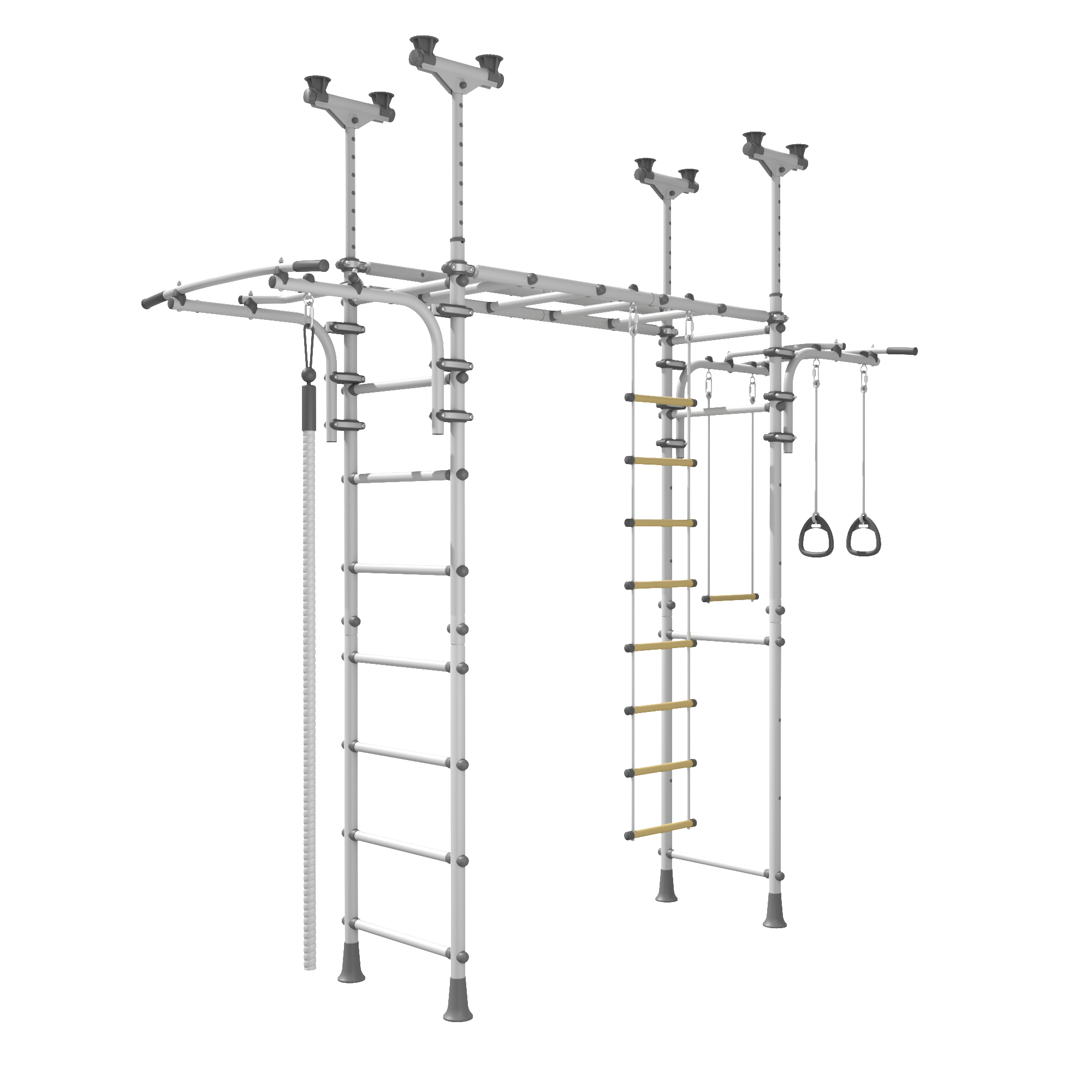
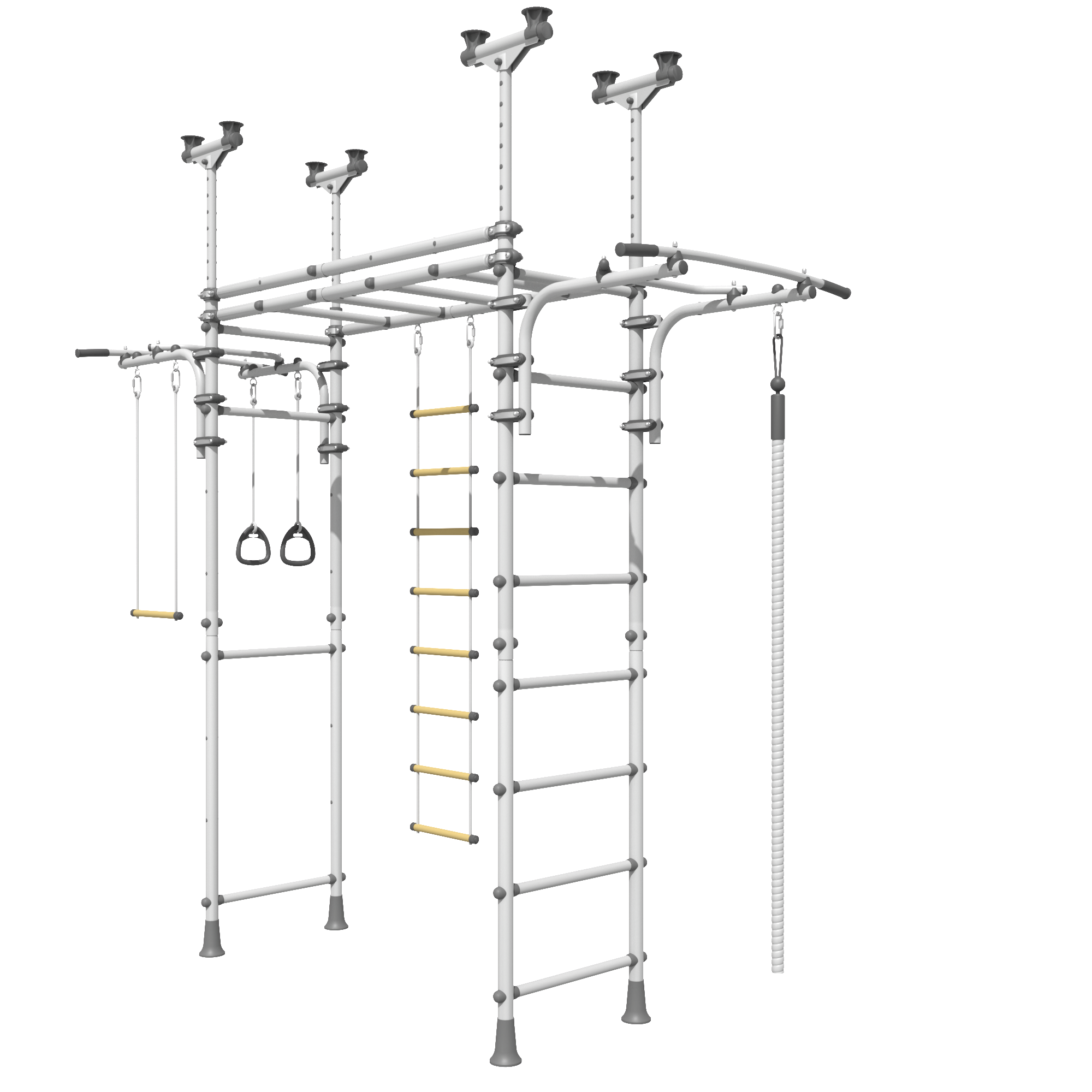
Montessori is not a look—it is the conviction that children build themselves through purposeful activity. Movement is part of the curriculum, not a break from it.
Quick answer: a play gym fits a Montessori home when it is freely accessible (in the child's everyday space, not a special outing), open-ended (no buttons, no script—the child invents the work), made of real materials (steel and rope rather than cartoon plastic), and repeatable, because mastery comes from doing the same hard thing many times.
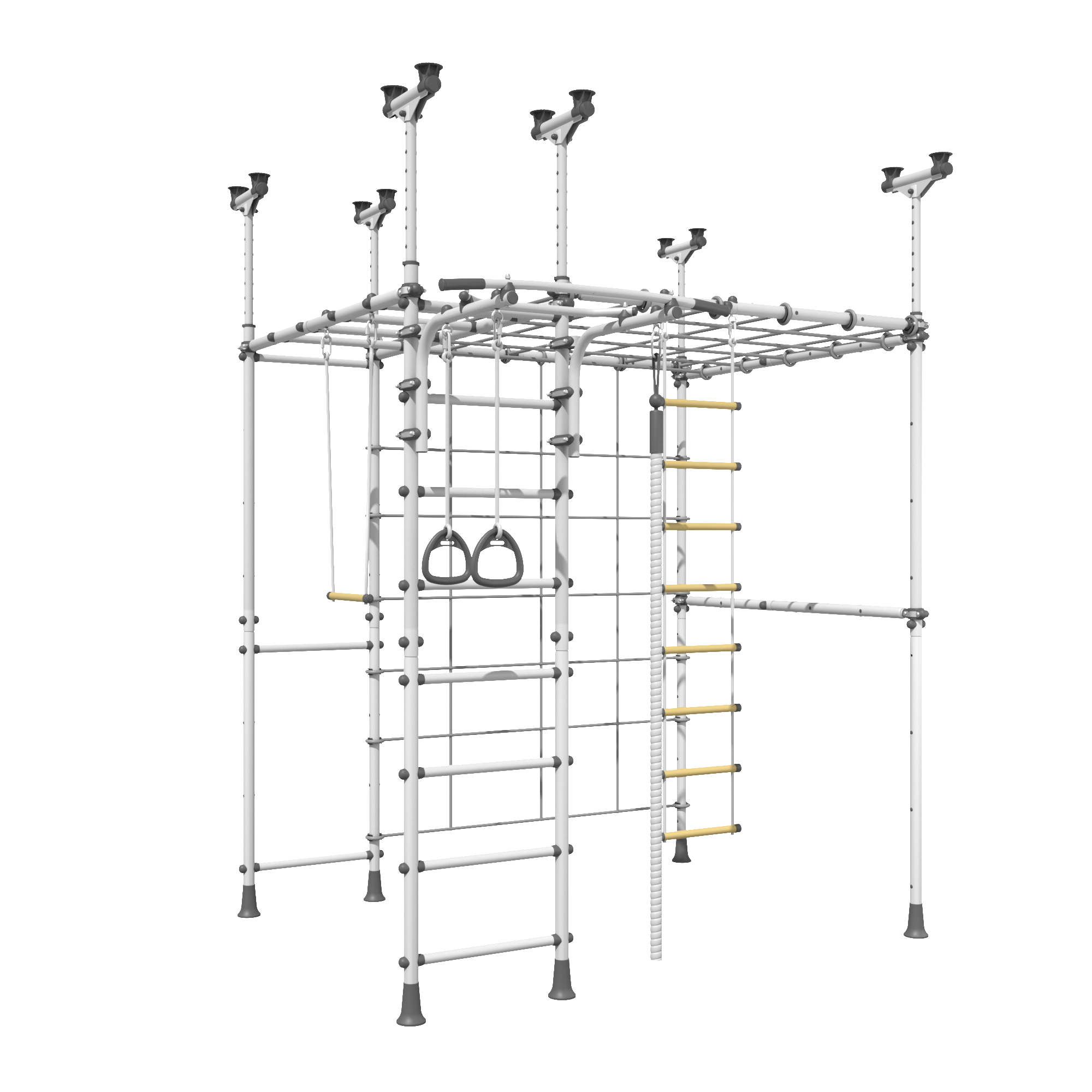
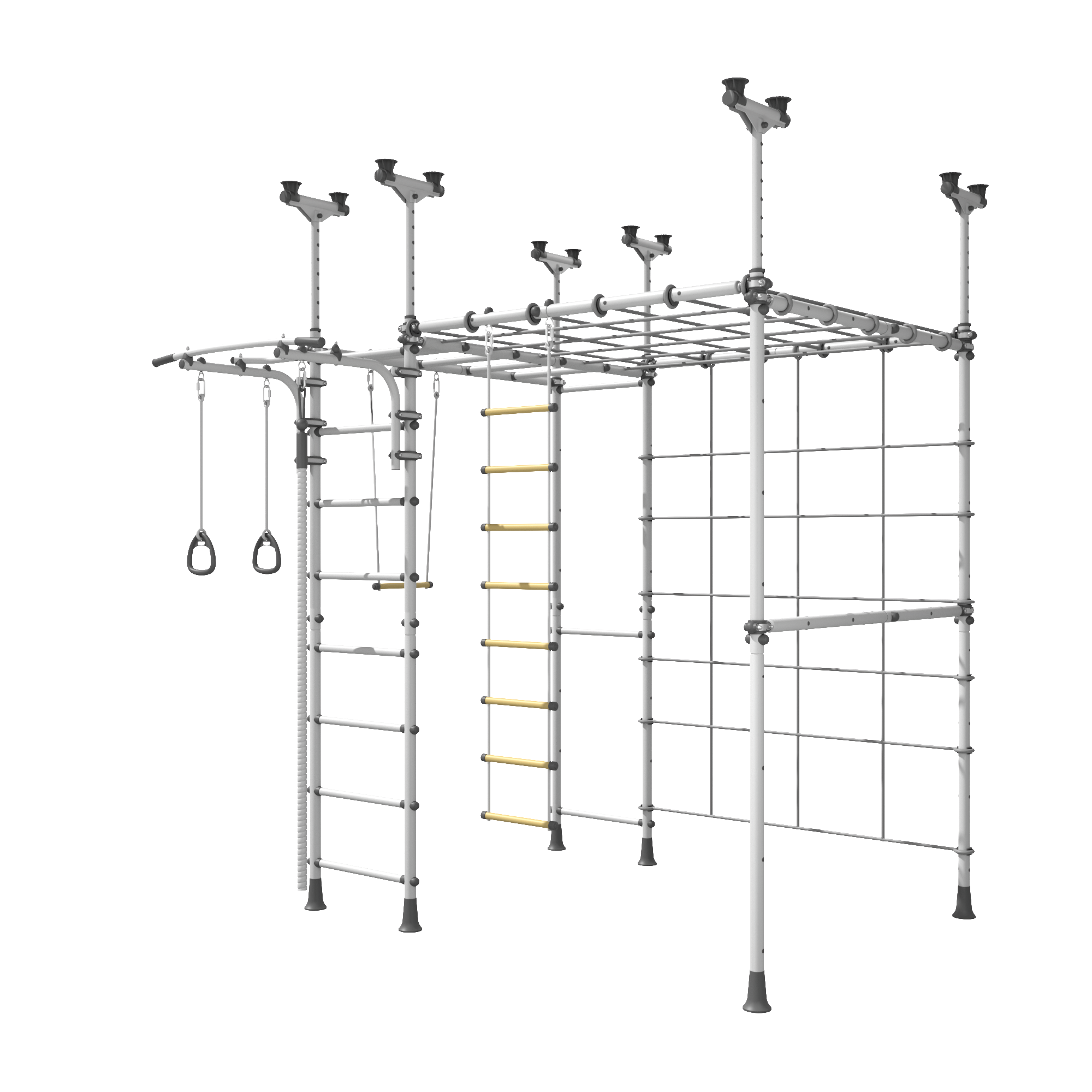
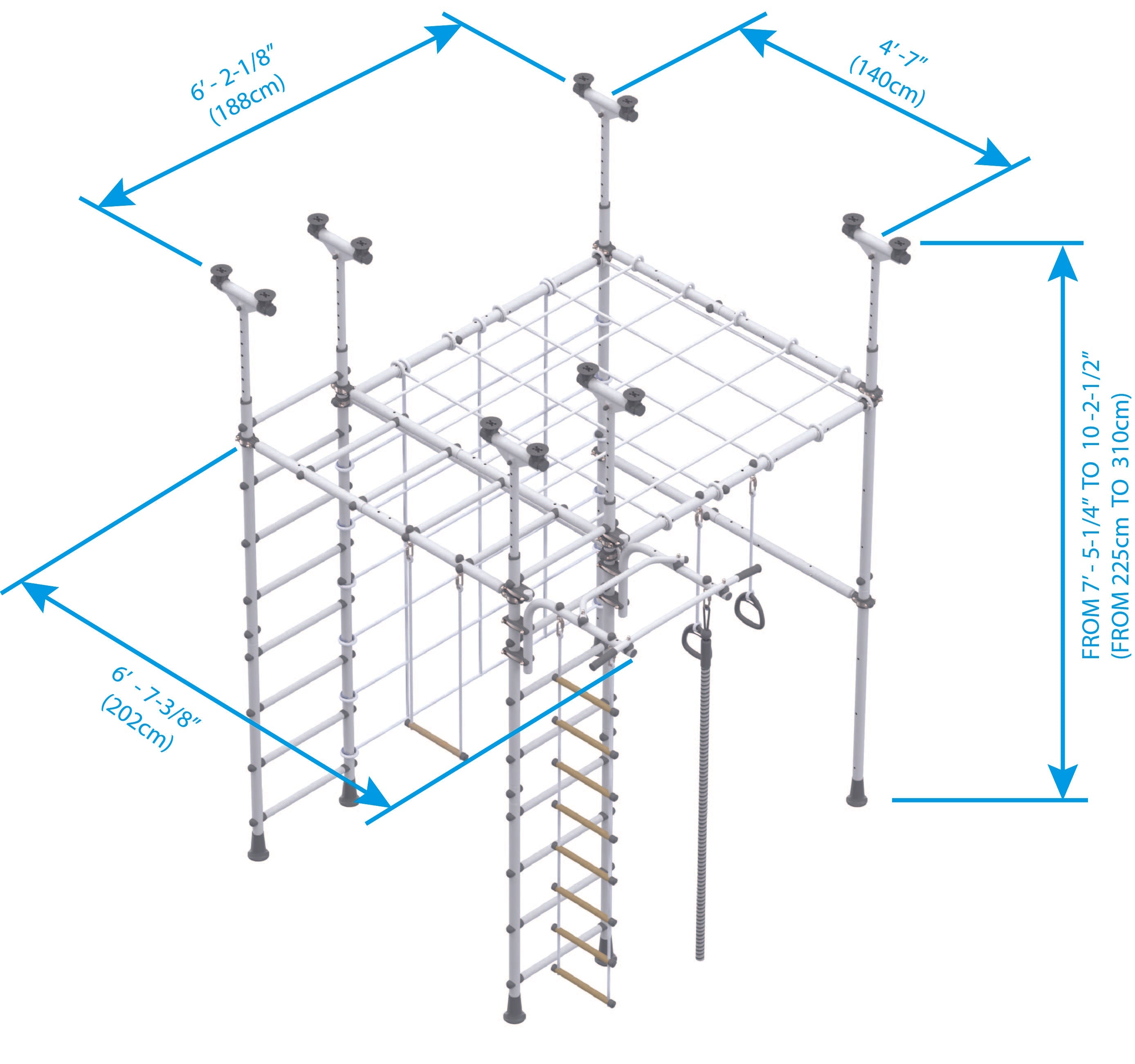
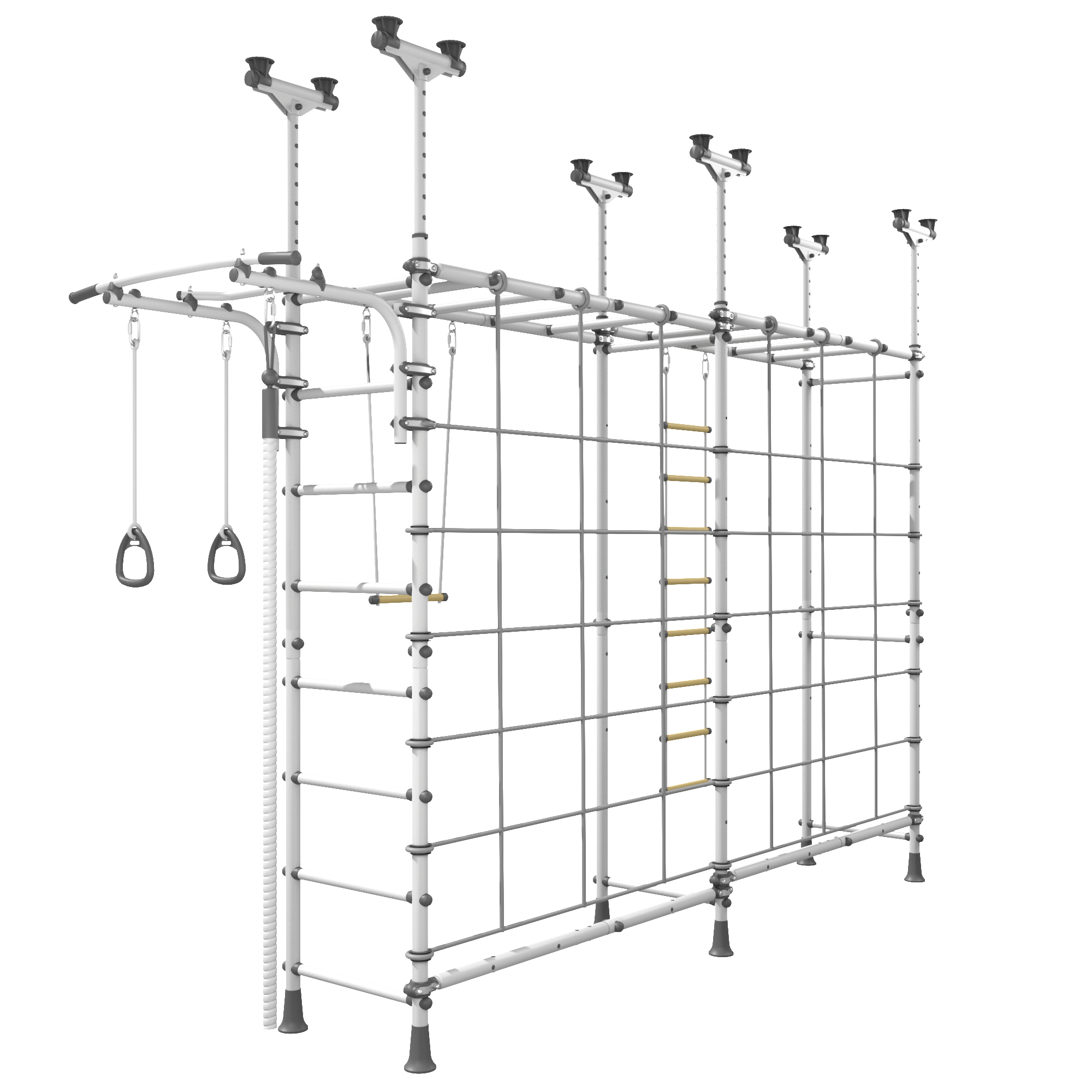
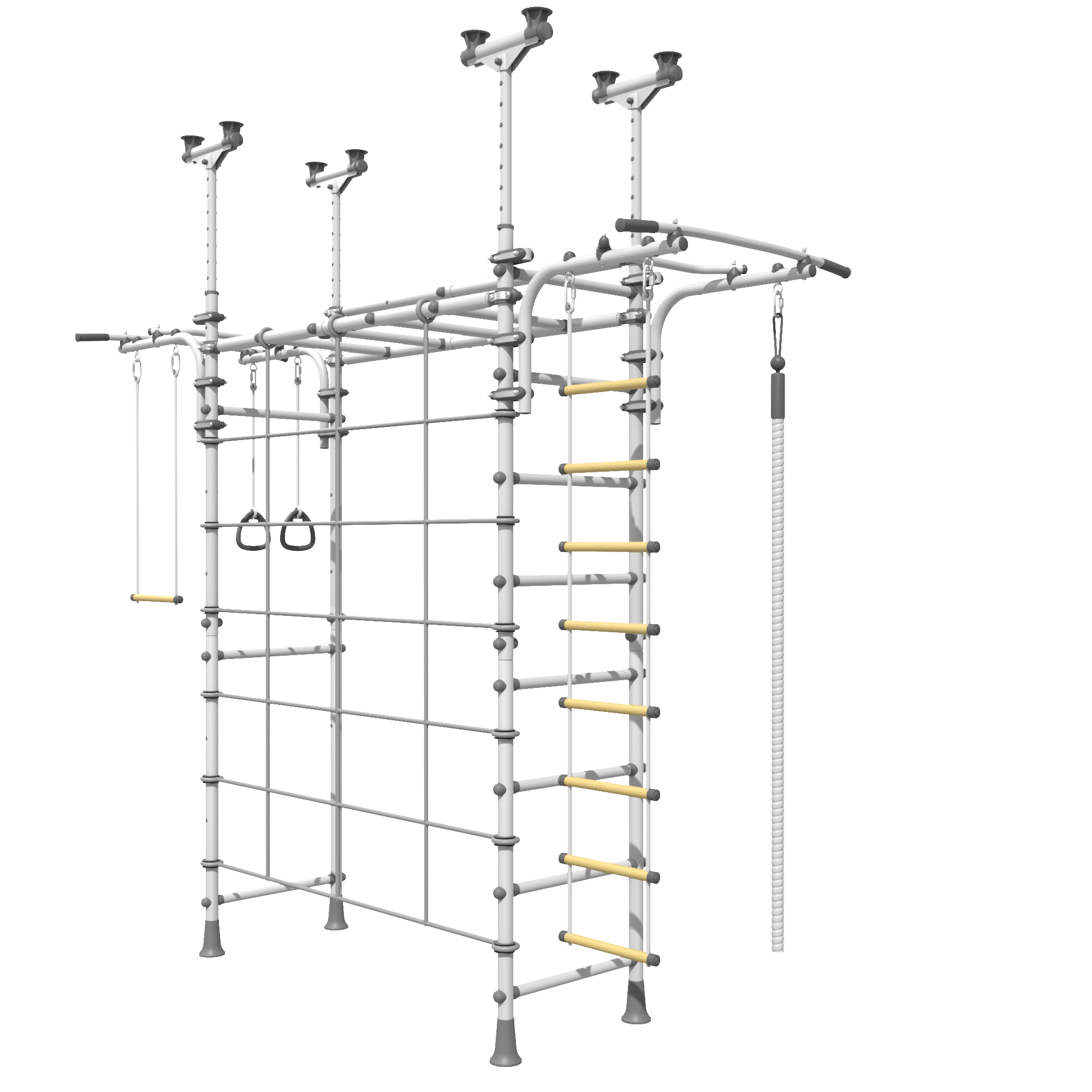
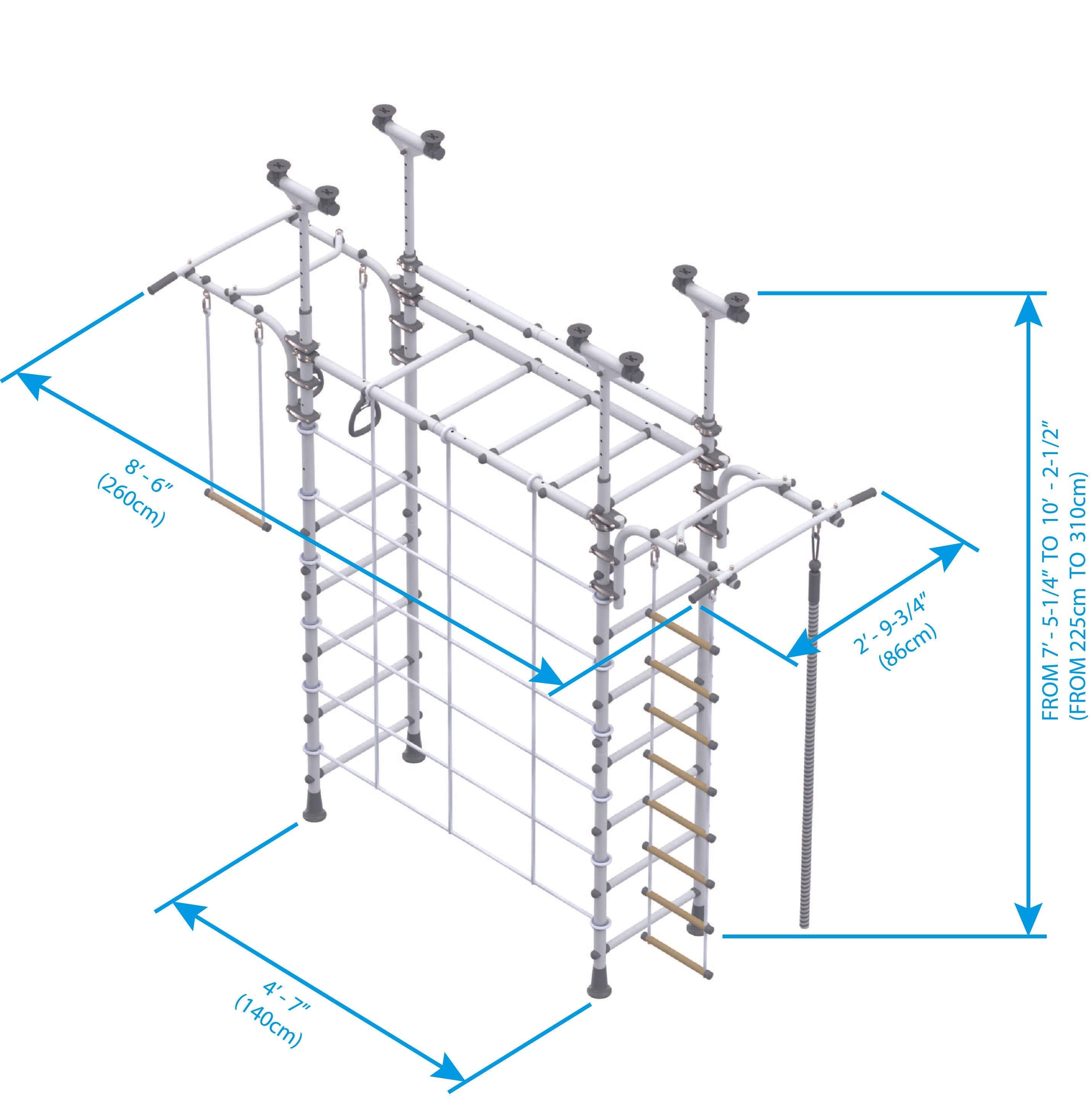
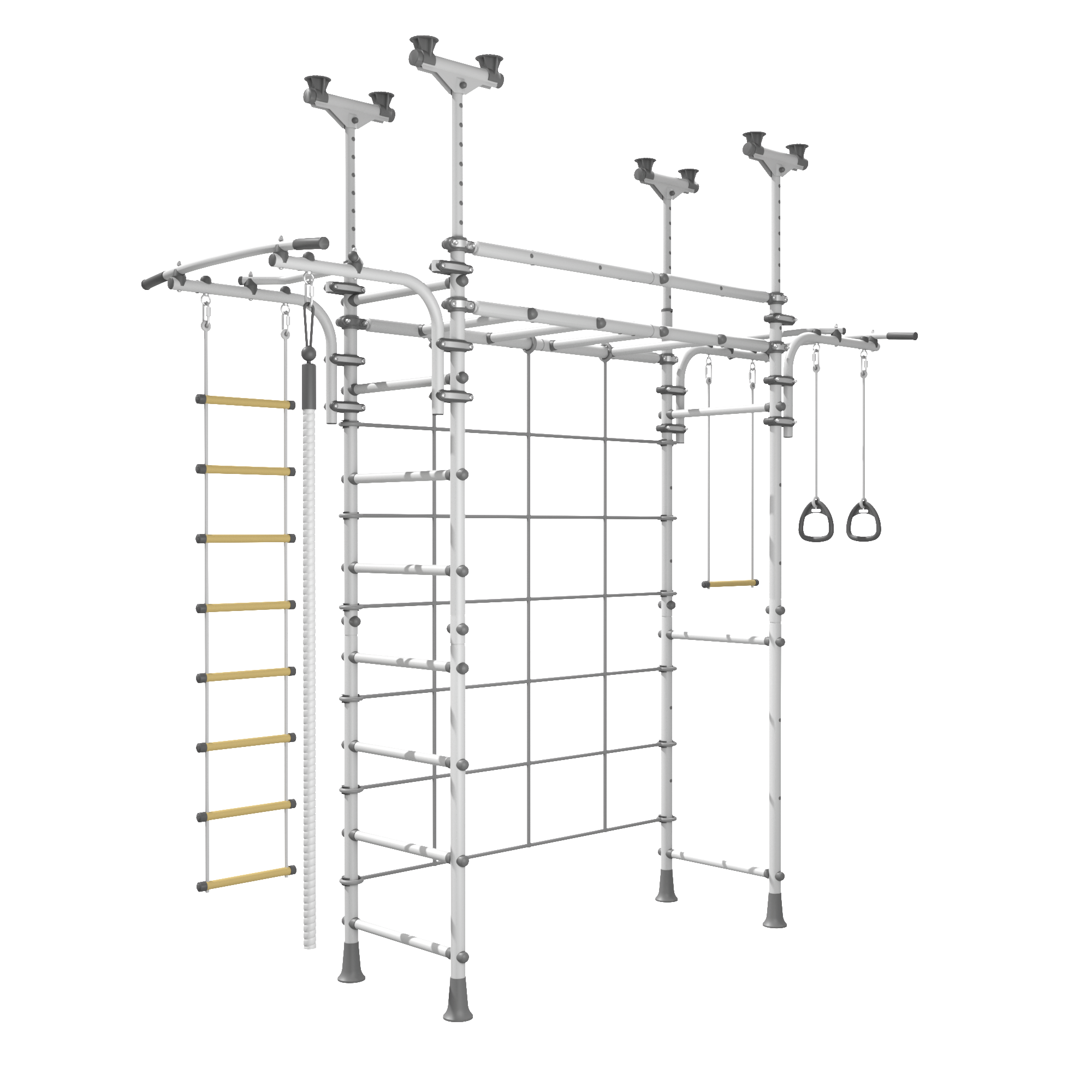
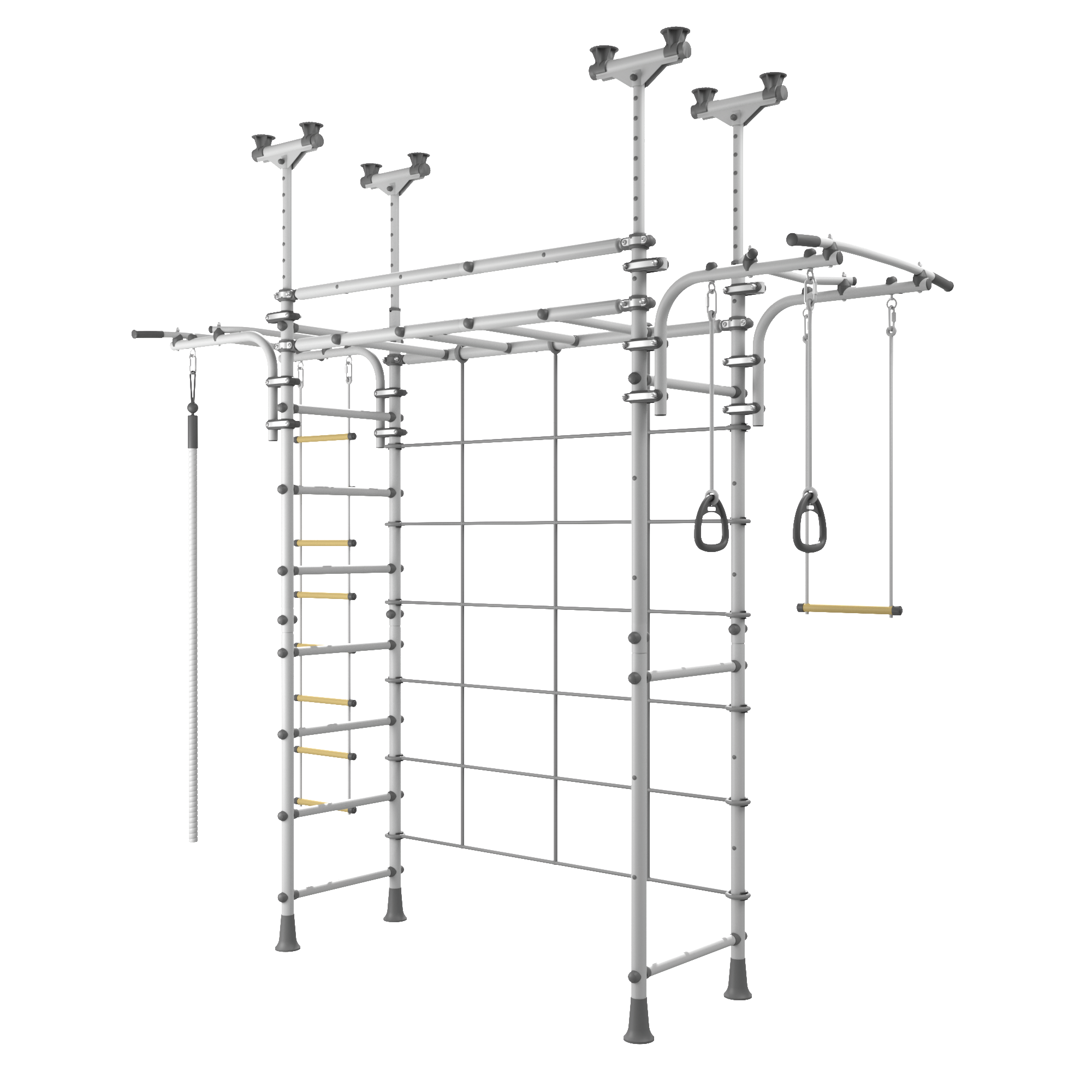
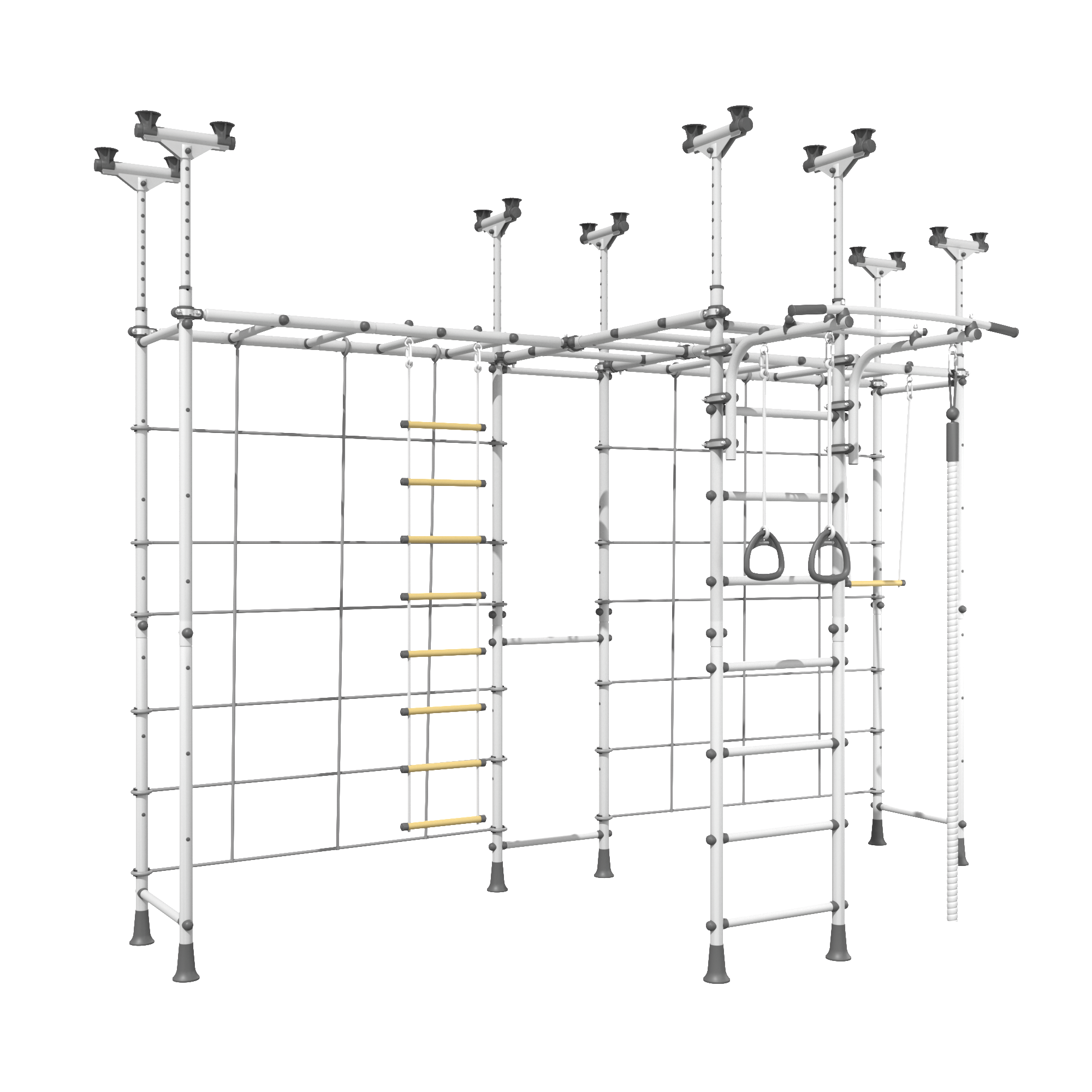
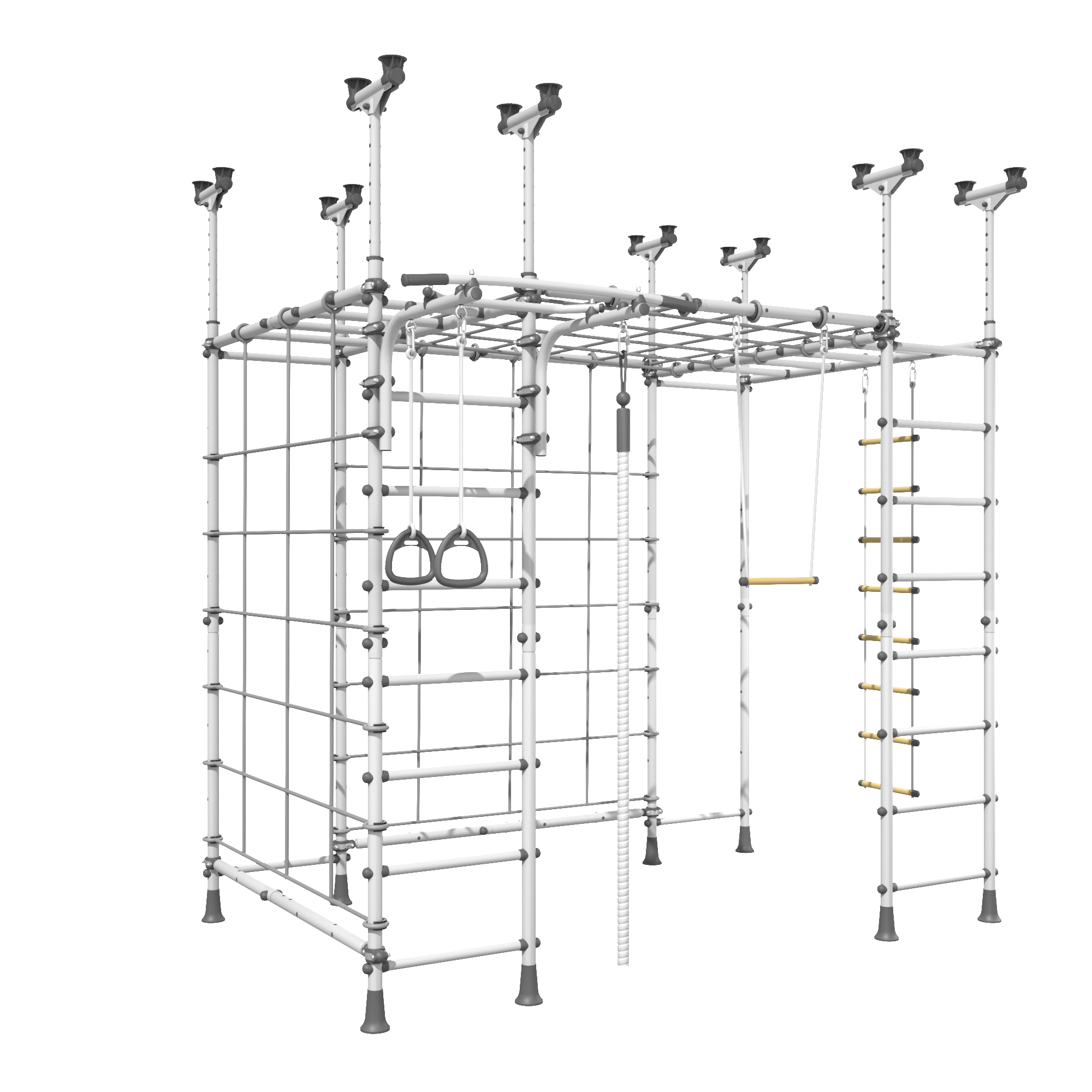
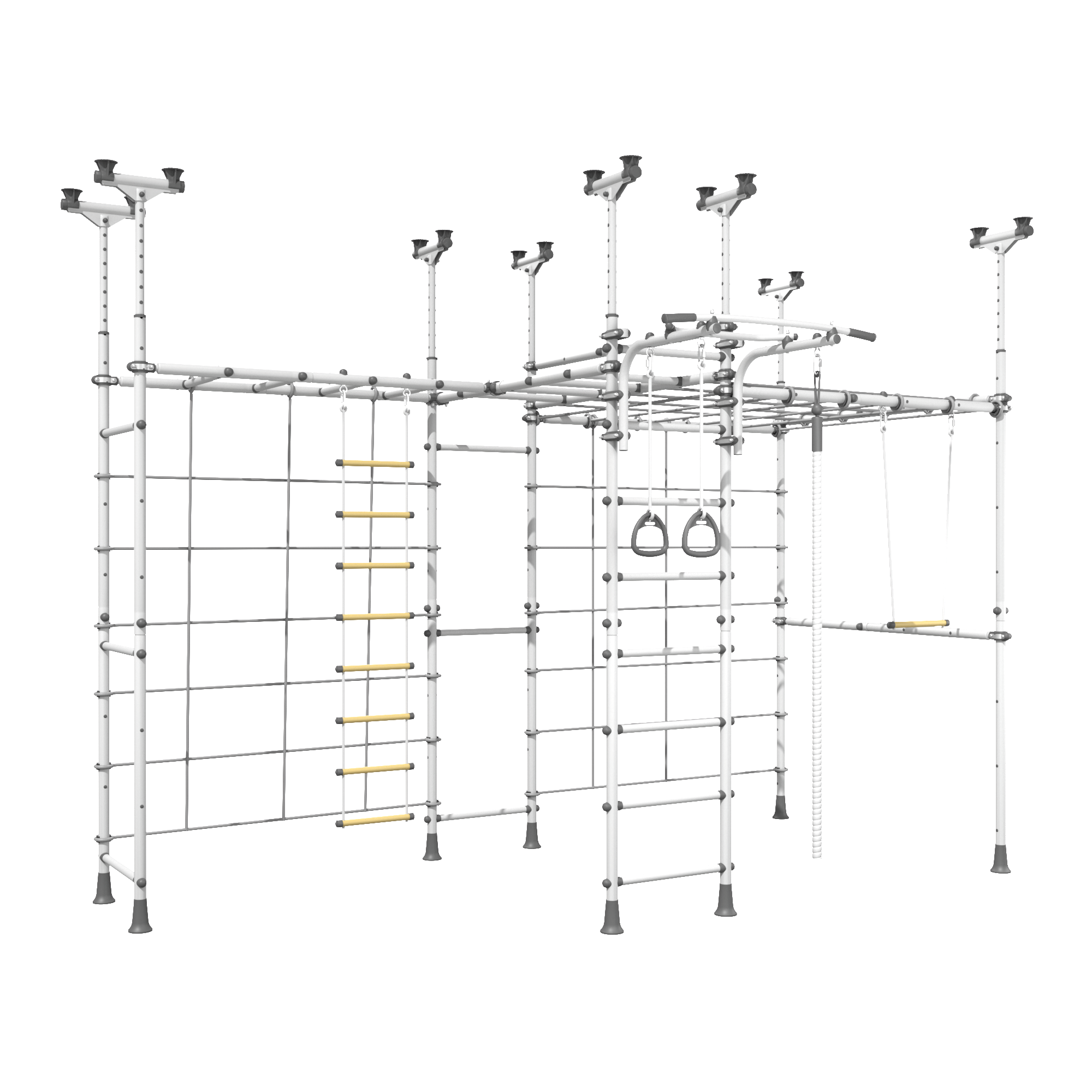
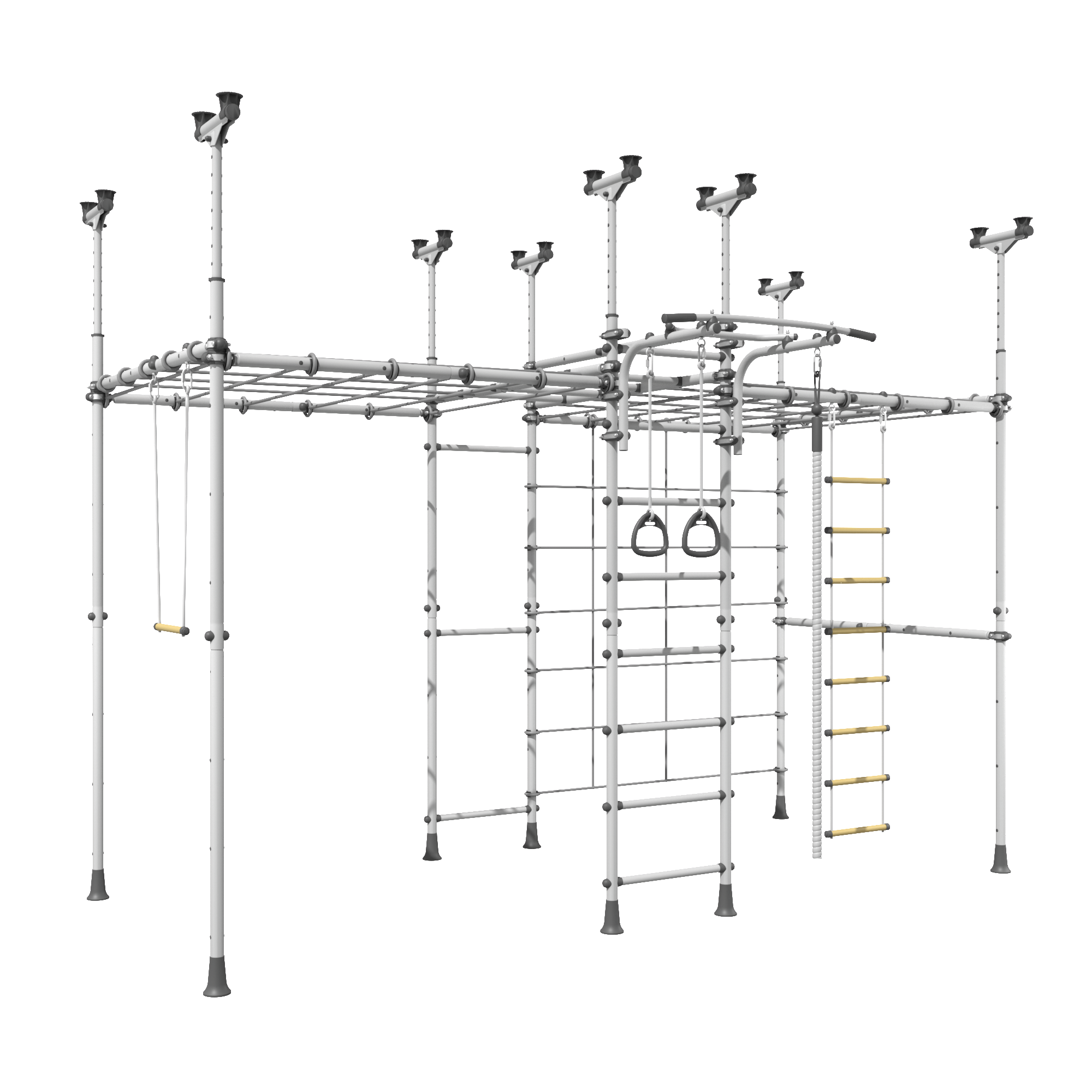
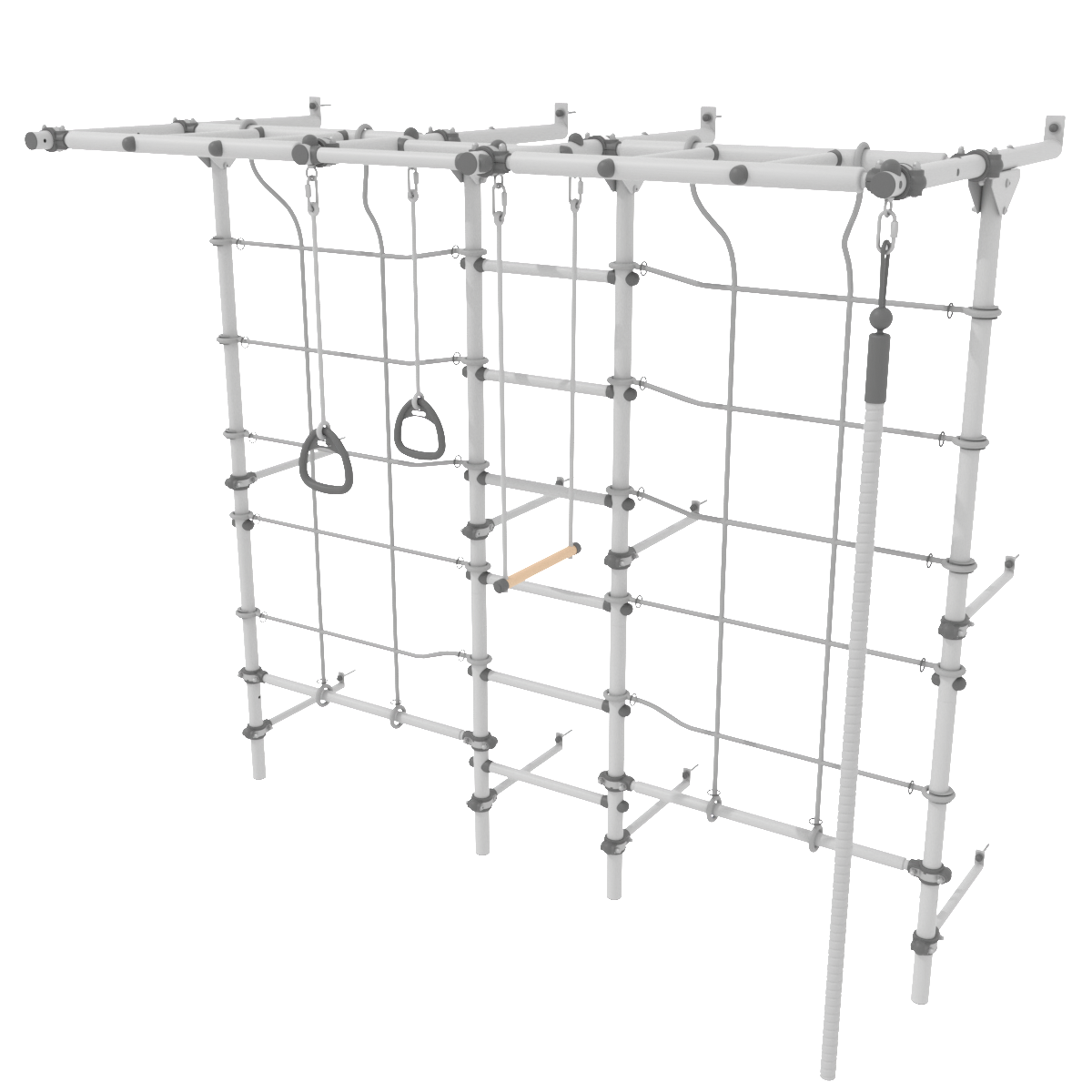
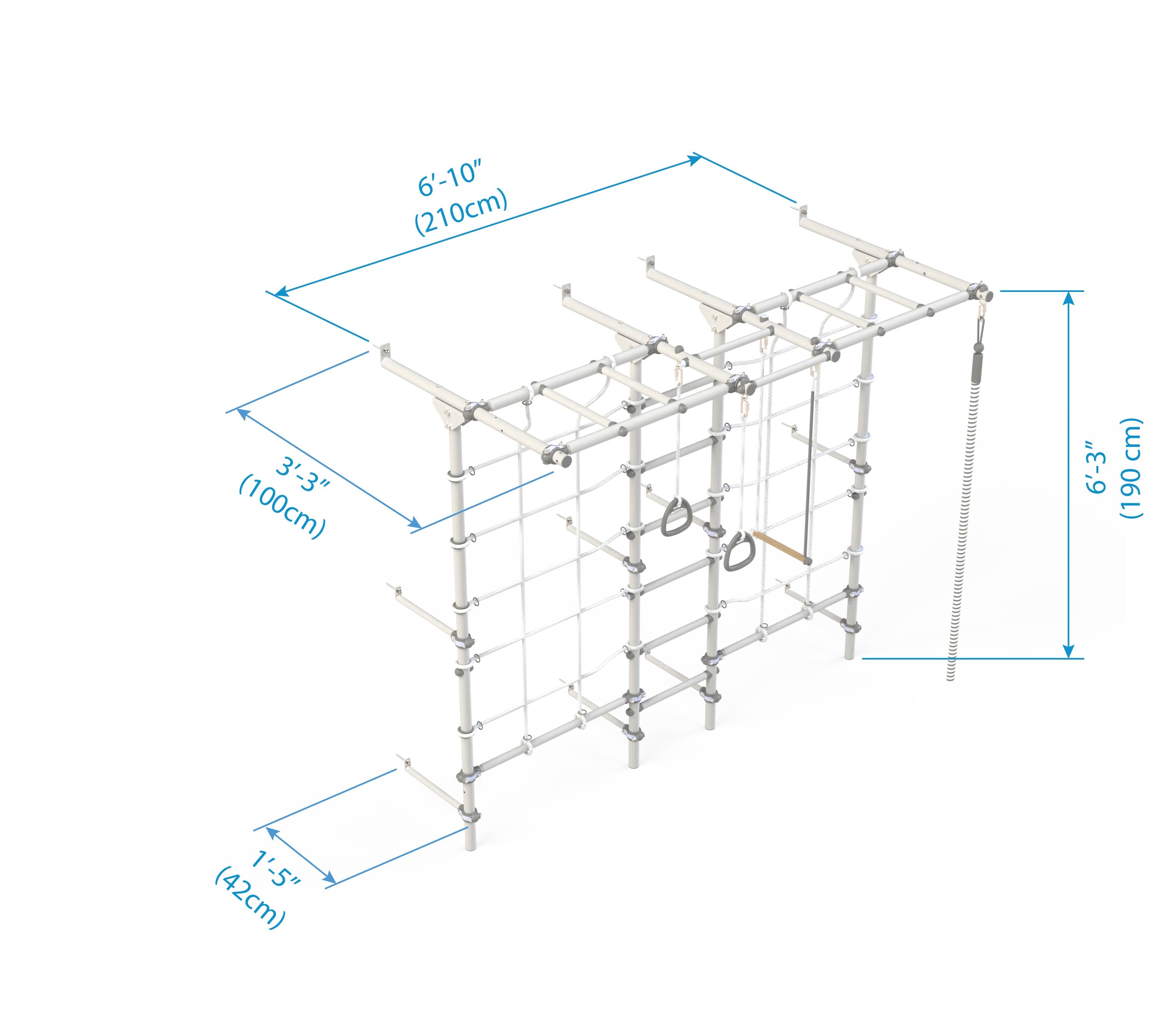
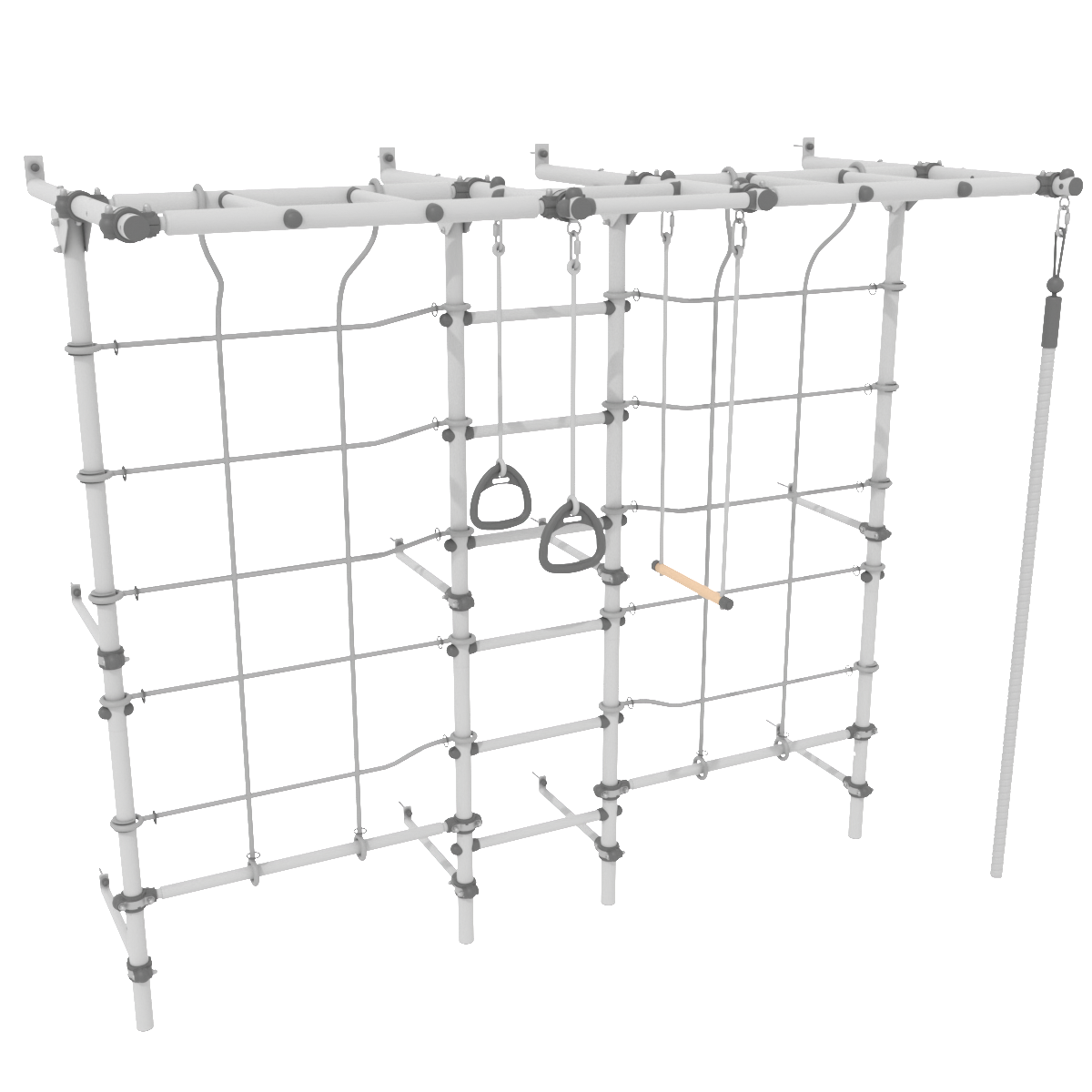
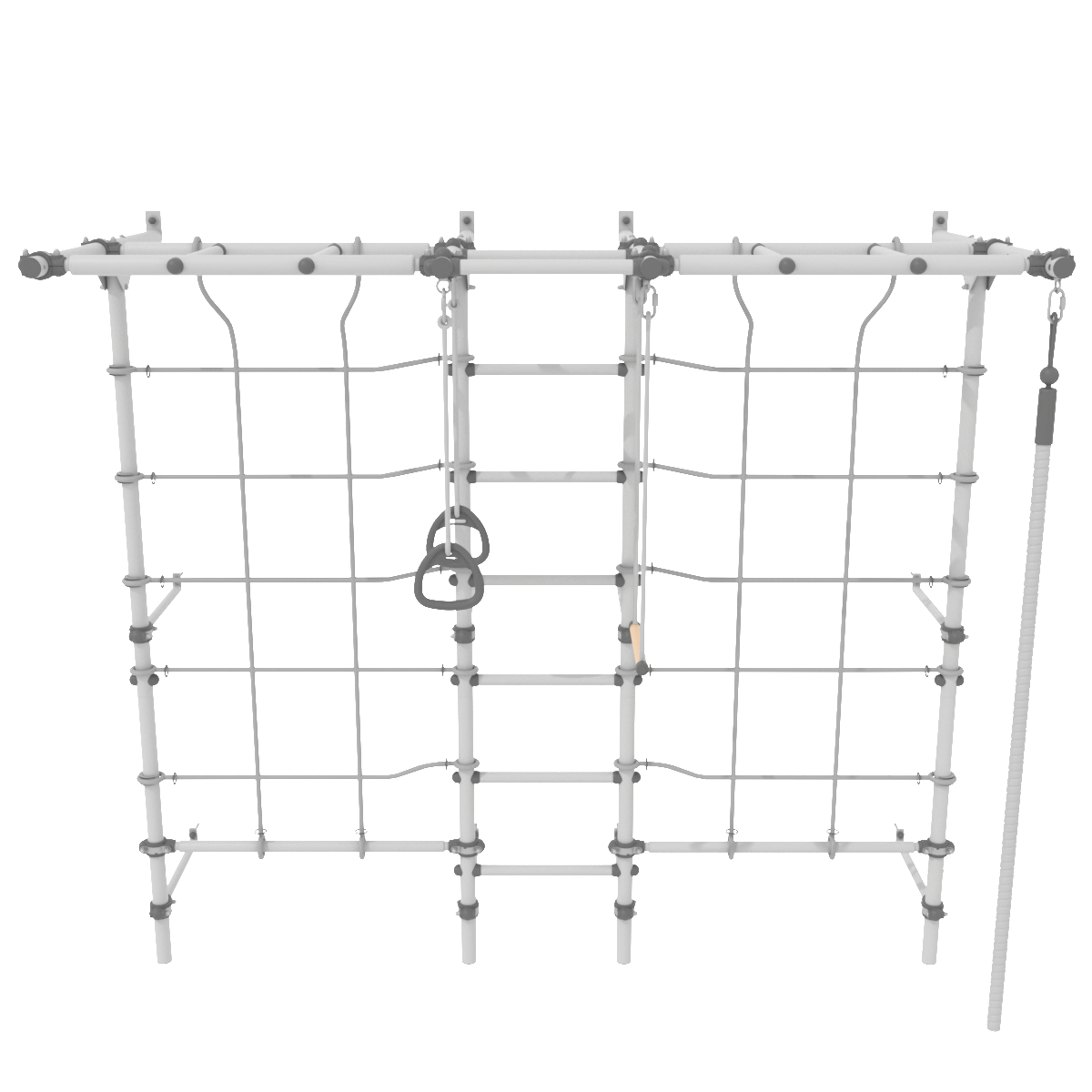
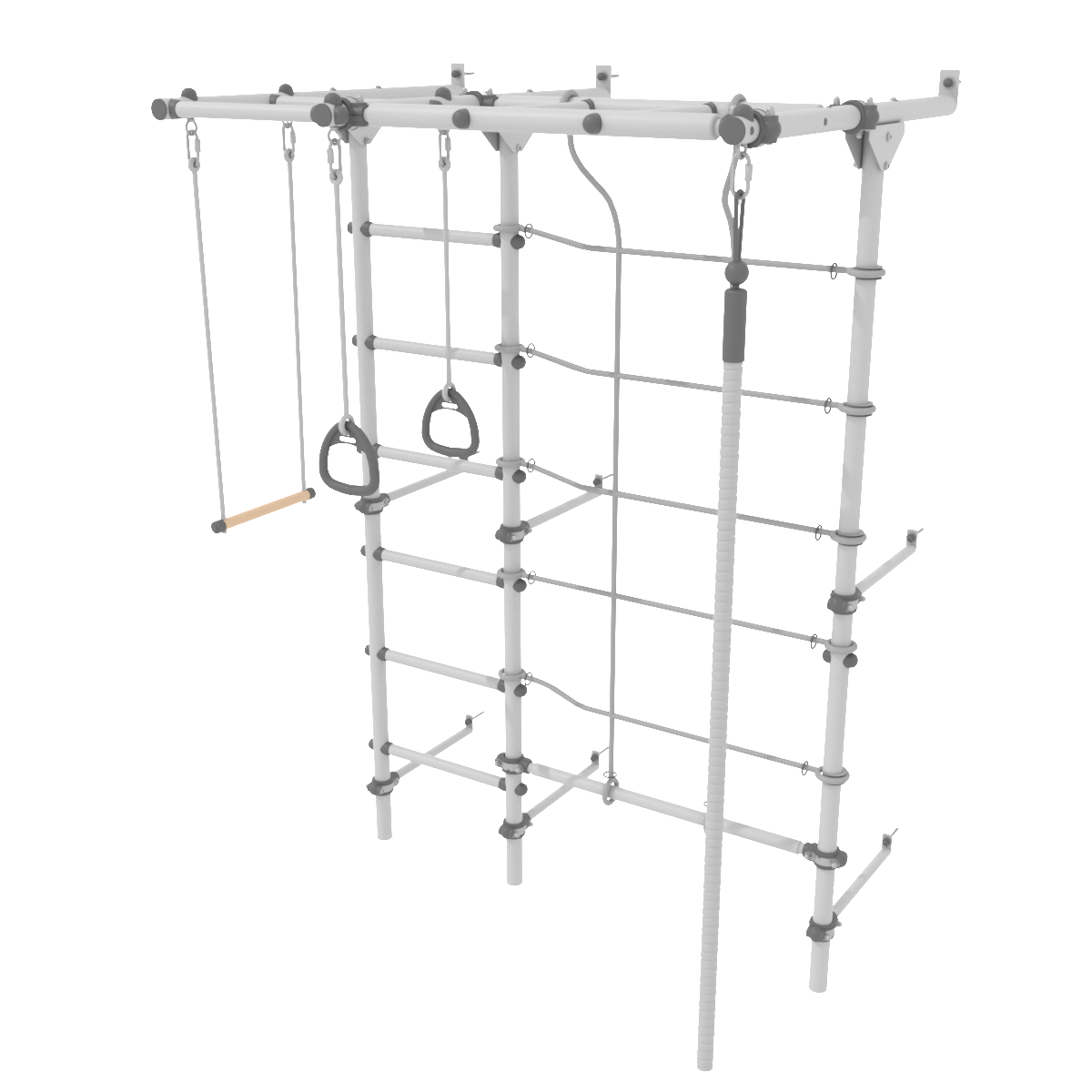
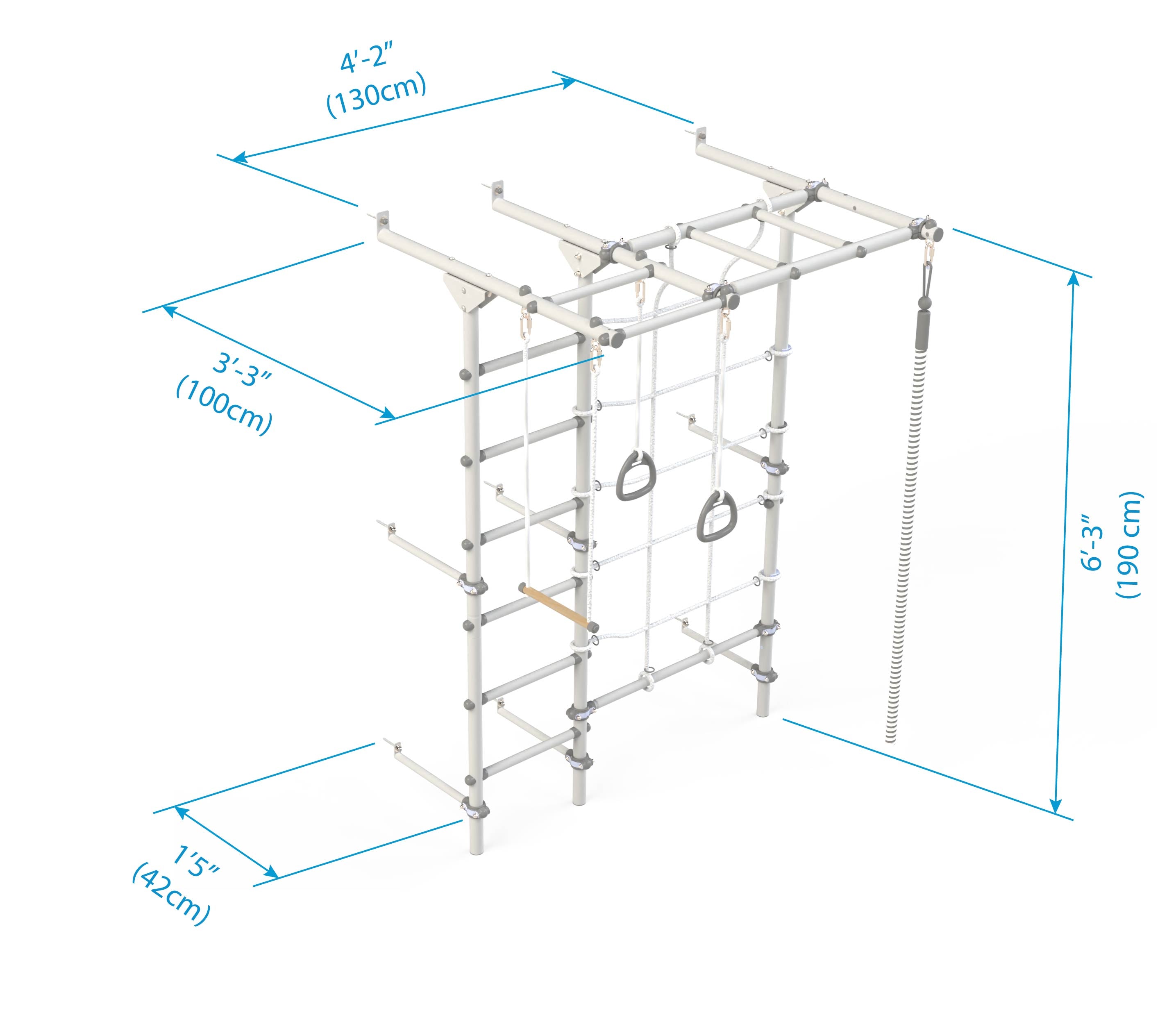
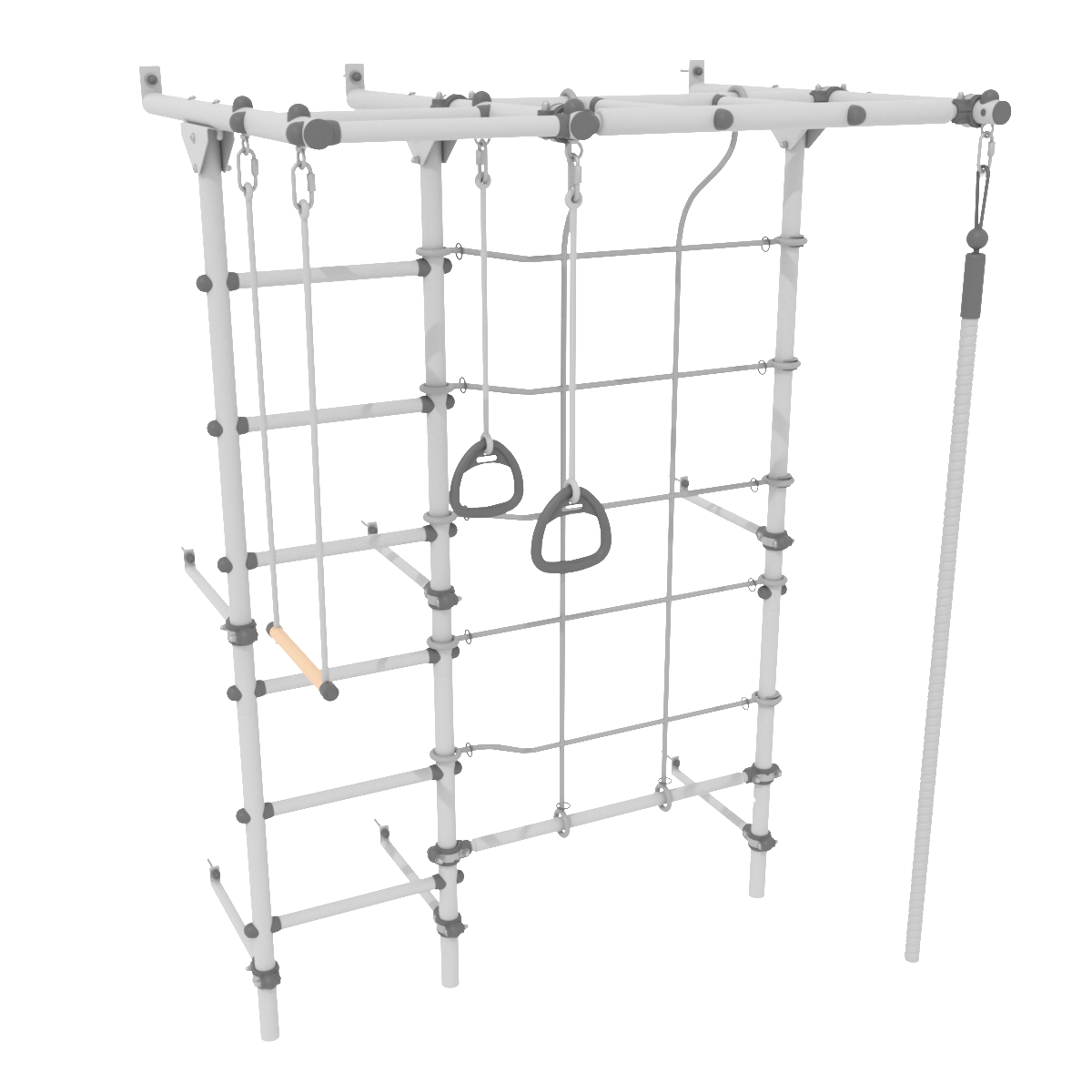
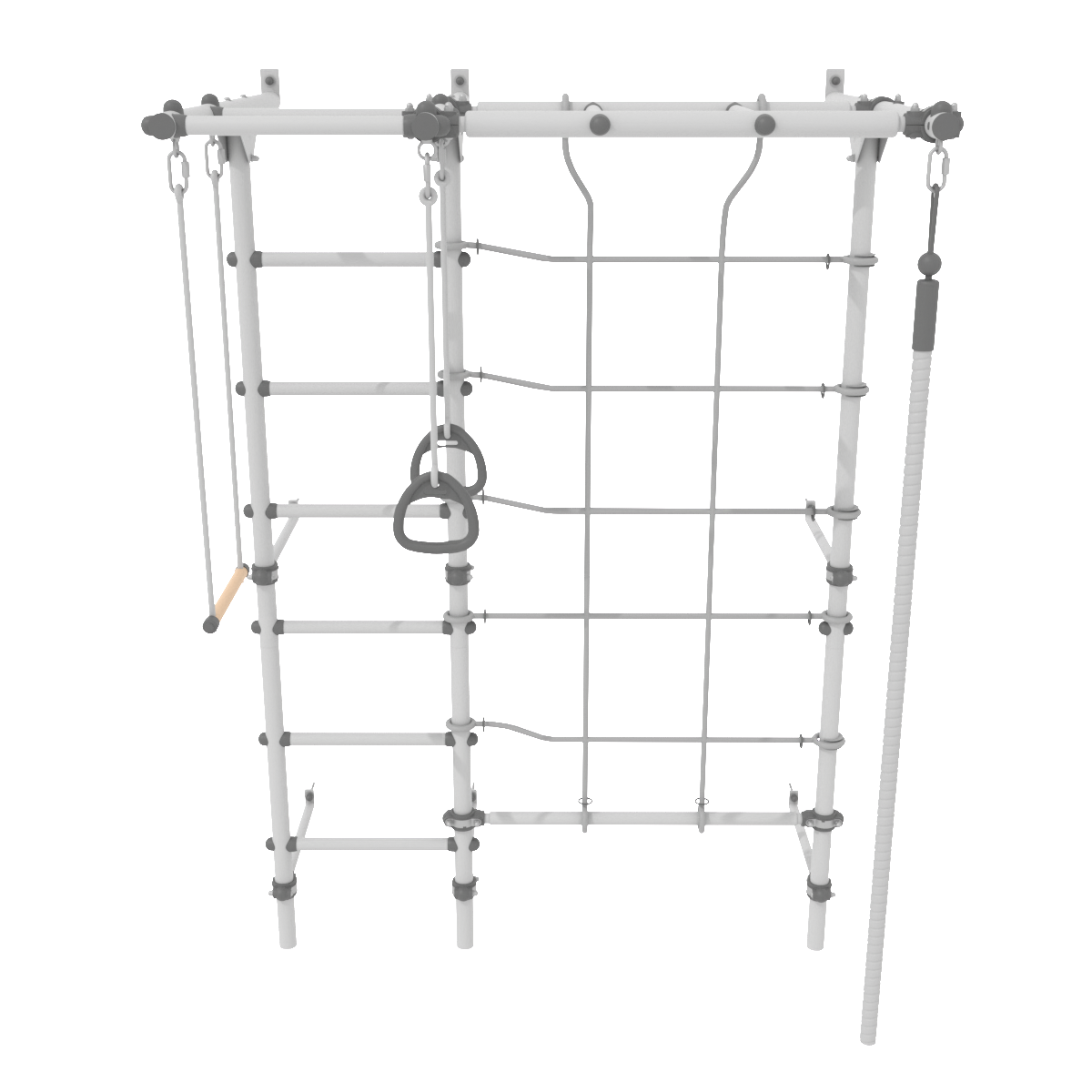
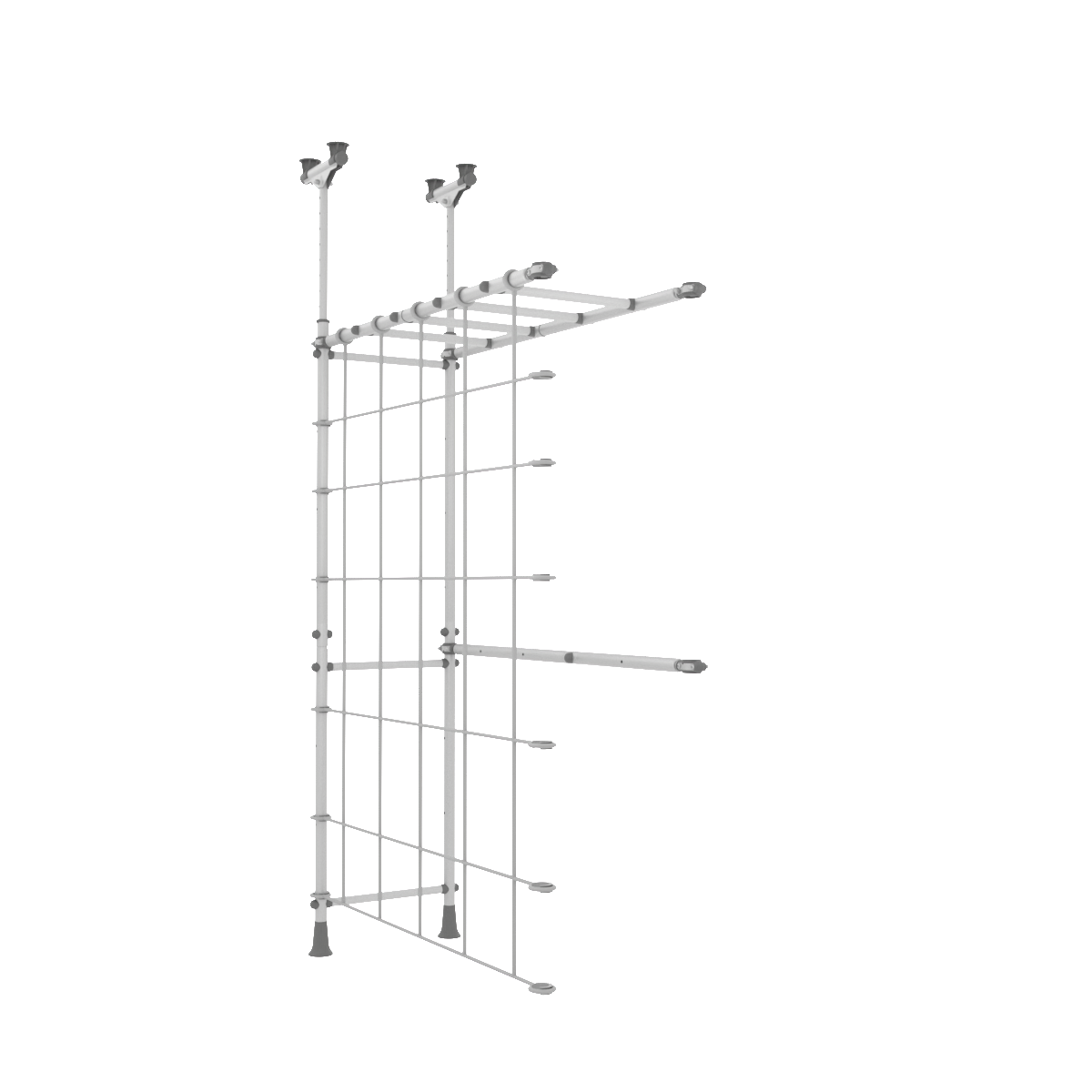
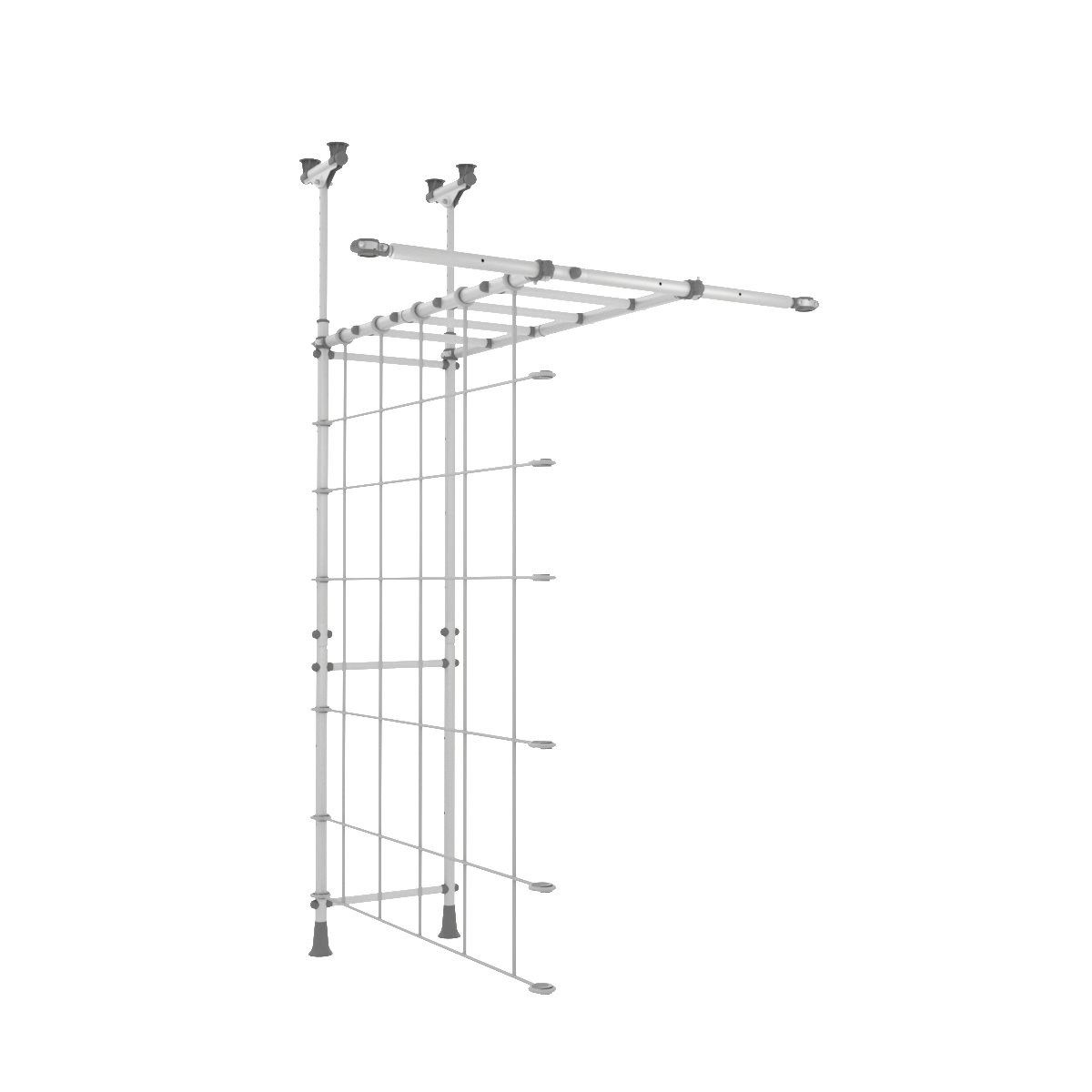
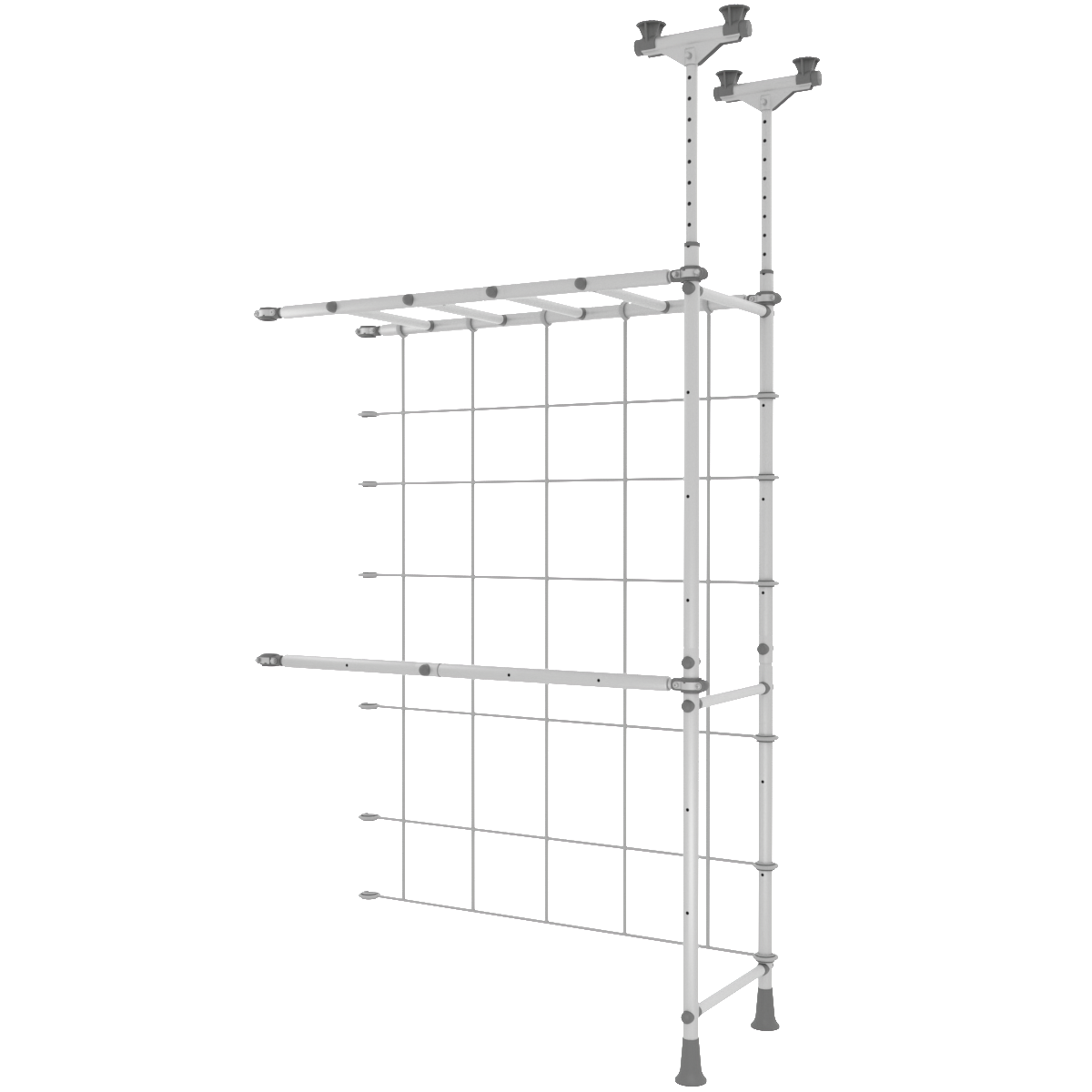
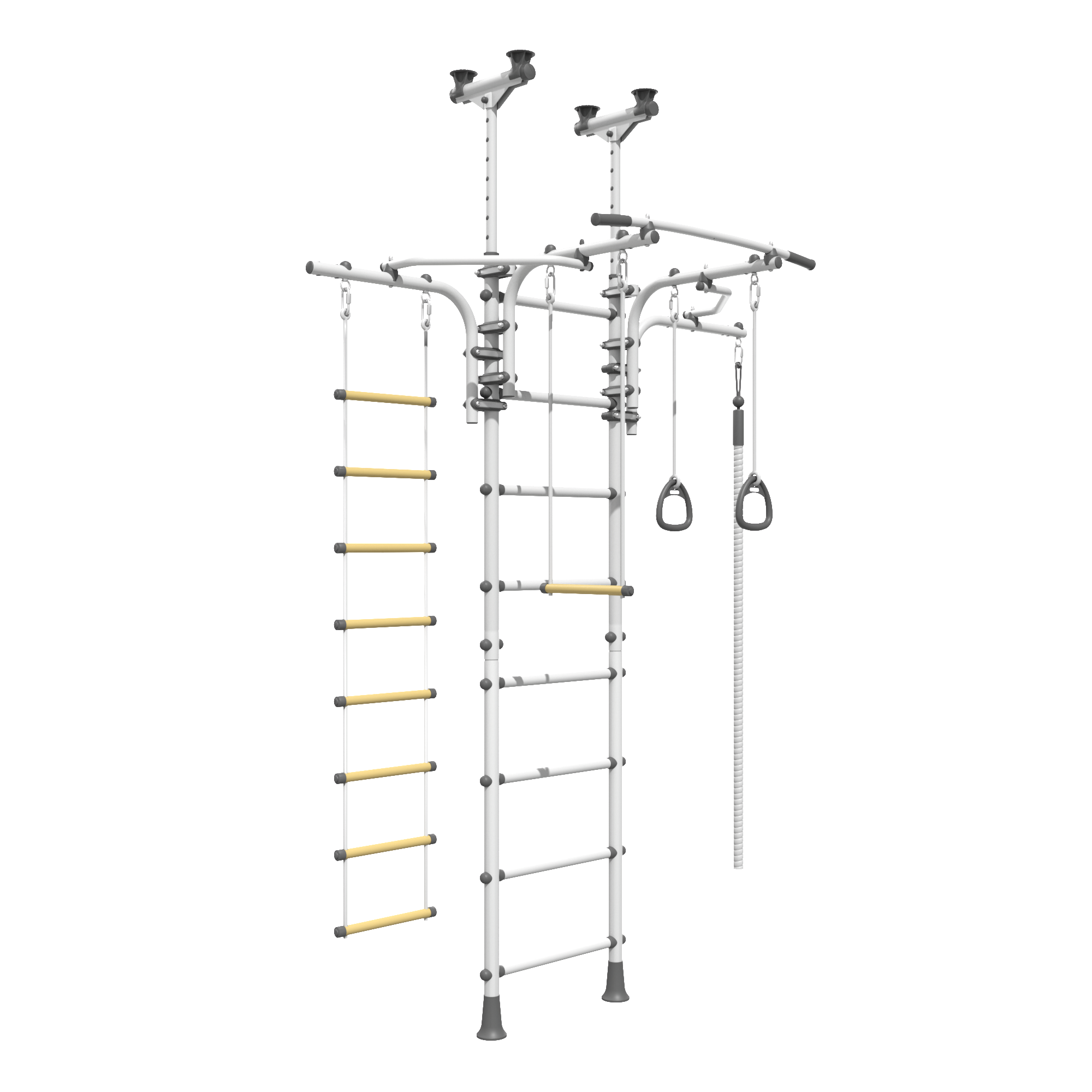
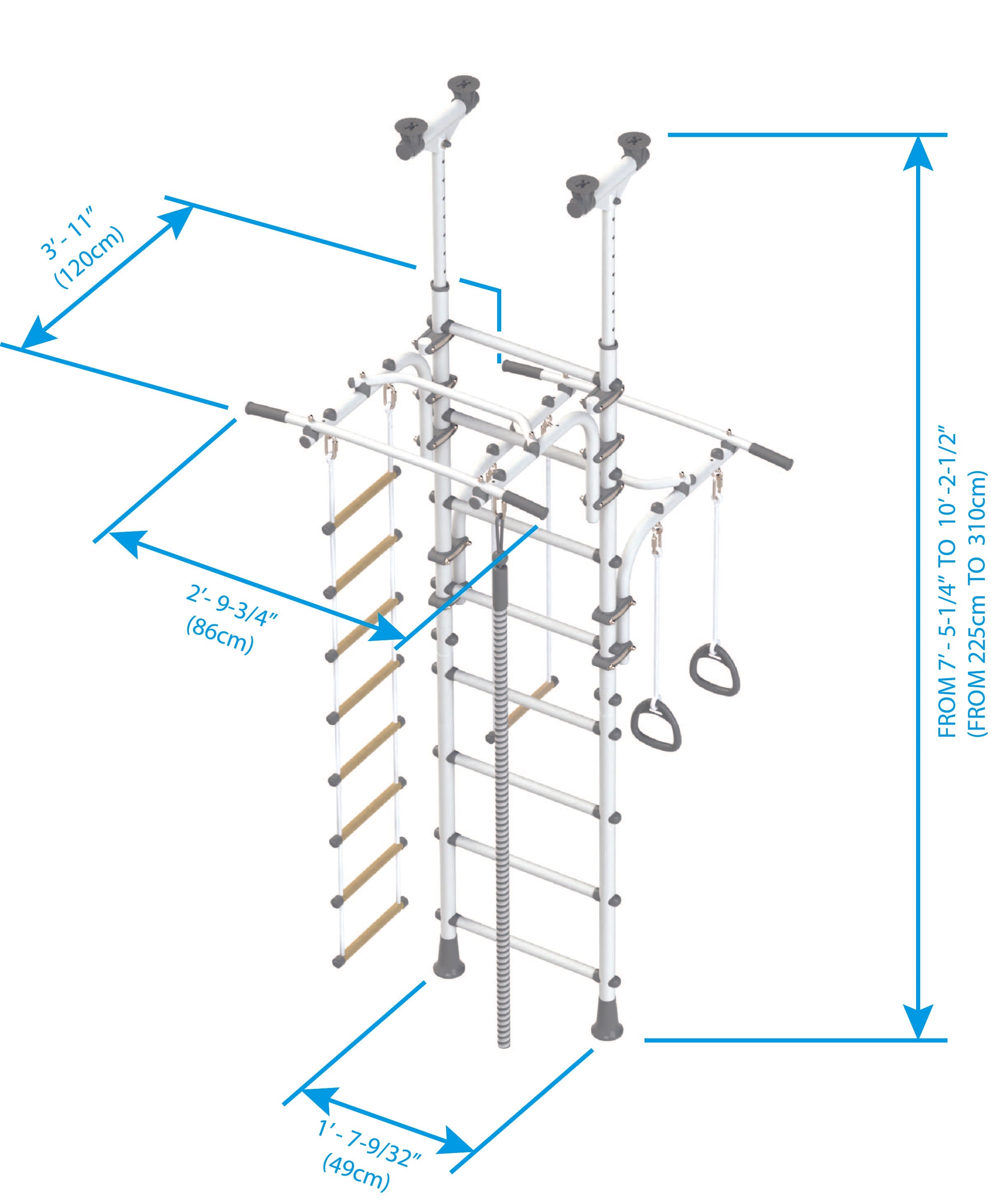
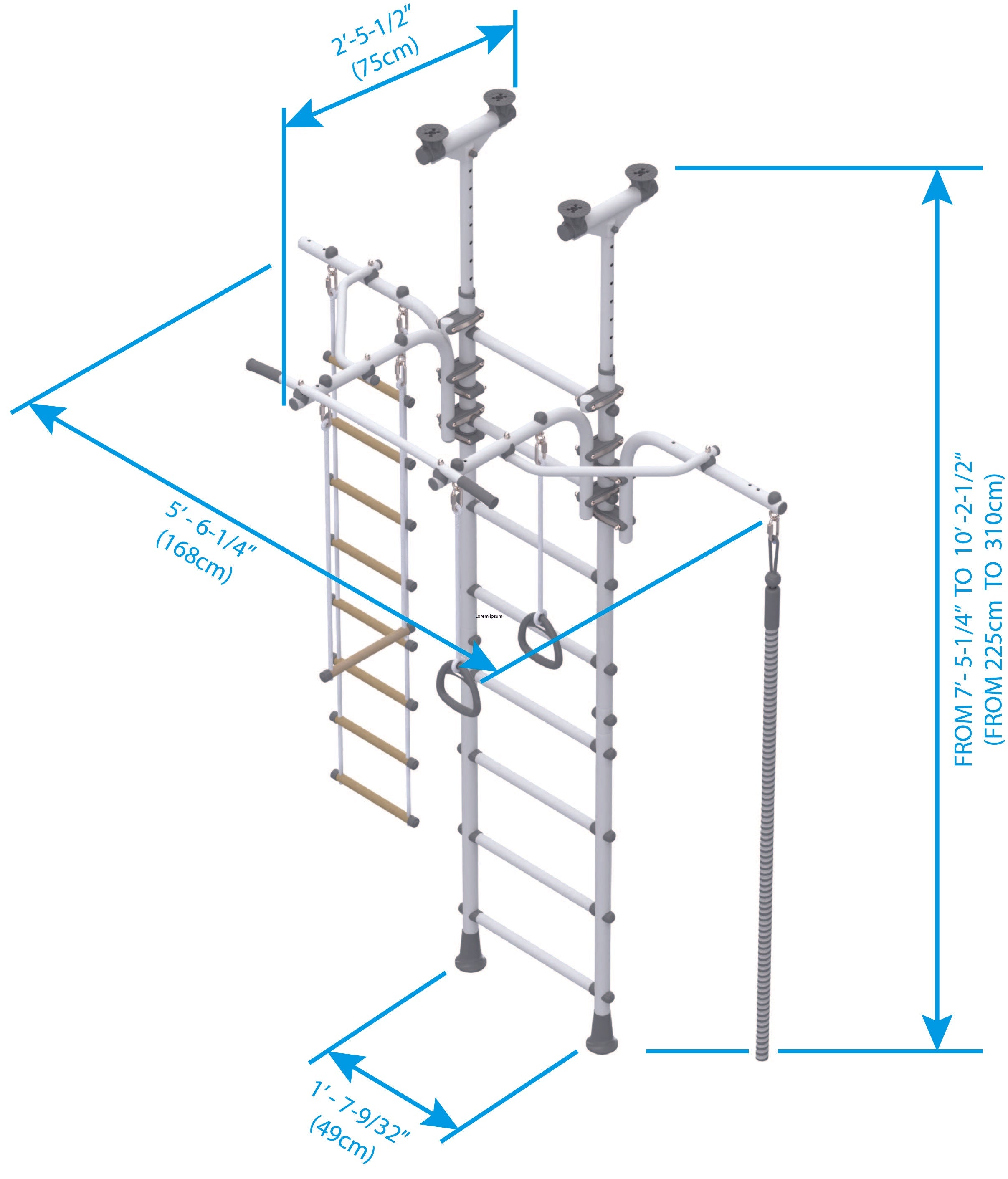
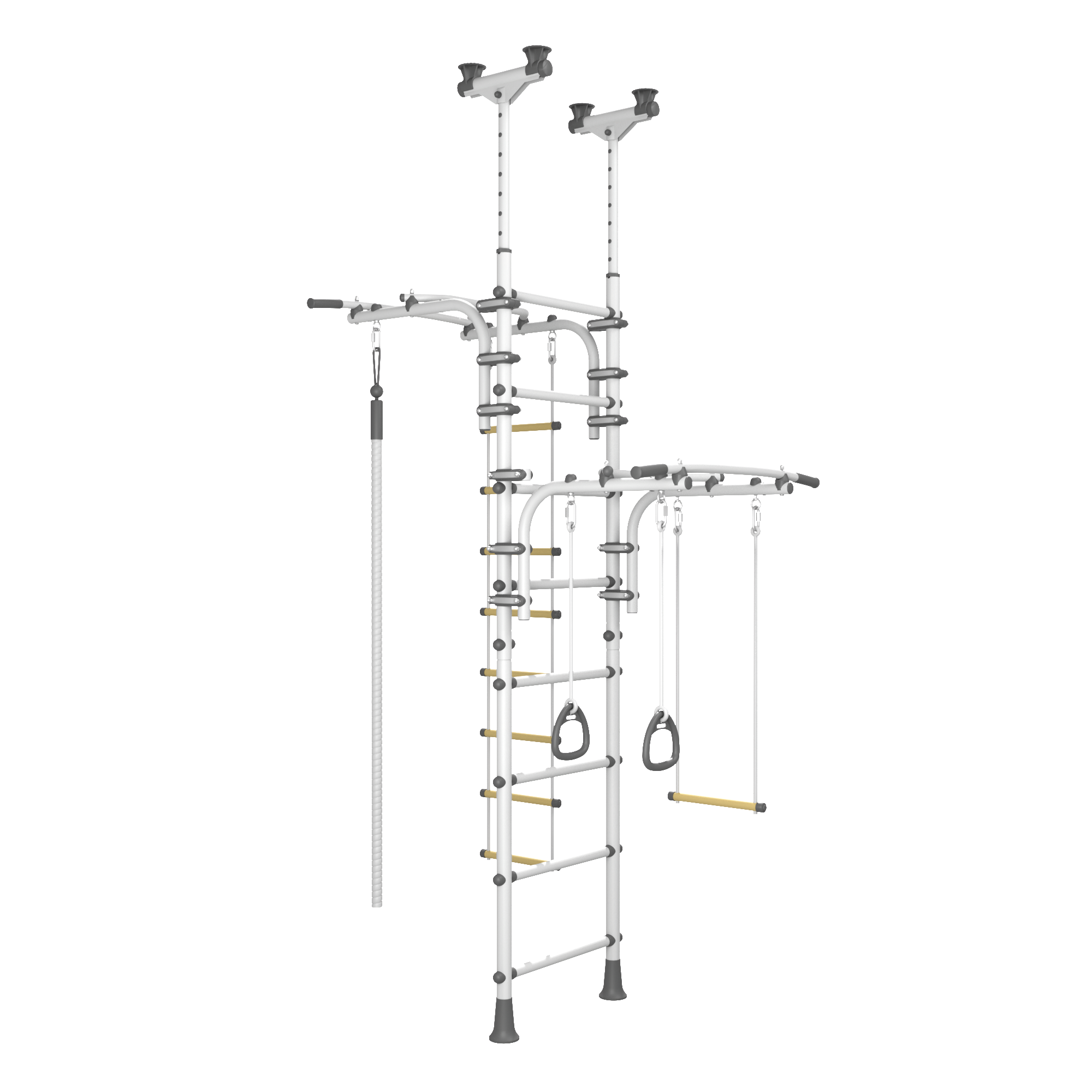
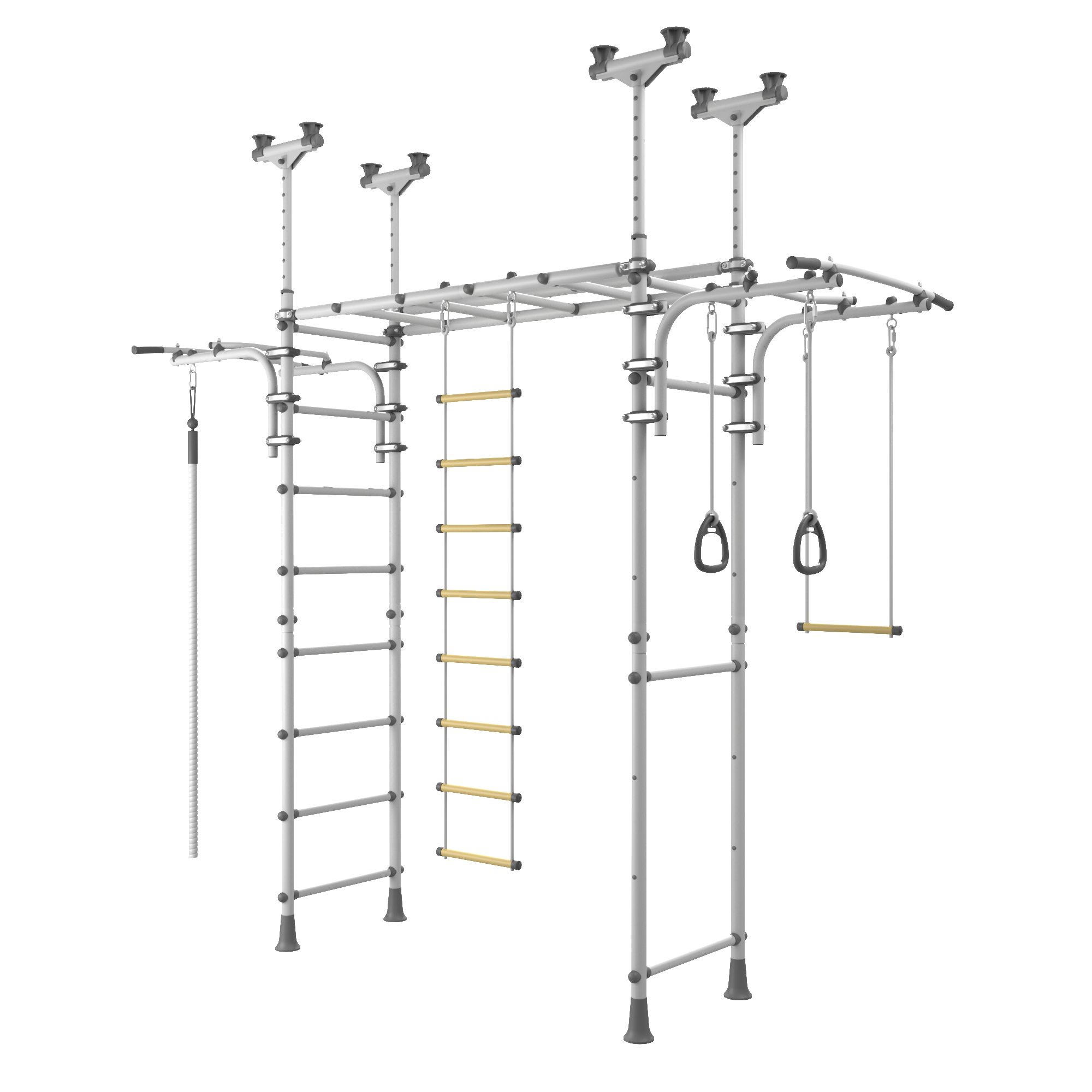
In a prepared environment the gym is furniture, not an event: it stands in the bedroom or playroom permanently, and the child decides when to work on it. Model W3 wall bars take the least floor space and suit a small bedroom; Spider V3 earns its spot in a shared playroom where the monkey-bar span becomes years of self-set challenges.
If your child is still in the Pikler triangle stage, start with our progression guide below—it maps what comes next, age by age, so the equipment always sits just at the edge of their ability, which is exactly where Montessori wants it.