
Key Takeaways:
- Movement matters: Physical activity supports focus, brain development, and emotional regulation in children with ADHD.
- Imagination helps: Creative and imaginative play builds cognitive skills, self-regulation, and flexible thinking.
- Early is better: Starting sensory-friendly routines as early as toddler age builds long-term habits and developmental support.
Some kids have a harder time sitting still. They fidget during meals, lose focus halfway through a simple task, or feel overwhelmed by noise or clutter. For kids with ADHD, these moments happen more often and hit harder. Movement can help. So can calming activities that bring their brains and bodies back into balance. With the right tools at home, it becomes easier to manage big feelings and boost daily focus.
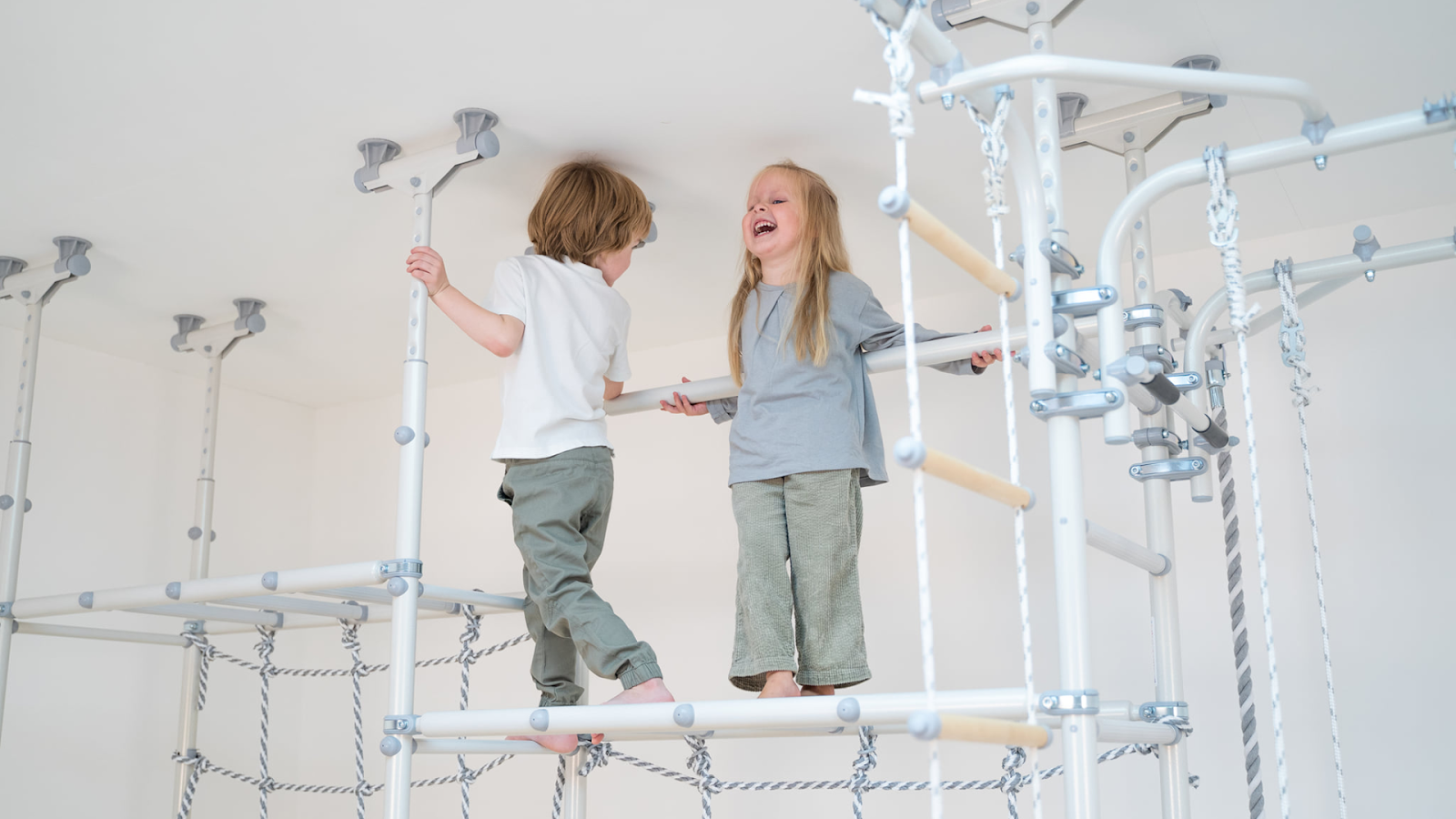
At Brainrich Kids, we design sensory-friendly indoor home play gyms made from high-grade steel, not wood or PVC. Our modular setups support imaginative play, daily movement, and full-body stimulation that helps improve brain development. Our products are approved by occupational and physical therapists and used by over 10,000 families across the country. They’re made for homes with limited space, cold winters, hot summers, and kids who need more than just a place to sit.
In this piece, we’ll explore calming activities for ADHD, explain how movement supports focus, and share practical ways to build a more supportive routine at home.

Why Kids With ADHD Need Calming Activities
Kids with ADHD process the world differently. Their brains crave movement, variety, and stimulation. But too much noise or chaos can overwhelm them. When energy builds up without a way out, it can look like restlessness, frustration, or meltdowns. Calming activities give that energy somewhere to go. They help regulate the nervous system, support emotional control, and make it easier to return to a task or routine. Here is what calming activities can help with:
- Lowering anxiety levels
- Improving emotional regulation
- Supporting better sleep routines
- Helping with transitions between tasks
- Creating structure kids can rely on
Movement-based calming is especially effective for kids with ADHD. Activities that involve climbing, swinging, stretching, or hanging let them release energy in a focused way. This helps shift the brain into a more organized state, where focus comes more naturally. A 2023 meta-analysis published in Frontiers in Physiology found that physical activity had a moderate effect on improving attention in school-aged children with ADHD. The review confirmed that movement-based interventions can support better focus and executive function.
How To Know When Your Child Needs Support At Home
Every child has off days. But if your child is frequently overwhelmed, struggles to stay focused, or melts down after small changes in routine, it may be time to build more support into your home environment. Here are signs your child may benefit from calming tools or sensory-friendly activities at home:
- Frequent fidgeting or restlessness indoors
- Avoiding quiet tasks like reading or homework
- Getting upset over transitions or unexpected changes
- Big reactions to sounds, textures, or bright lights
- Daily routines like bedtime or mealtime feel like battles
These behaviors can be even more noticeable in homeschooled children, since the structure and sensory input of a traditional classroom isn’t part of their day. Sensory input and movement can make a huge difference. A swing, ladder, or climbing frame gives your child safe ways to regulate themselves without needing to leave the house. This is especially helpful during cold winters or hot summers when outdoor play isn’t always an option. When kids feel more regulated, routines get easier. Transitions are smoother. Focus improves.

Calming Activities For Kids With ADHD
Not every calming activity looks like deep breathing or sitting still. Many kids with ADHD calm down by moving their bodies, engaging their senses, or using their imagination. The key is to find activities that give the brain the input it needs without overstimulation.
Sensory-Based Play
Simple sensory activities can help kids reset during an overwhelming moment. Playing with textured objects, pouring rice between containers, or squishing modeling clay offers calming tactile feedback. For younger children, these sensory play ideas are a great place to start.
Heavy Work And Resistance
Activities that involve pushing or pulling against resistance, such as wall pushes, carrying books, or crawling through a tunnel, can help release built-up energy and settle the nervous system. These are often called “heavy work” and are commonly recommended by occupational therapists.
Swinging And Climbing
Movement helps organize the brain. A few minutes on an indoor swing, climbing frame, or rope ladder can reduce stress and improve attention afterward. These tools are especially helpful before transitions, homework time, or meals.
Creative Or Imaginative Play
Drawing, storytelling, pretend play, or building forts helps the brain shift out of fight-or-flight mode. These activities give kids more control over their environment, which lowers frustration and supports focus.
Breathing And Quiet Time
For some kids, calming looks like laying on a soft mat with a weighted blanket. Others may respond better to simple breathing games like blowing cotton balls across a table or counting slow breaths with fingers. The goal is not to eliminate movement but to guide it in a way that helps the brain regulate. With the right setup at home, these calming tools can become part of your child’s daily rhythm.
Indoor Swings and Movement Tools That Help Kids Focus
Movement is more than play for kids with ADHD. It’s a form of regulation. When kids swing, climb, or hang, they’re doing more than burning energy. They’re activating key systems in the brain that support focus, body awareness, and emotional control. According to a study published in the American Journal of Occupational Therapy, sensory integration activities like swinging and climbing can help improve attention and reduce hyperactivity in children with sensory processing challenges, including ADHD. This kind of movement is especially useful at home:
- Indoor swings provide rhythmic, calming motion that helps settle the nervous system.
- Ladders, bars, and climbing frames offer full-body input that supports coordination and spatial awareness.
- Hanging tools like trapeze bars or rings engage core strength and balance.
Many occupational therapists recommend using movement breaks throughout the day, especially before challenging transitions like schoolwork or mealtime. Even five minutes of climbing or swinging can help reset the brain and increase a child’s ability to focus. If you’re considering adding an indoor swing to your space, we break down the five key benefits here.
Creative Play, Imagination, And Brain Development
Not all focus-building activities involve physical movement. Imaginative play is just as powerful. It gives children a sense of control, reduces frustration, and strengthens cognitive flexibility. This is a skill many kids with ADHD struggle with. When a child builds a fort, acts out a story, or turns a cardboard box into a spaceship, they are doing more than playing. They are developing:
- Problem-solving skills
- Emotional regulation
- Language and communication
- Working memory and planning
This kind of play naturally encourages brain development, especially when children are given tools that support open-ended exploration. Toys that do not flash or talk back and instead require creativity and decision-making are ideal. What are Montessori toys is a great resource for choosing tools that encourage independence, self-direction, and imaginative thinking. These options help kids stay engaged without becoming overstimulated.
Imaginative play is also easy to integrate into a sensory-friendly home. A climbing gym can become a pirate ship, jungle, or space station with a few blankets and a child’s imagination. The same structure that supports physical regulation can also spark creative expression. The more opportunities a child has to imagine, move, and create, the more prepared their brain is to focus when it matters.
When To Start A Home Gym For Your Child
The earlier kids start moving, the better. Physical activity in early childhood supports focus, coordination, and brain development. Here’s what research and therapists suggest:
- A 2023 study published in Early Childhood Education Journal found that physical activity for children as young as 3 supports attention, self-regulation, and executive function.
- Toddlers can begin with soft mats, low climbing frames, or slow swinging under supervision.
- Ages 5 to 12 benefit from more structured movement like climbing ladders, hanging, and swinging.
- Teens can continue using adjustable equipment that adapts as they grow.
Start as early as age 2. Earlier movement supports stronger motor skills and better focus later on. An indoor home gym is especially helpful for:
- Homeschooled children
- Kids with ADHD or sensory needs
- Families with limited outdoor access
- Long cold winters or extreme summer heat
You do not need a huge space. You do not need experience. You just need a system that supports daily movement at home.

Final Thoughts On Supporting Your Child’s Focus At Home
Helping a child with ADHD focus is not about forcing stillness. It is about giving their brain what it needs. Movement, structure, and calming routines make everyday tasks more manageable. Calming activities work best when they are part of the environment. Not just a reaction to a meltdown, but a built-in part of the daily rhythm.
Whether it is climbing, swinging, building forts, or imaginative play, these moments are more than fun. They support brain development, focus, and emotional regulation. At Brainrich Kids, we believe every home should include space for movement. Our structure is made from high-grade steel, not wood, and does not require drilling or permanent installation. It is approved by occupational and physical therapists and supports families with kids from toddler to teen. You do not have to wait for your child to outgrow big feelings. You can support their focus now with tools that meet them where they are.
Read Also:
- Best Pull Up Bar For Kids
- Five Benefits Of Having Indoor Swings For Kids
- Six Types Of Sensory Swings For Your Brainrich Kids
Frequently Asked Questions About Our Calming Activities For ADHD
What are some calming activities for ADHD during travel?
Try activities that offer sensory input without requiring much space. Fidget tools, chewable necklaces, drawing pads, and weighted lap pads can help during car rides or flights.
Can calming activities be helpful for ADHD teens?
Yes. Teens with ADHD benefit from resistance training, yoga, martial arts, creative hobbies like music or drawing, and quiet spaces with low sensory input.
Are digital apps effective as calming tools for kids with ADHD?
Some mindfulness or guided breathing apps can be helpful, but screen-based tools should be limited. Look for ones designed specifically for neurodiverse kids.
What are some calming activities that can be done in a classroom?
Chair push-ups, stress balls, quiet coloring, and deep breathing techniques are effective. Many teachers also use visual timers or simple movement breaks.
How can parents tell if a calming activity is working?
Look for signs like slower breathing, a more relaxed body posture, and improved focus afterward. Every child responds differently, so track what helps.
Do calming activities help with sleep problems in ADHD?
Yes. Many kids benefit from calming routines before bed, such as stretching, deep pressure, or soft swinging if available. It helps signal the brain to wind down.
What is the difference between calming activities and sensory breaks?
Sensory breaks are short bursts of activity that help regulate input. Calming activities are often longer and designed to reduce stimulation. Both can be useful.
Can calming activities reduce meltdowns?
They can help prevent them. Regular use of calming strategies builds self-regulation, so kids are better equipped to manage big emotions before they escalate.
Are calming activities only helpful for hyperactivity?
No. They also help with impulsivity, emotional regulation, and anxiety. These strategies are about overall nervous system balance.
Can calming activities be used alongside ADHD medication?
Absolutely. They work well as part of a full support plan, alongside therapy, school accommodations, and medication if prescribed.
Sources:
- Li, D., Li, L., Zang, W., Wang, D., Miao, C., Li, C., Zhou, L., & Jin, Y. (2023). Effect of physical activity on attention in school-age children with ADHD: a systematic review and meta-analysis of randomized controlled trials. Frontiers in Physiology, 14(1189443). https://doi.org/10.3389/fphys.2023.1189443
- Kadlec, M. B., Coster, W., Tickle-Degnen, L., & Beeghly, M. (2005). Qualities of Caregiver–Child Interaction During Daily Activities of Children Born Very Low Birth Weight With and Without White Matter Disorder. American Journal of Occupational Therapy, 59(1), 57–66. https://doi.org/10.5014/ajot.59.1.57
- McGowan, A. L., Chandler, M. C., & Gerde, H. K. (2023). Infusing Physical Activity into Early Childhood Classrooms: Guidance for Best Practices. Early Childhood Education Journal, 52. https://doi.org/10.1007/s10643-023-01532-5
Share:
How To Create A Safe And Fun Home Play Gym Area For Your Kids