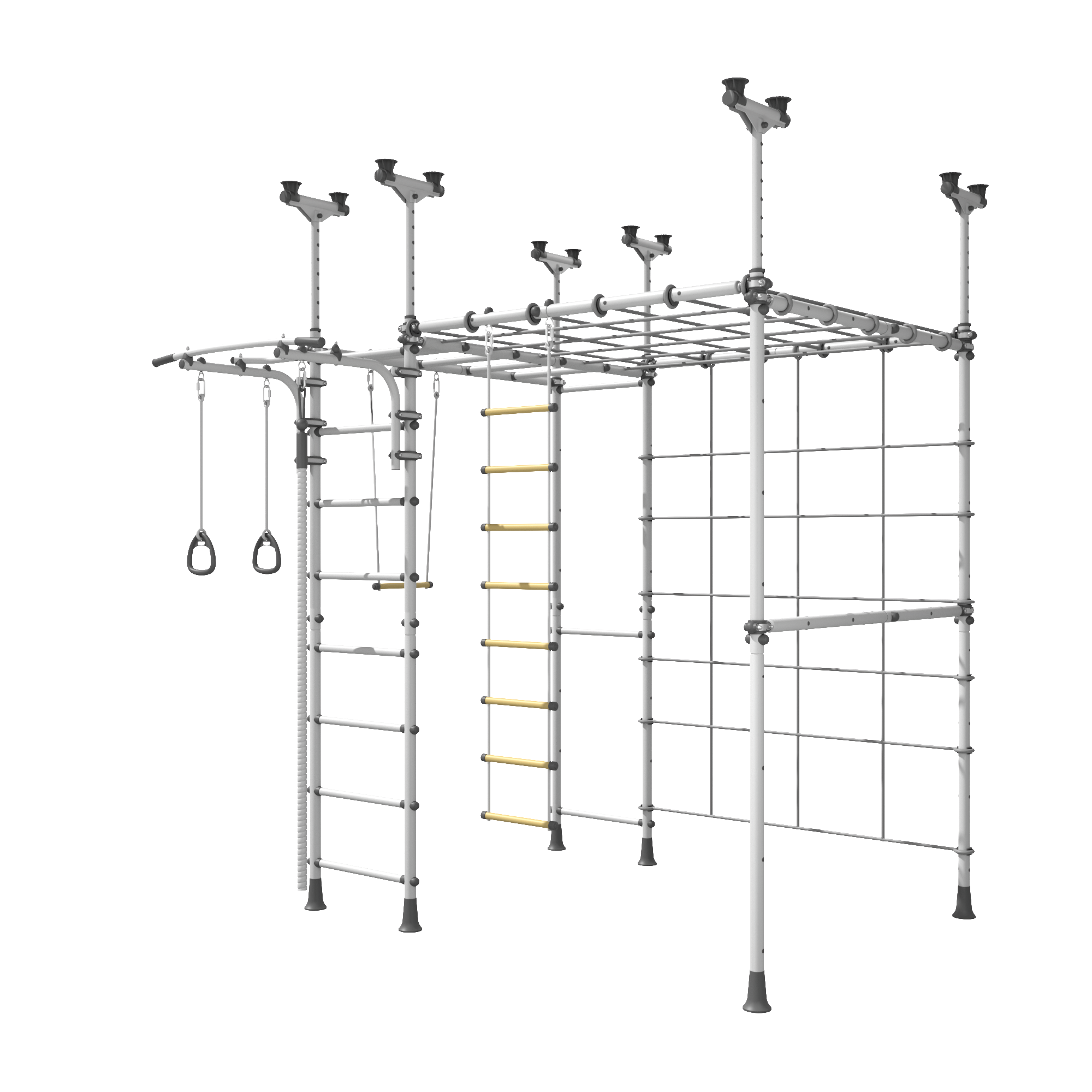
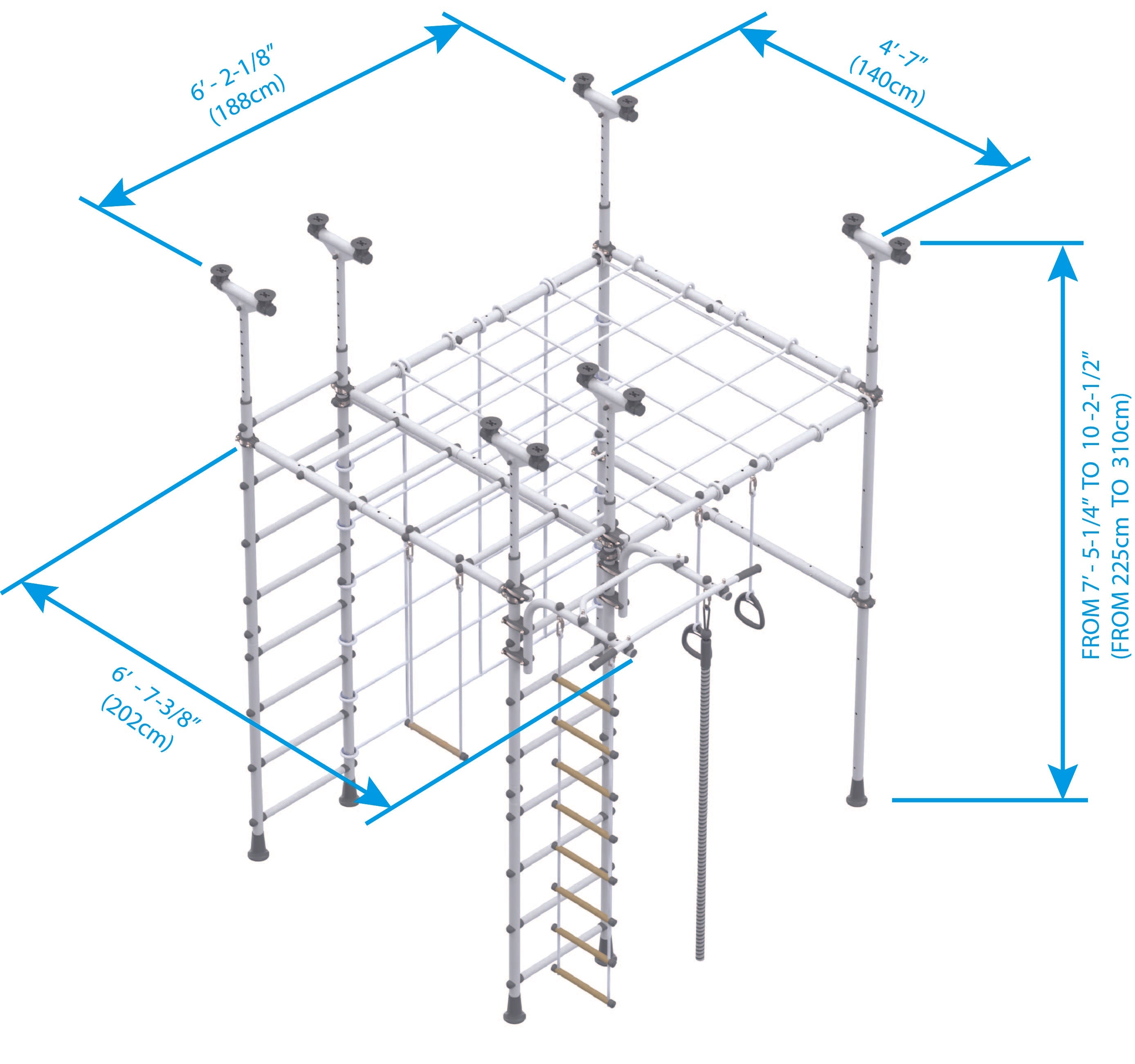
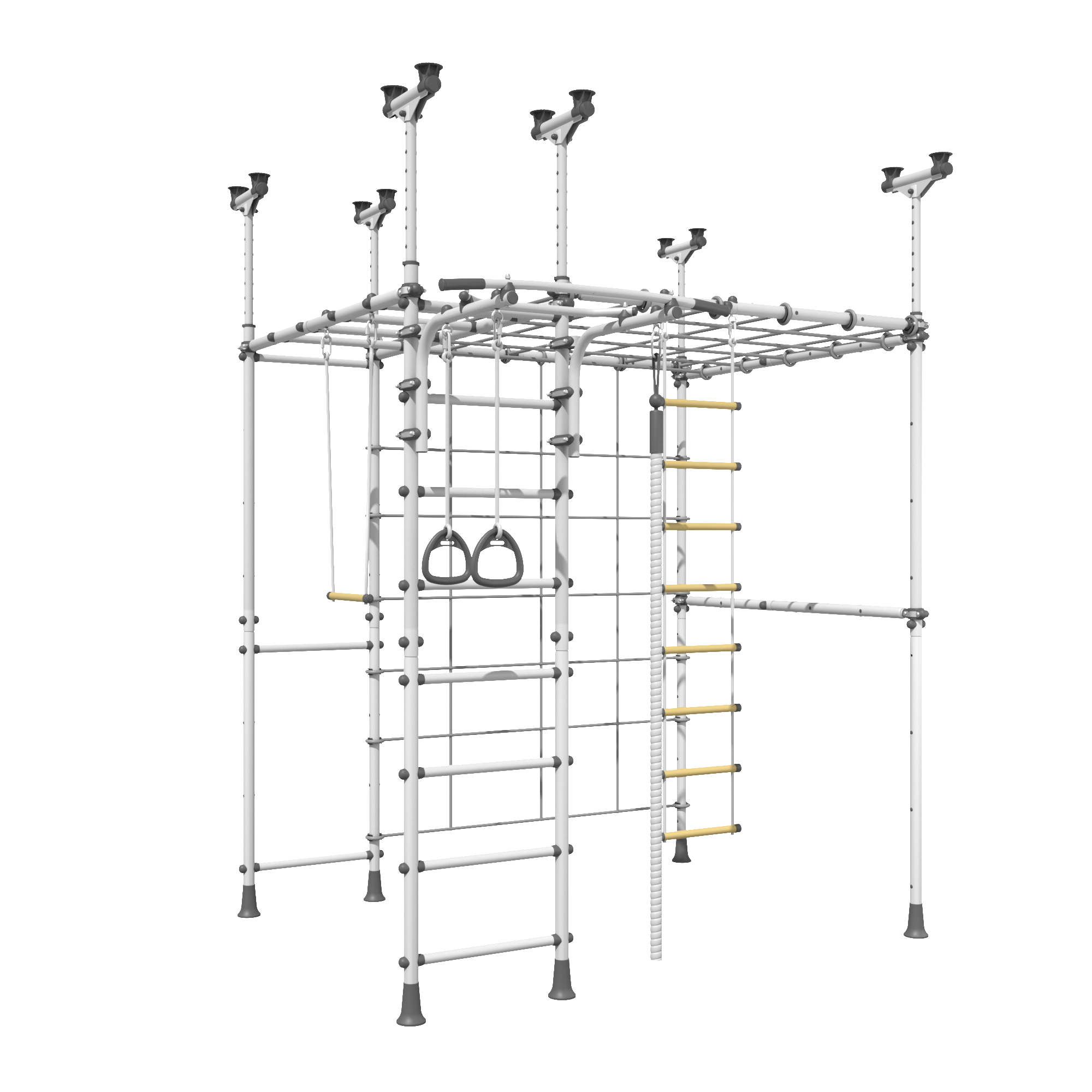
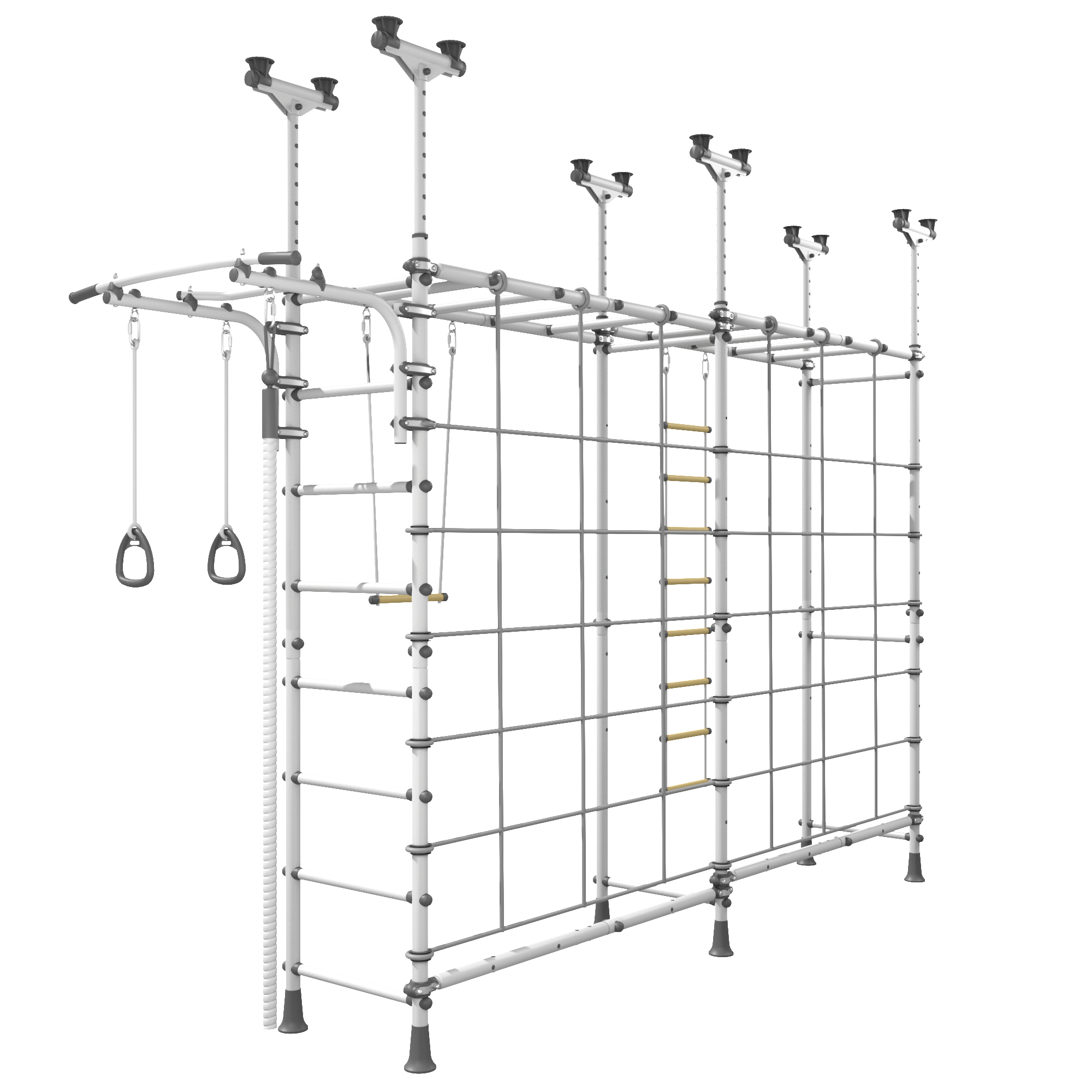
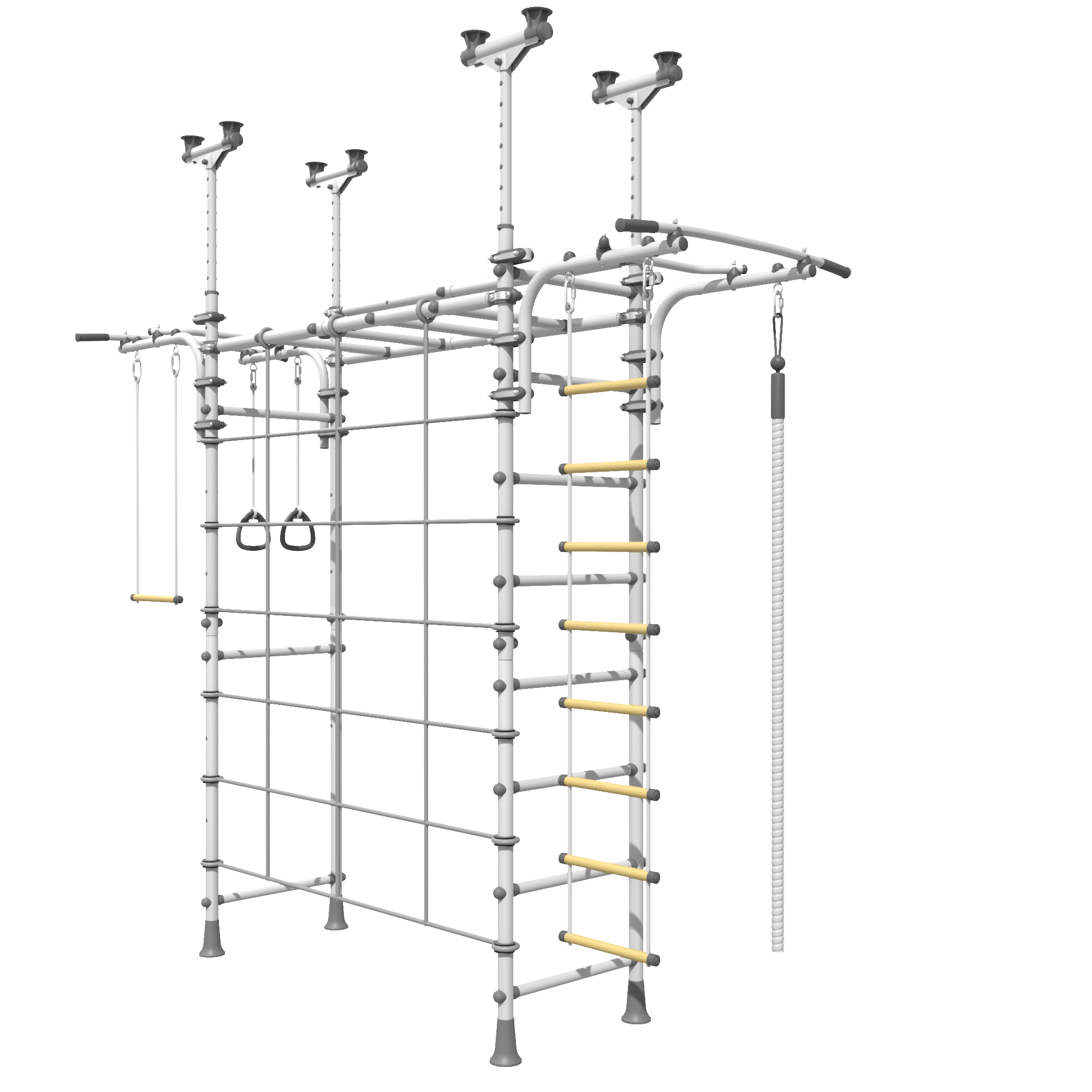
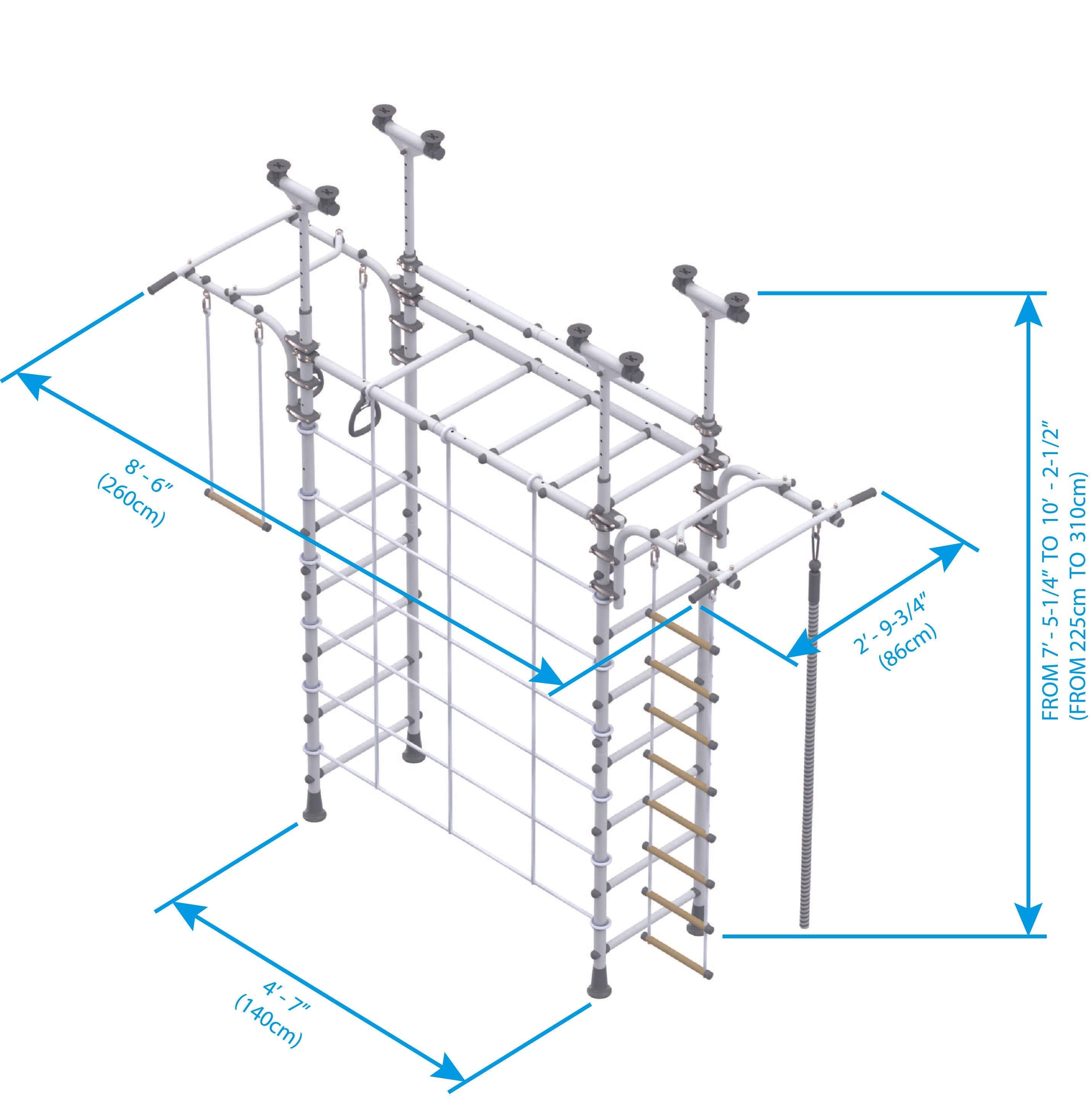
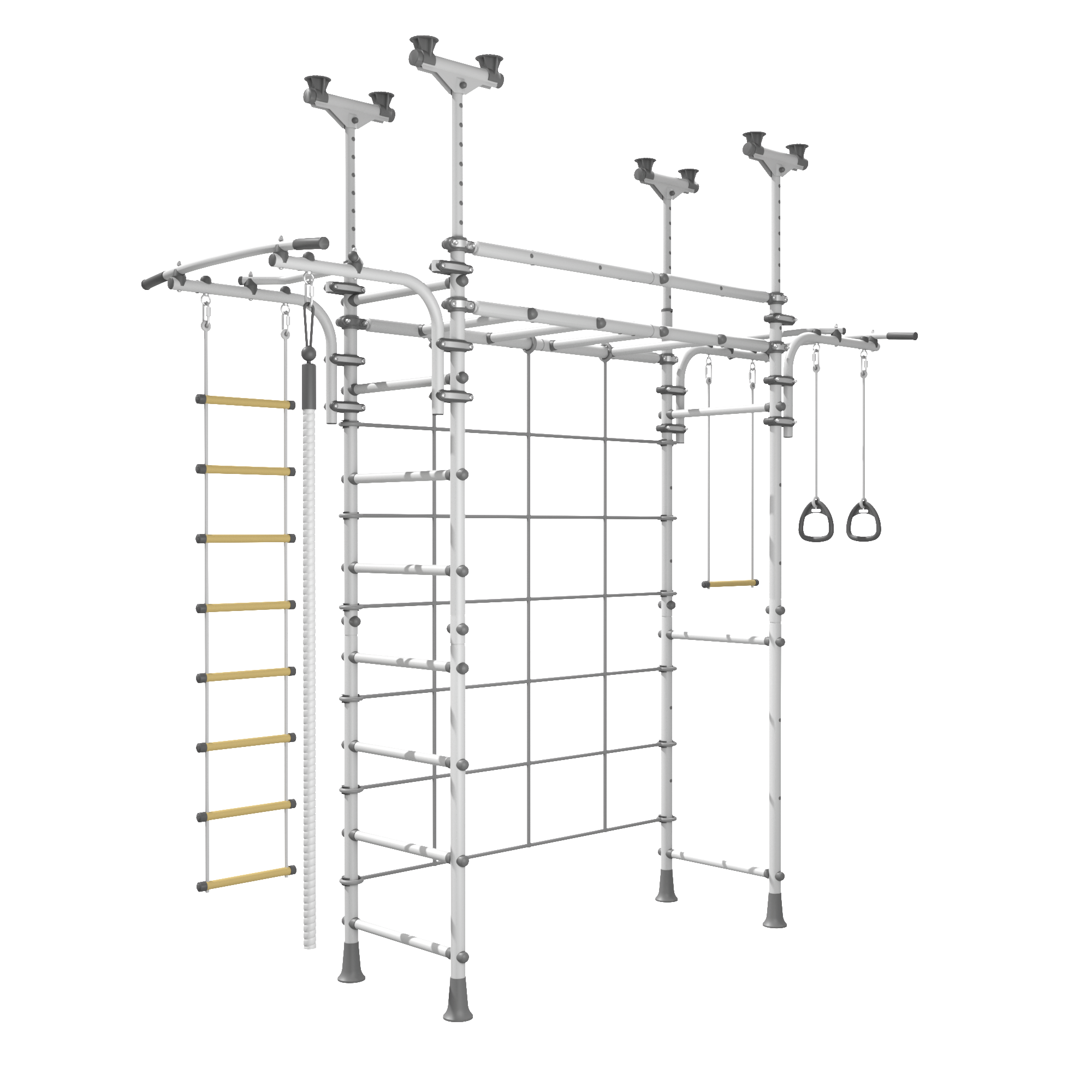
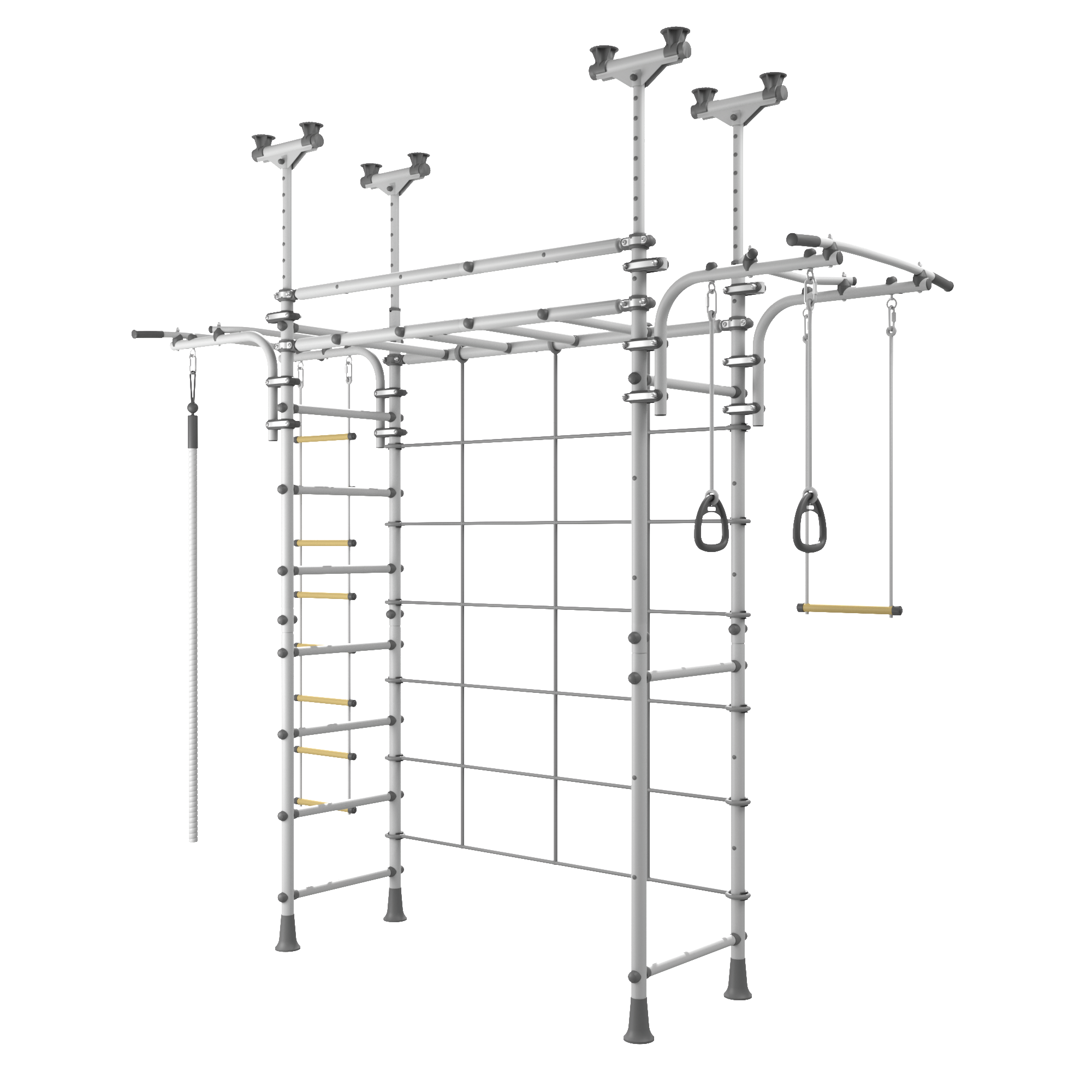
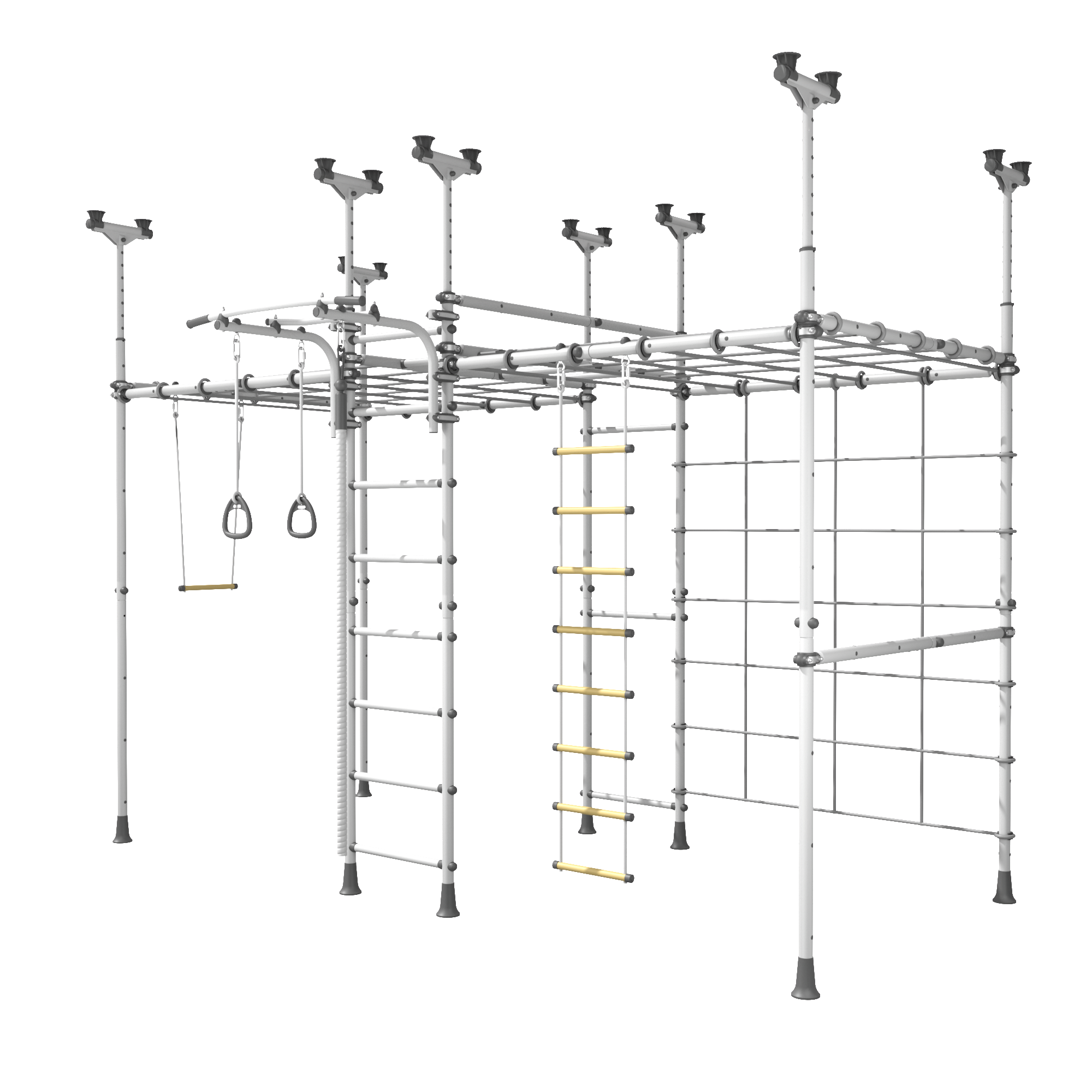
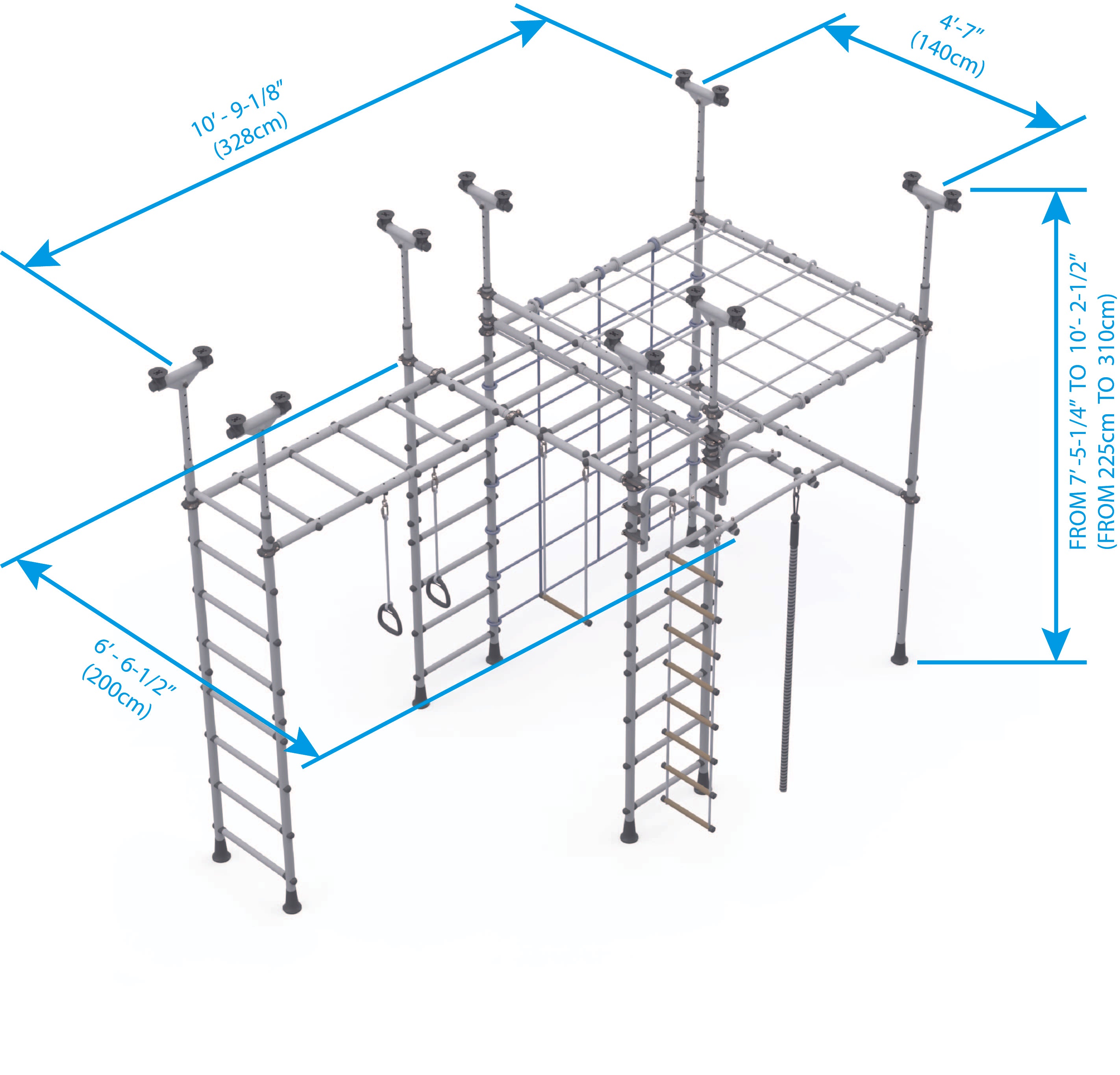
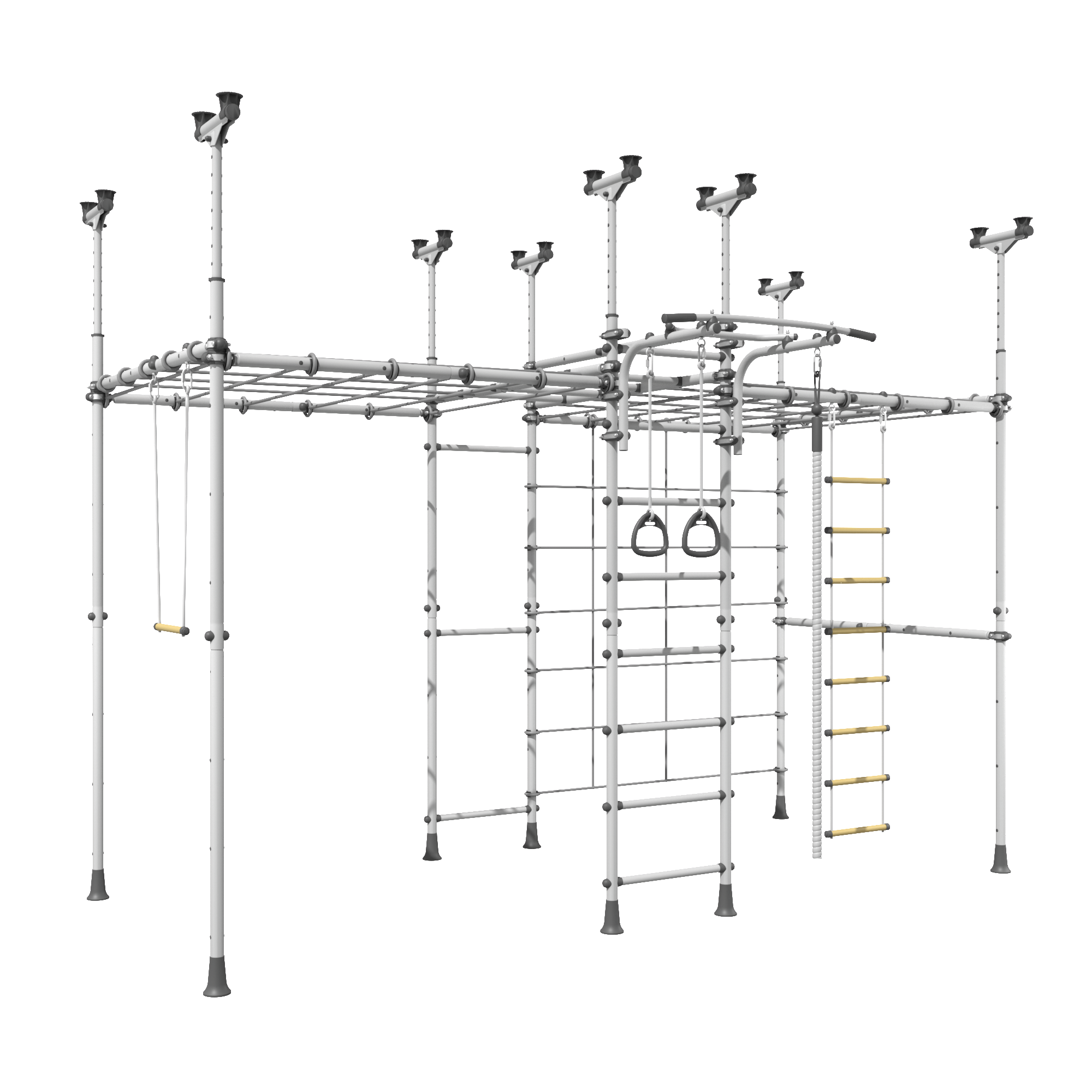
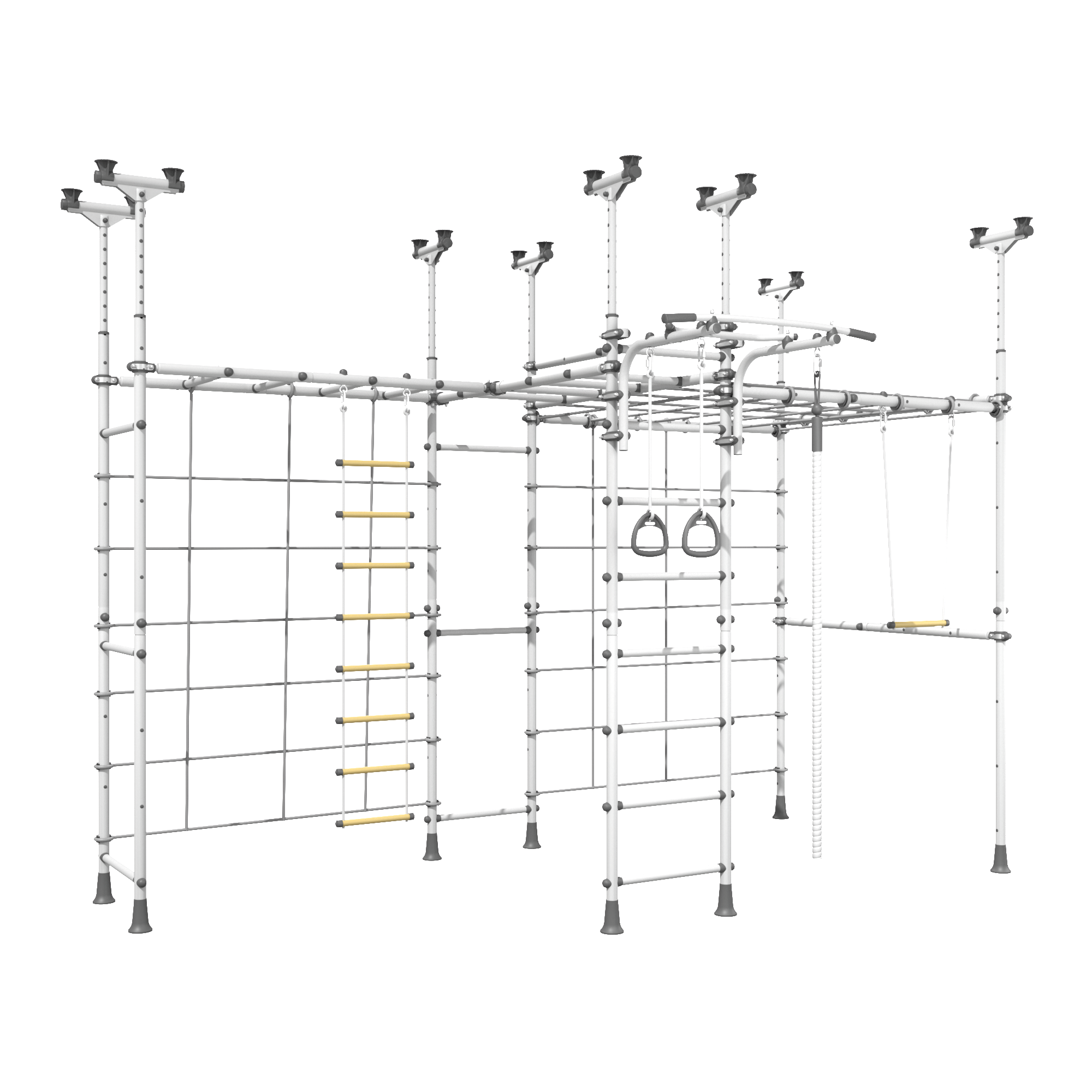
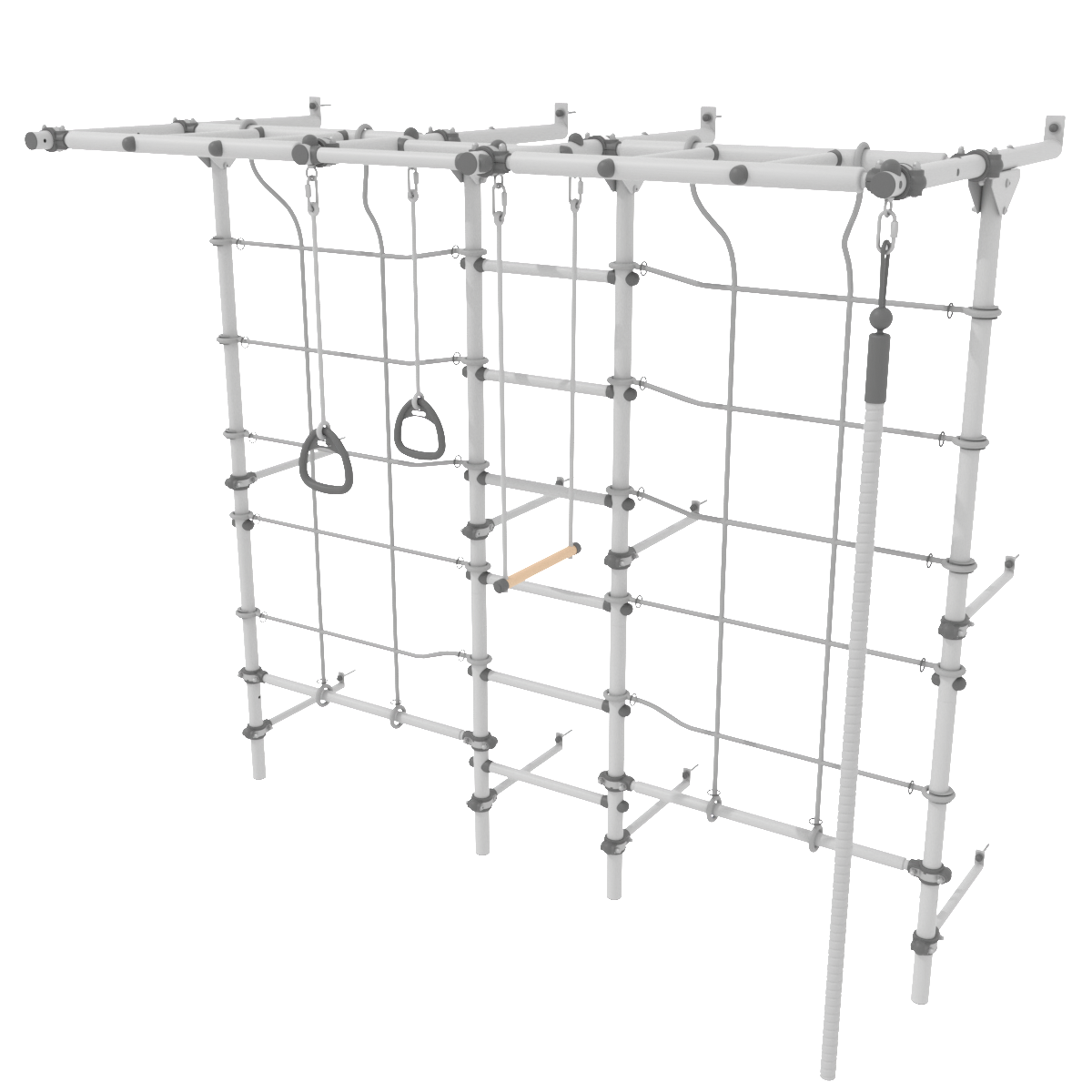
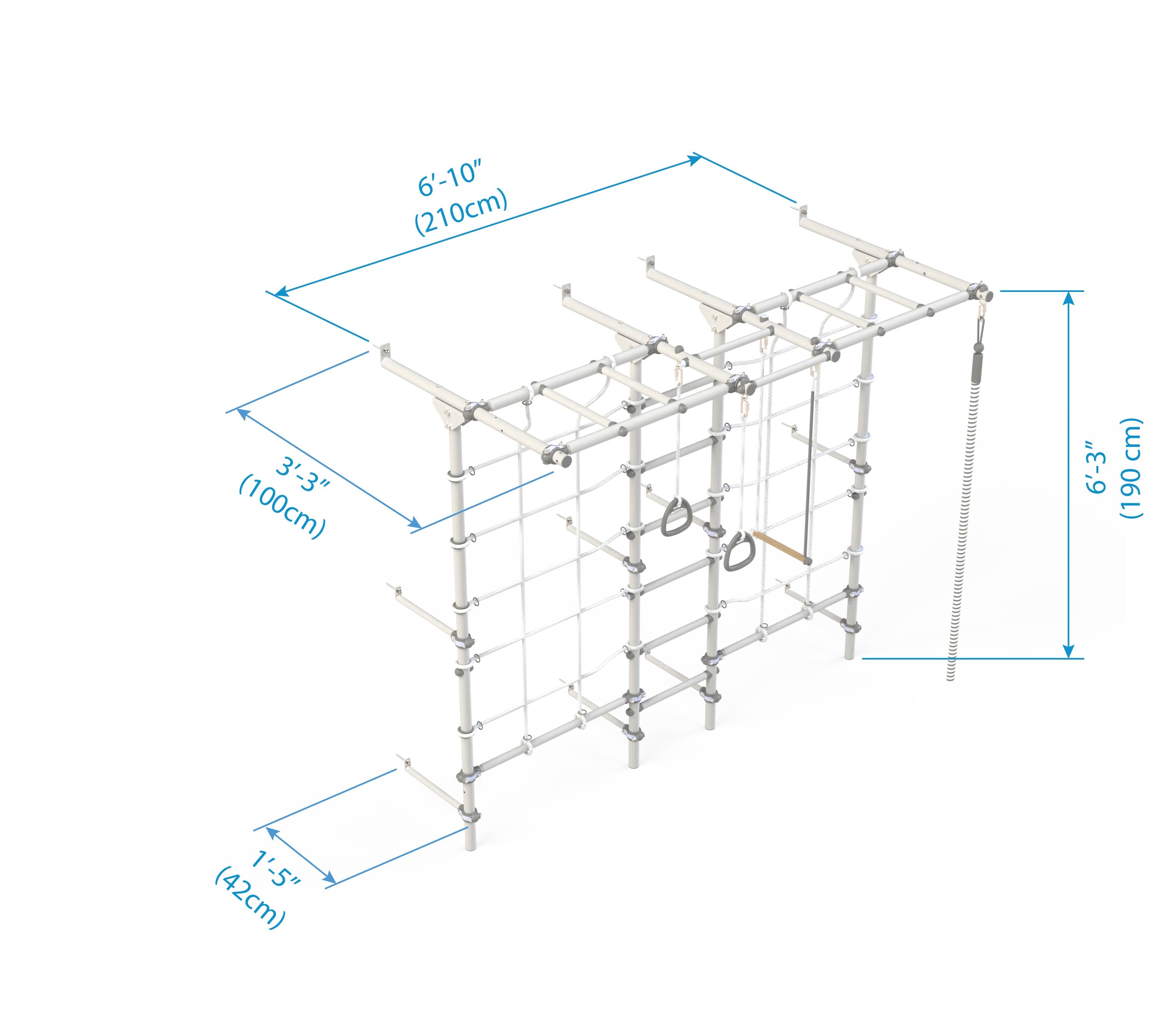
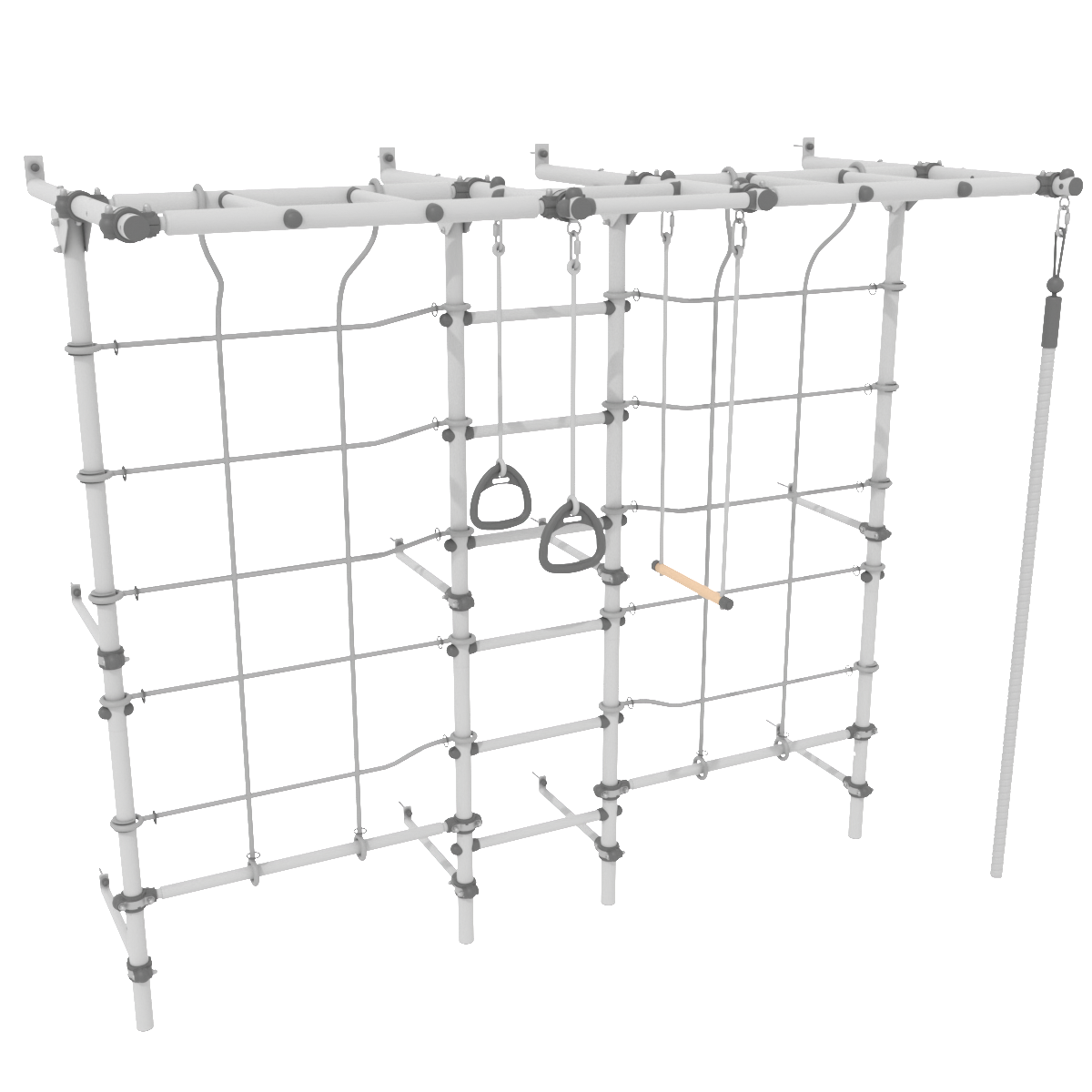
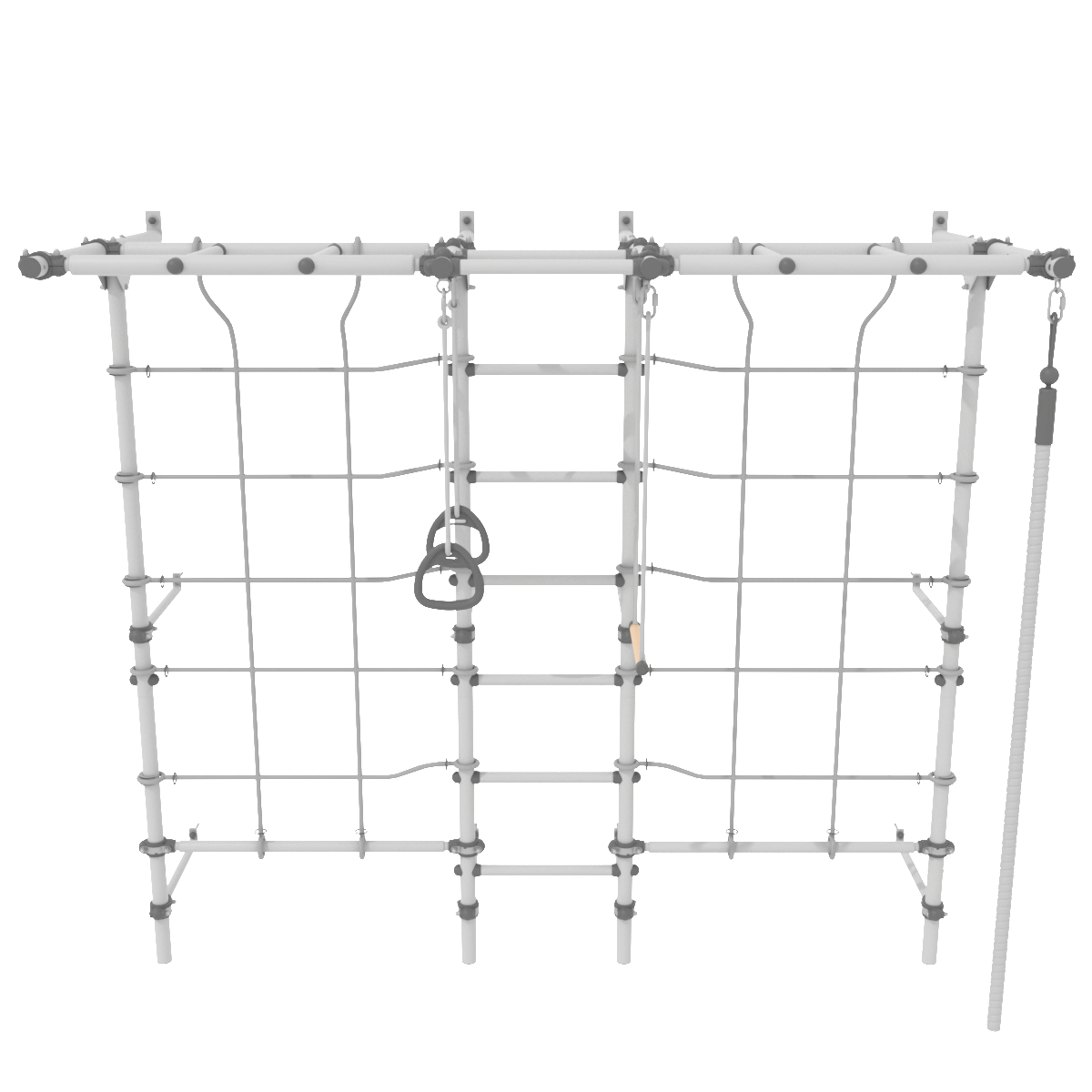
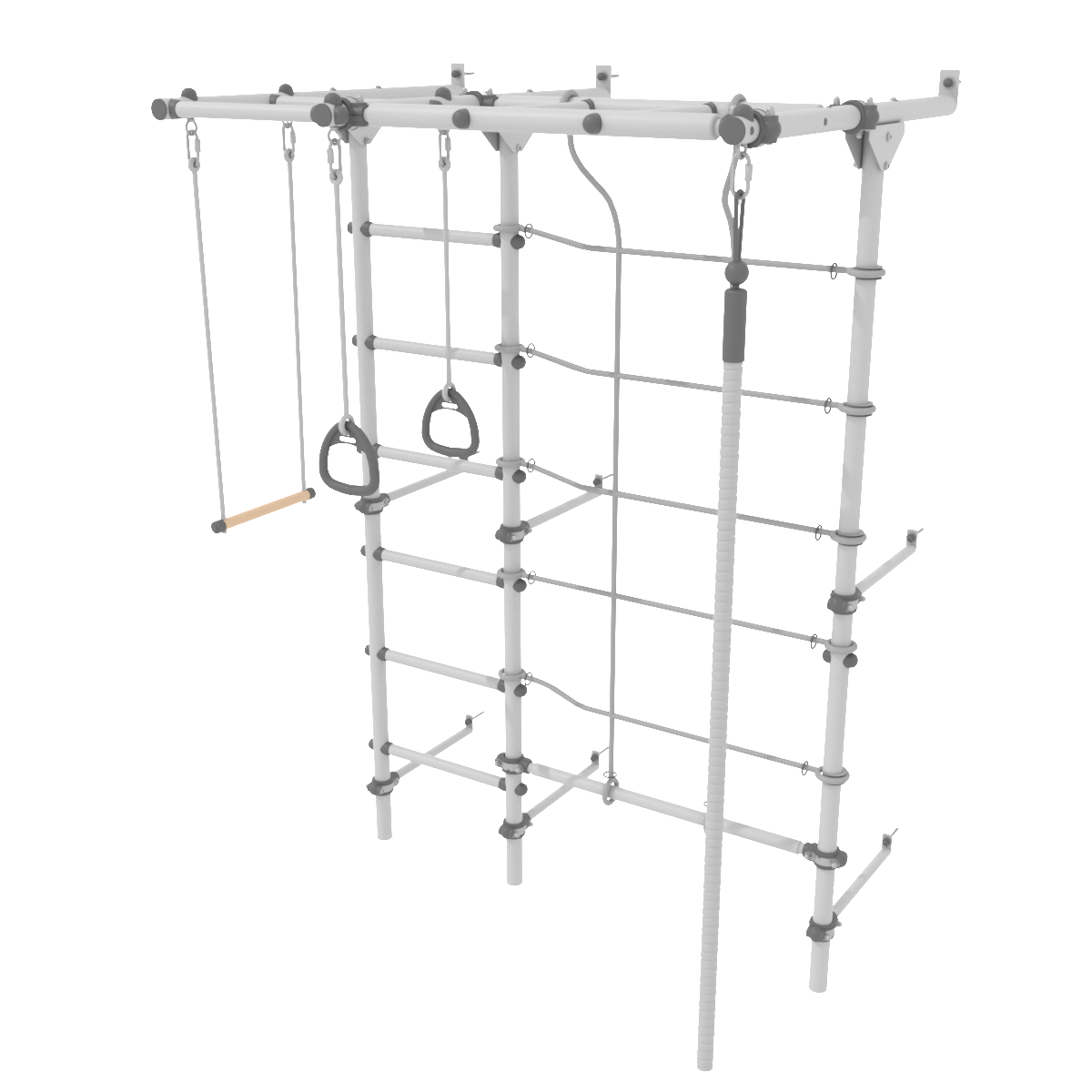
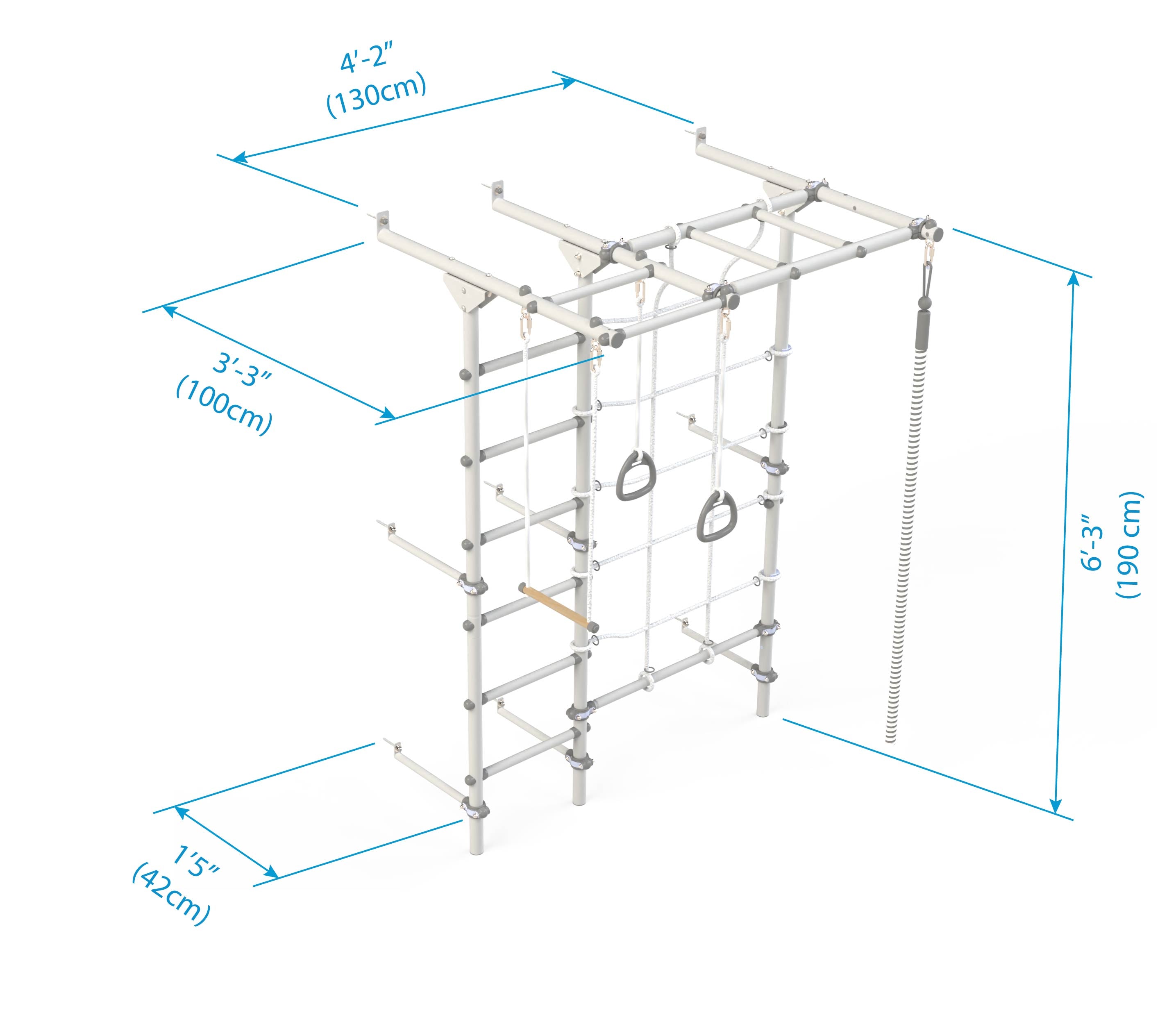
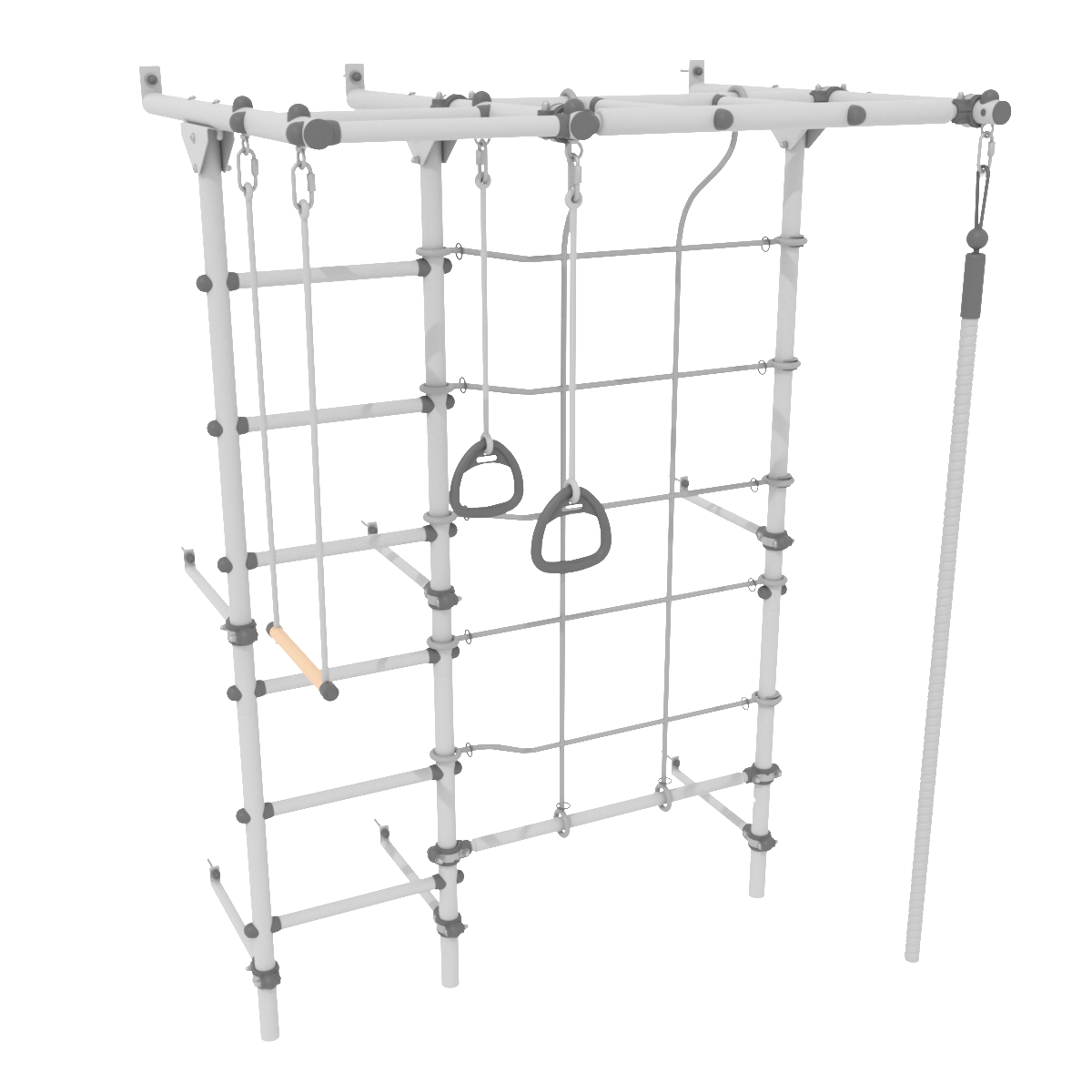
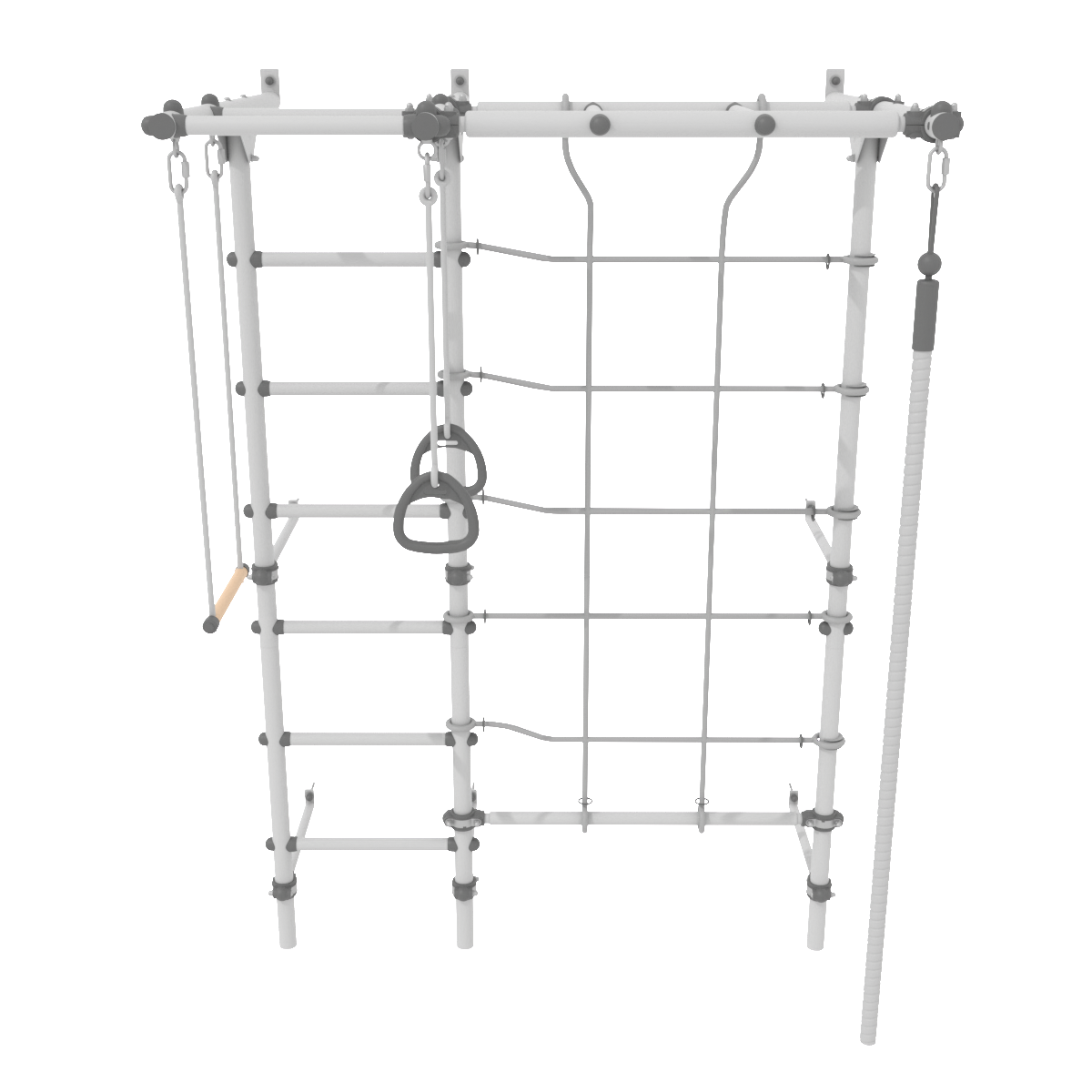
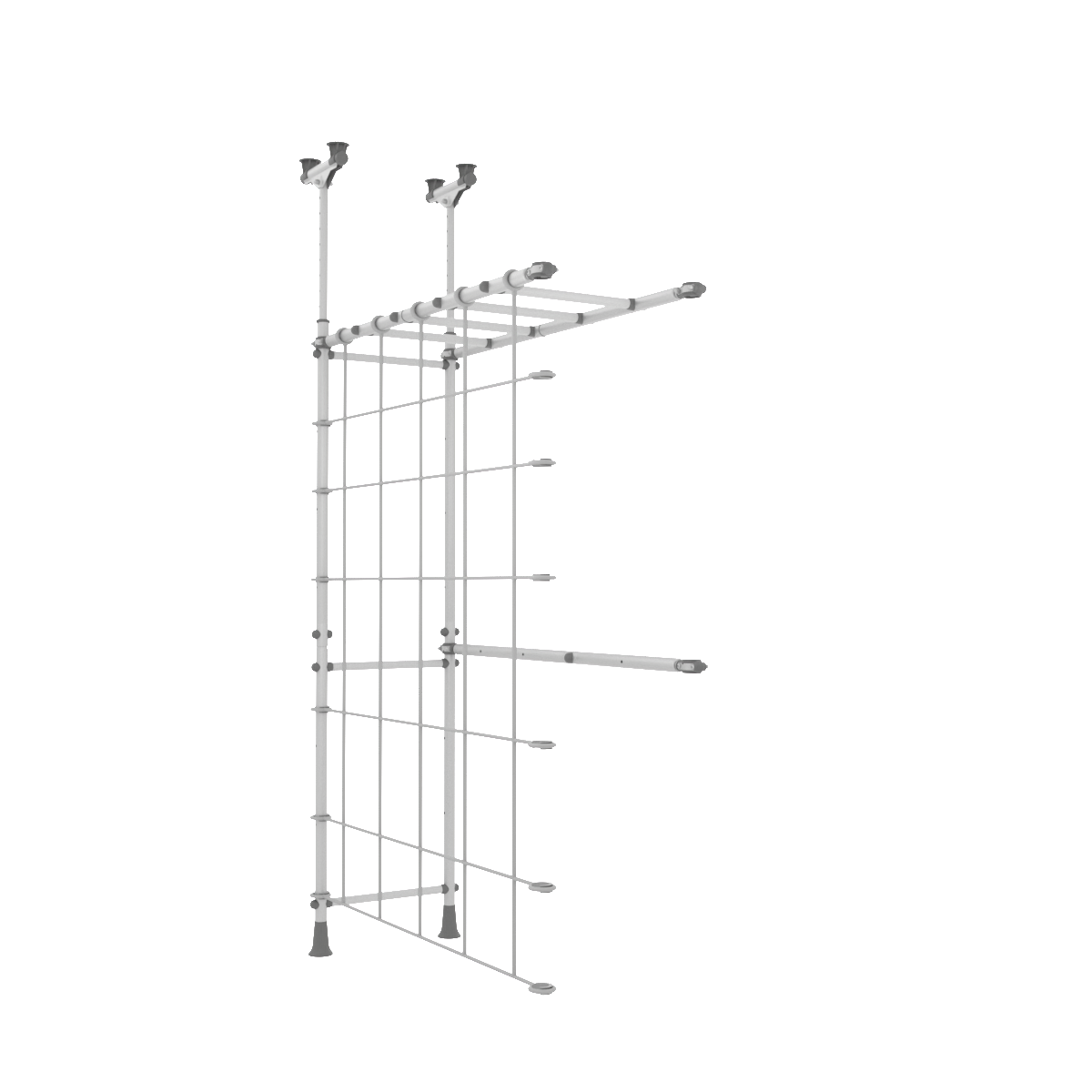
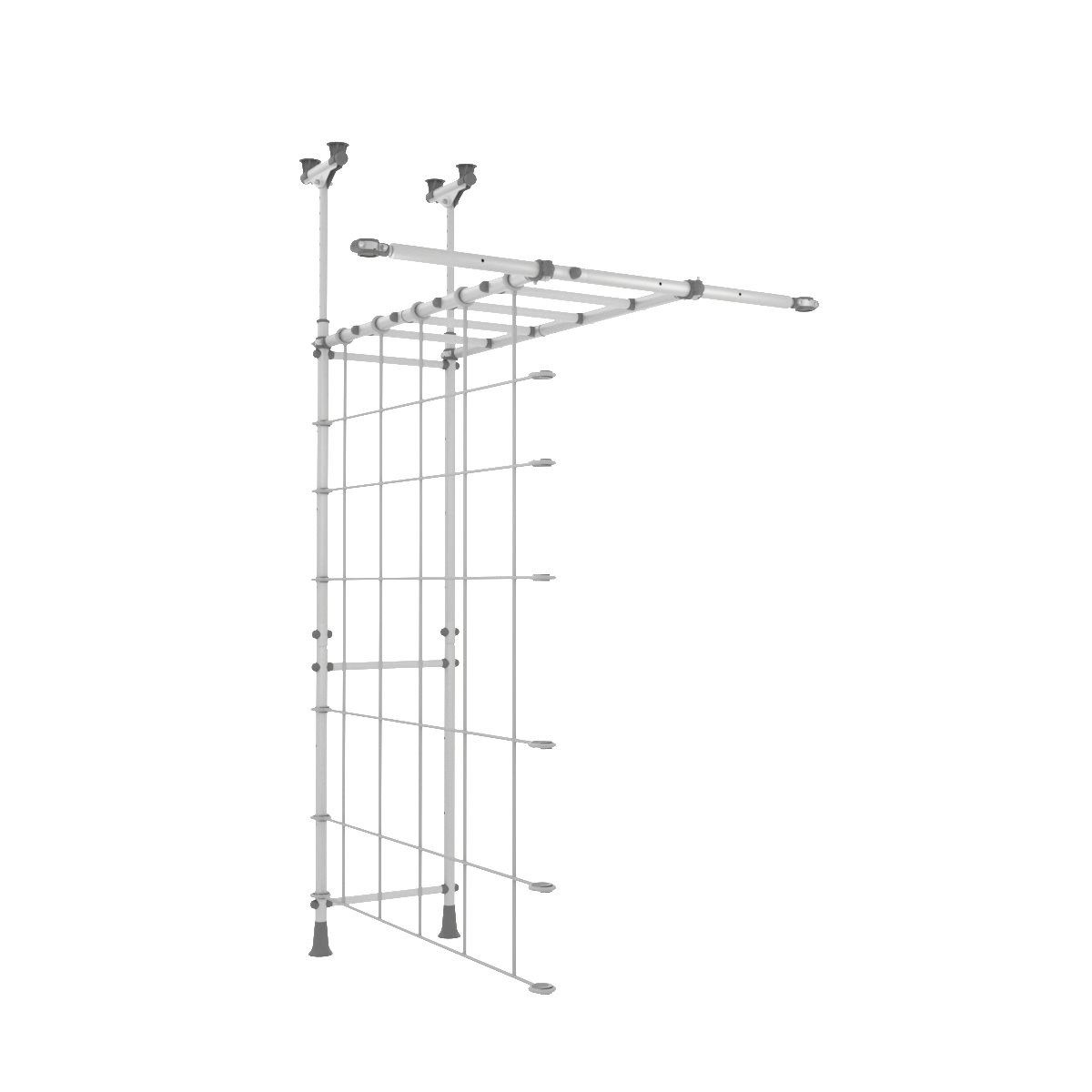
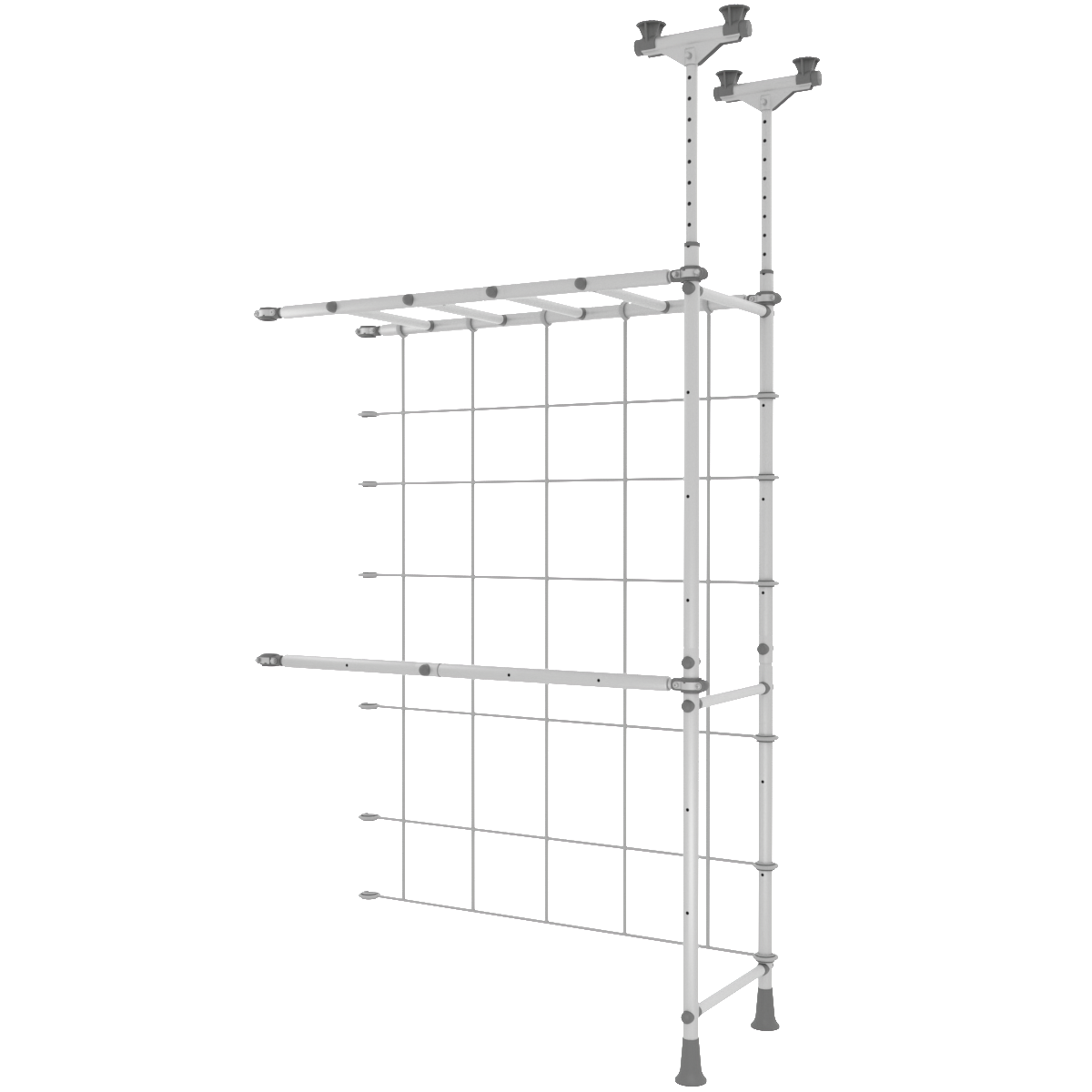
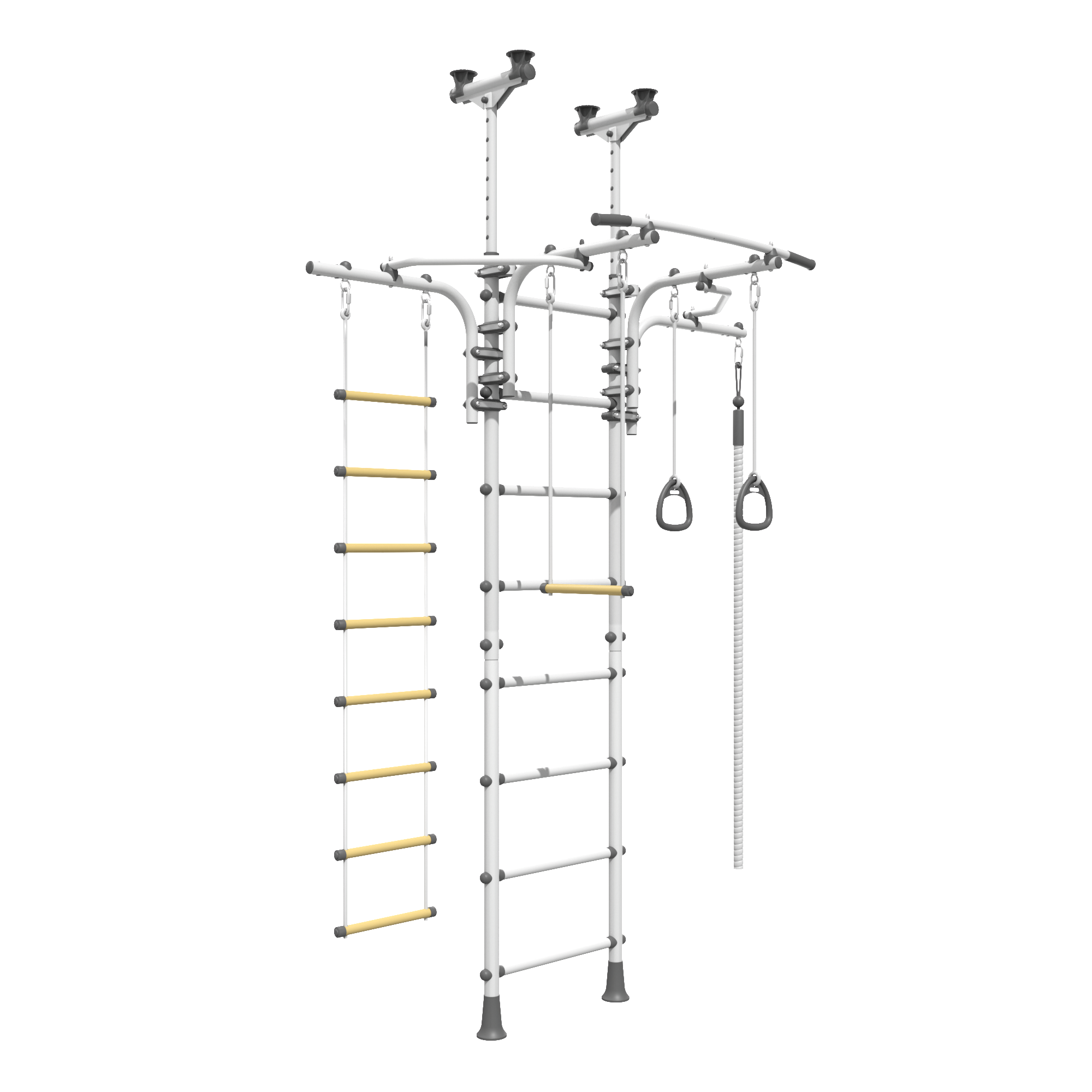
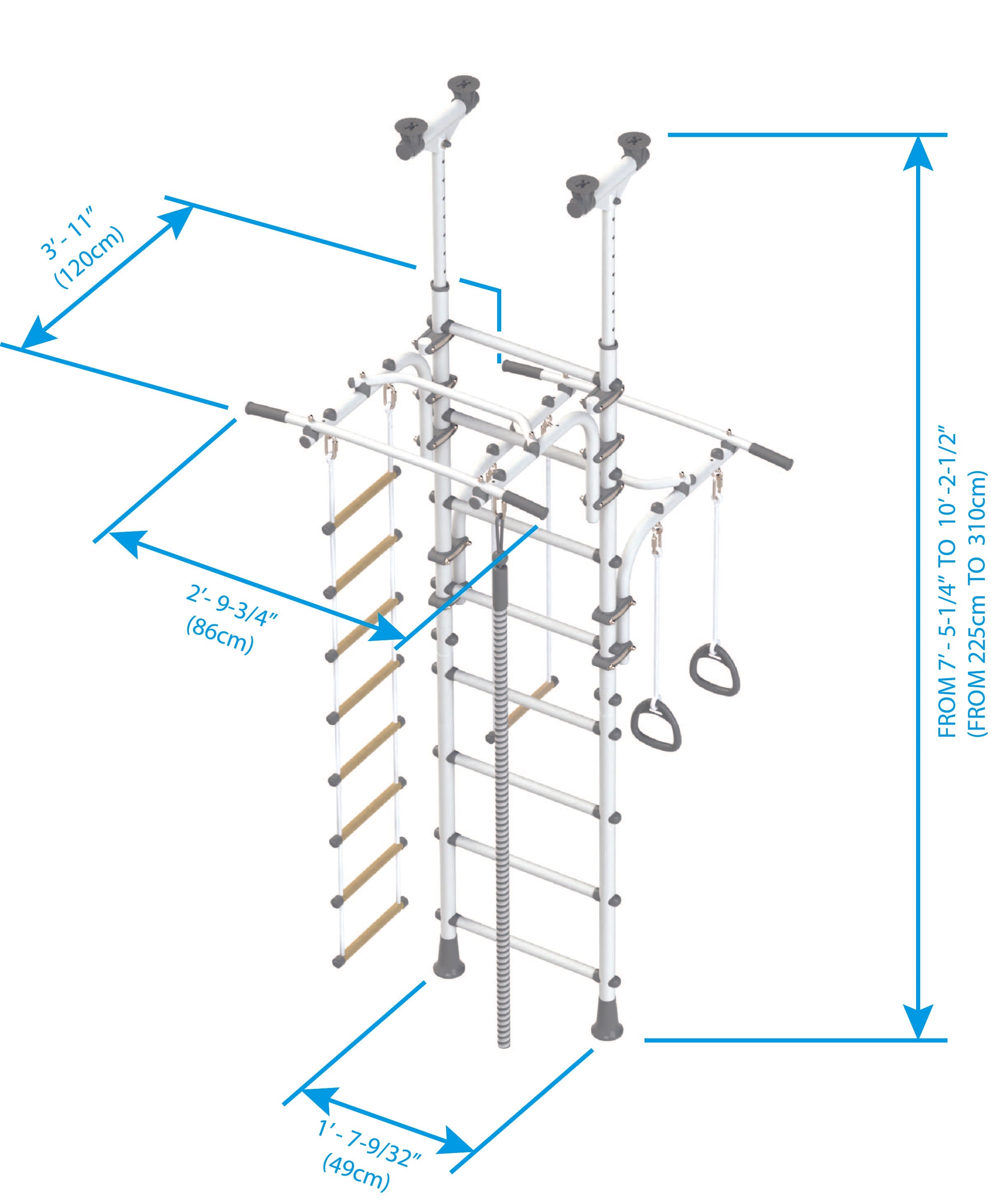
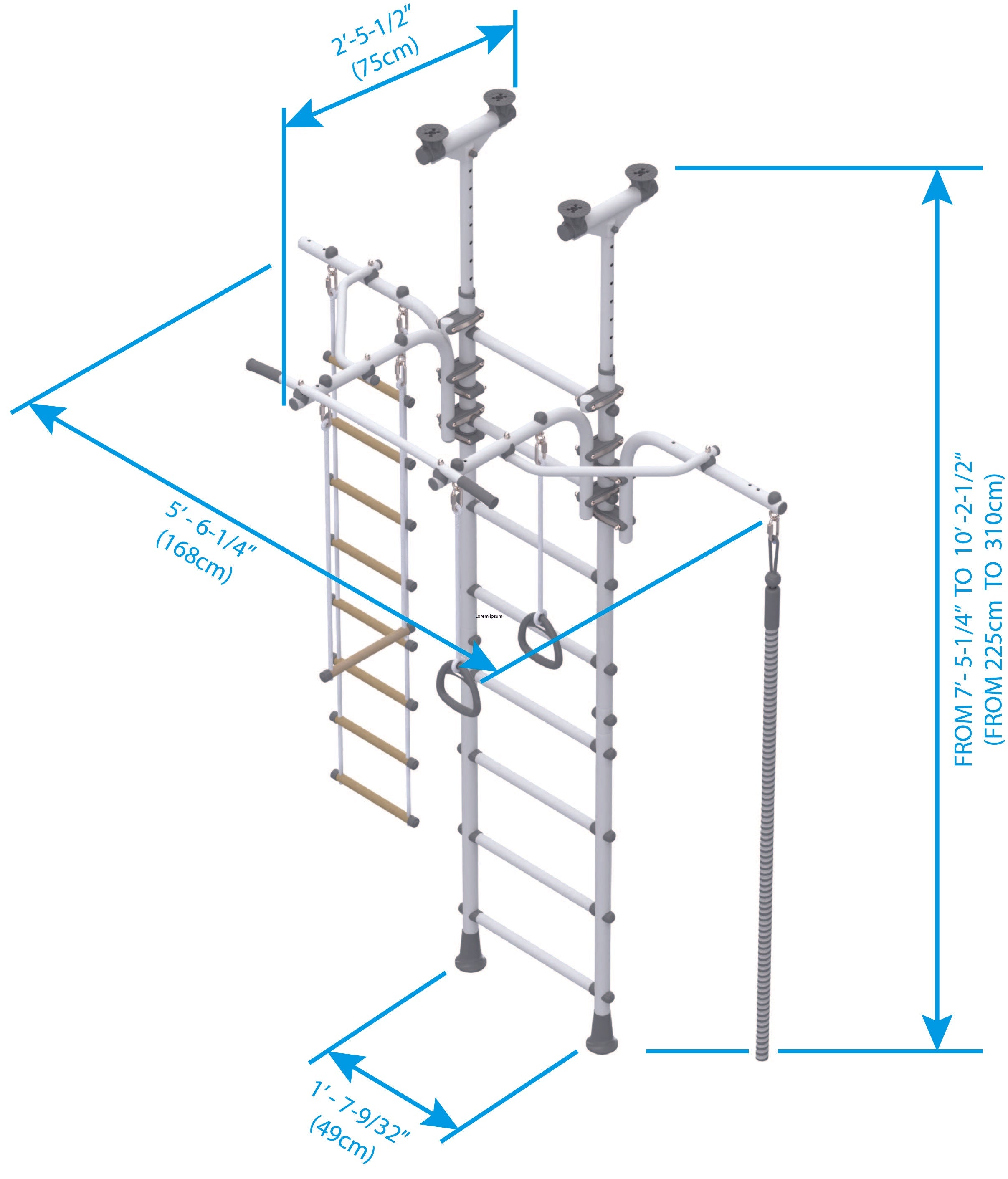
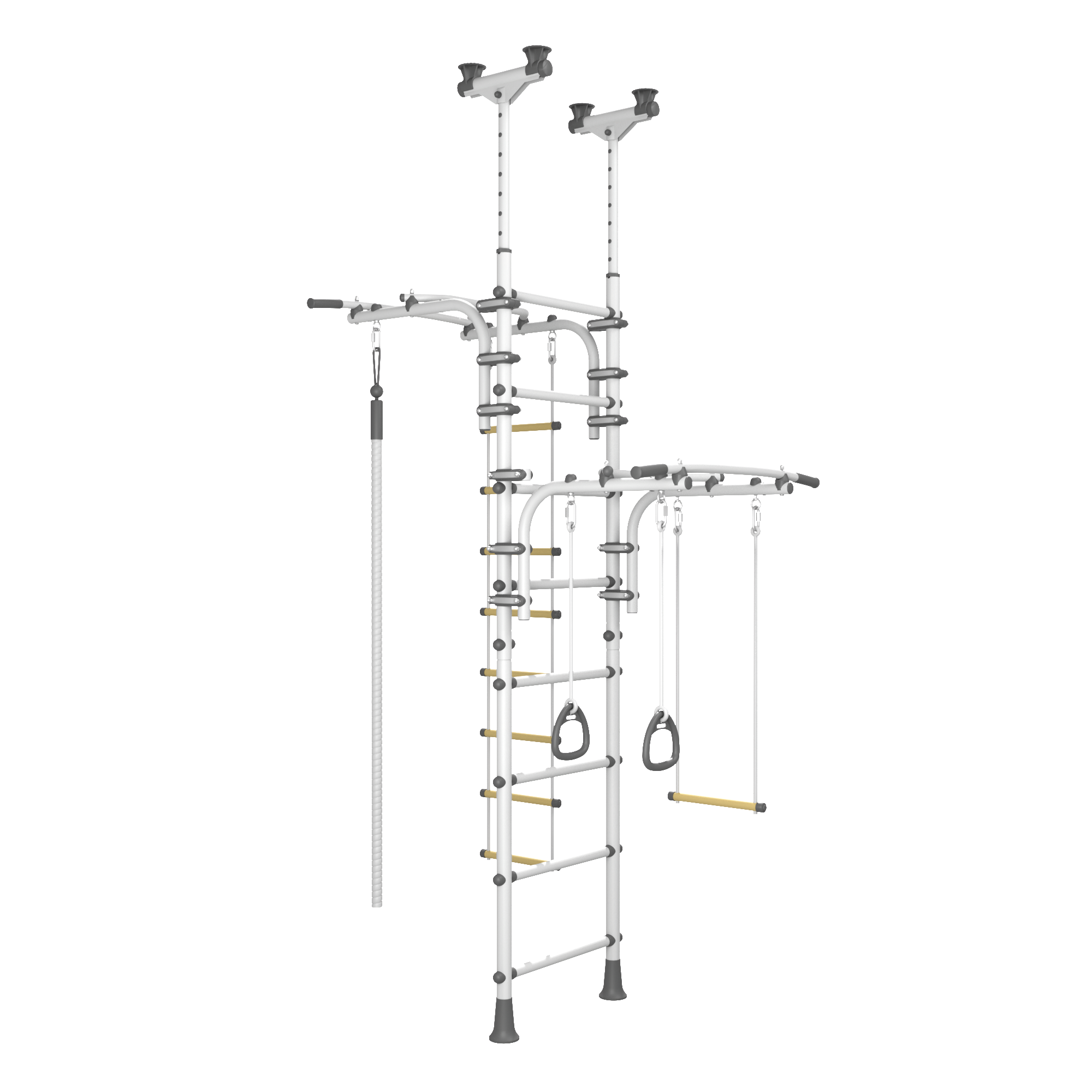
A Montessori play gym is a simple structure that helps kids move freely and build coordination, balance, and independence. These gyms follow Montessori principles that support hands-on learning, self-direction, and imaginative play. Kids are encouraged to climb, swing, balance, and explore using their own bodies. That movement helps develop physical confidence and supports early brain development.
Montessori-style play uses movement as part of how children learn. When kids engage their bodies, they also stimulate brain areas tied to memory, attention, and emotional control. A 2024 peer-reviewed study published in Sports Medicine found that gross motor activity is linked to stronger working memory, attention, and executive function in children.
A Montessori play gym fits well in homes with limited space, cold winters, or hot summers. Homeschooled kids often use it throughout the day to move between lessons. Just 10 to 15 minutes of climbing or swinging can help reset focus and support long-term brain growth through movement.
Why Choose A Montessori Indoor Play Gym?
Montessori indoor play gyms offer more than just a place to burn energy. They create a safe, structured space for kids to build strength, practice coordination, and develop confidence inside the home. These gyms are especially helpful for kids with autism, children with sensory needs, and homeschooled learners who benefit from regular movement during the day.
Here’s why families are choosing Montessori indoor play gyms:
- Supports brain development through movement-based learning
- Encourages imaginative play and creative problem-solving
- Helps improve attention and regulation, especially in sensory-seeking kids
- Modular design fits small spaces and adjusts as kids grow
- Great for year-round use during cold winters or hot summers
- Ideal for families with multiple children due to its strength and capacity
- Recommended by occupational and physical therapists for at-home sensory support
- Provides safe movement indoors without screens or overstimulation
The structure we make at Brainrich is designed specifically for indoor home use. It is strong enough for daily play, adjusts with your child's growth, and does not require any drilling or permanent installation. Two people are needed to assemble it, but no prior experience is necessary.
When To Get A Montessori Play Gym (And What Age To Start)
A Montessori play gym can be introduced earlier than most parents expect. The best time is as soon as a child shows signs of early mobility. Movement in the first years of life builds critical brain architecture. According to Harvard’s Center on the Developing Child, physical exploration in early childhood supports learning, attention, and emotional regulation.
For toddlers between ages 1 and 3, a play gym gives them a safe place to pull up, climb, and move daily. This supports coordination, balance, and strength during a key window of physical growth.
Preschoolers and older kids benefit from active movement, too. Kids of all ages continue to gain value from indoor climbing and imaginative play. A modular gym that adjusts over time offers ongoing benefits for homeschooled learners, active children, and those with sensory needs who thrive on regular movement breaks.
Indoor gyms are especially helpful during cold winters or hot summers when outdoor activity isn't practical. That’s why many families bring one in early and keep it as a long-term part of their child’s daily routine.
Your child might be ready if:
- They’re starting to sit, pull up, or reach for movement
- They need physical play to stay calm or focused
- They enjoy imaginative or sensory play
- They’re home most of the day and need active breaks
- Outdoor play isn’t always an option
Starting early means more support for brain development during the years it matters most.
Designed For Brain Development, Built For Real Life
Not all indoor play structures support brain development the way Montessori play gyms do. Ours are built for movement with purpose. Every detail helps kids grow physically while supporting focus, memory, and emotional control. Harvard researchers explain that active, hands-on play helps form the neural pathways responsible for learning and behavior regulation.
Movement isn’t just physical. It also drives brain activity, especially in early childhood. Climbing, hanging, and swinging support coordination, visual tracking, and executive function. Our gym is not just about play. It’s designed to support how kids think, concentrate, and respond to everyday challenges.
We see this benefit across different ages and needs:
- Kids with Autism who rely on movement to stay regulated
- Toddlers who are building strength and body control
- Preschoolers who improve attention and memory through physical activity
- Homeschooled learners who need active resets throughout the day
The Brainrich gym is designed for indoor home use. It is strong enough for multiple children and modular so it grows with your child. There’s no drilling or permanent installation. Assembly takes time and two people, but you don’t need experience.
We use food-grade, non-toxic plastic and high-grade steel. Not wood. Not PVC. The materials are built to last because families need a solution that works every single day.
This isn’t just about staying active. It’s about giving kids the tools to build confidence, stay focused, and support brain development in a way that fits real life.
How Our Play Gym Supports All Ages From Babies To Teens
The Brainrich gym is designed to grow with your child. It is modular, adjustable, and built from high-grade steel and food-grade, non-toxic plastic. It is not made from wood or PVC. From babies to teenagers, this gym adapts to support every stage of physical and brain development.
Babies
Even before walking, babies benefit from reaching, pulling up, and climbing in a safe environment. These movements help develop balance, spatial awareness, and motor planning, which are foundational for brain development.
Toddlers
Toddlers need movement every day. Climbing and swinging help them burn energy and build coordination. These activities also support focus, emotional control, and executive function.
Preschoolers
Preschoolers naturally seek more complex challenges. The gym allows them to climb higher, hang longer, and explore their limits. This builds confidence, gross motor control, and a stronger connection between movement and thinking.
School-Age Children
Children in this age group, especially homeschooled learners, benefit from structured movement throughout the day. The gym becomes part of a routine that supports imaginative play, sensory regulation, and mental focus.
Older Kids And Teens
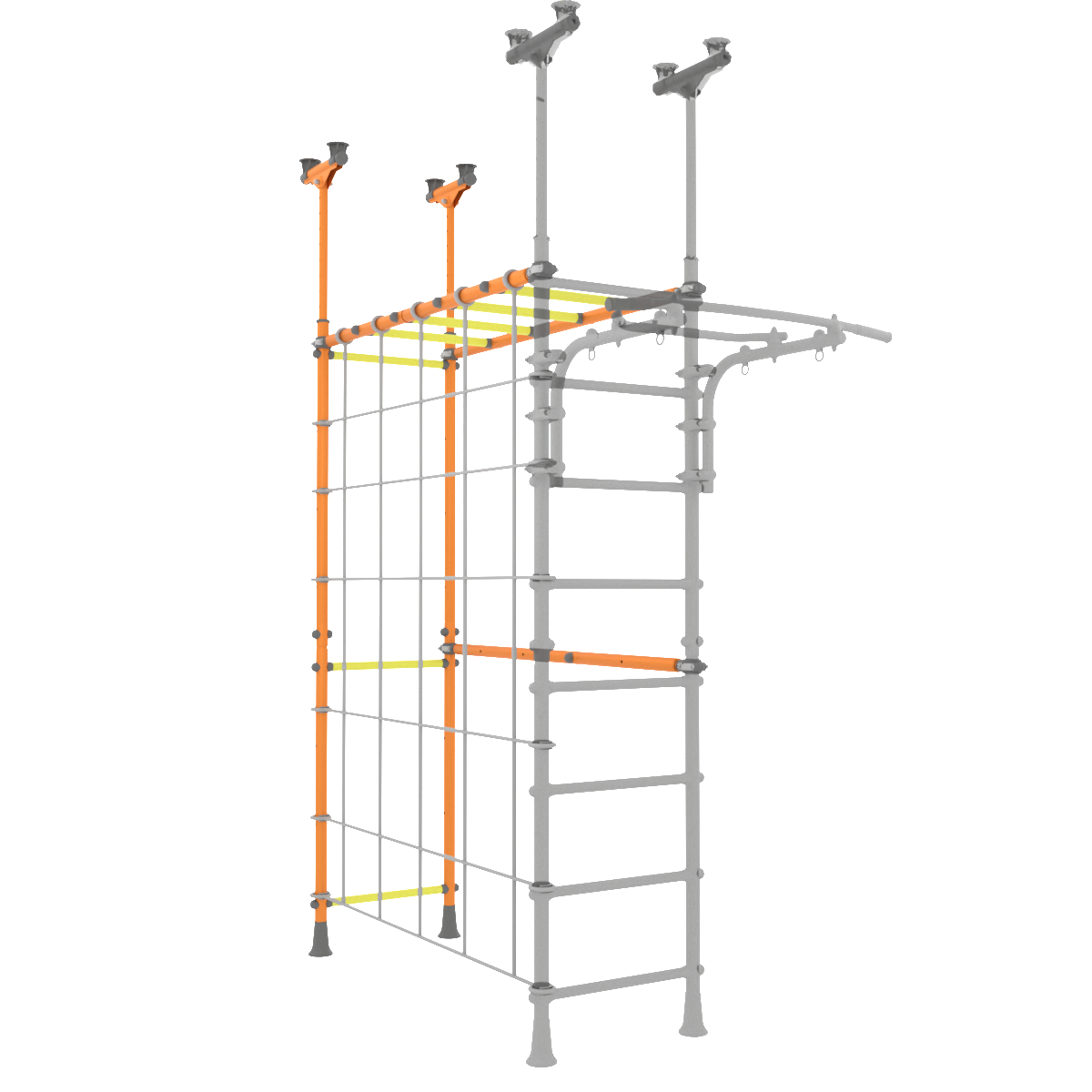
As children grow, the gym grows with them. The modular design makes it easy to reconfigure the setup to support more advanced movement. It holds more weight, making it suitable for strength-building, balance, and full-body coordination.
Sensory Input, Imaginative Play, And Support For Kids With Autism
The Brainrich gym is more than just equipment. It provides daily support for sensory input, movement, and imaginative play, especially for children with sensory processing needs.
For children who use movement to stay regulated, the gym offers a way to climb, swing, and balance in a controlled indoor space. These actions help improve focus and emotional control. According to a 2025 meta-analysis published in Frontiers in Pediatrics, structured physical activity helps support better behavior, motor coordination, and emotional regulation in children with autism.
The gym also supports imaginative play, which can be especially valuable for kids with autism. A climbing ladder can become a rocket ship. A platform turns into a hideout. This kind of flexible play builds confidence, problem-solving skills, and creative expression without overwhelming stimulation.
Families tell us the gym becomes part of a predictable routine. It gives their child space to reset between activities and feel more in control of their body and environment.
Our gym is also approved by occupational and physical therapists. It fits naturally into home-based sensory plans while using materials that hold up to daily use.
Why Brainrich Makes The Best Montessori Play Gym
At Brainrich, we designed our play gym to meet the needs of active, growing families. It’s built for everyday use, supports development, and adapts as children get older.
The structure is made from high-grade steel, not wood, and does not require drilling or permanent installation. It holds multiple children at once, adjusts to different heights, and works in small spaces. It’s strong, safe, and designed for real homes.
We’ve supported over 10,000 families with a system that offers daily movement and long-term value. The materials are food-grade, non-toxic, and made from proper steel, not PVC or soft wood.
Wooden Montessori gyms have their place. But Brainrich offers more flexibility and durability over time.
What makes our gym different:
- Modular design that changes as your child grows
- Approved by occupational and physical therapists
- Safe for toddlers, challenging for teens
- Encourages sensory input, focus, and creative movement
- Used daily in homes with limited space or weather restrictions
This isn’t equipment you store after a few months. It stays part of the home. Part of the daily rhythm. And part of how children build strength, confidence, and independence through movement.
Explore More Montessori And Sensory Learning Resources
We know that movement and sensory play are just one part of the bigger picture. At Brainrich, we’re committed to supporting families with resources that explain how learning, regulation, and physical activity work together. Whether you’re exploring Montessori for the first time or building a long-term sensory plan at home, we’ve put together guides that help you make informed choices.
These articles offer helpful starting points:
Each piece is written to support brain development and give families real tools they can use at home. Just like our gym, these resources are made to grow with you.
Read also:
Sources:
- Brain-Building Through Play: Activities for Infants, Toddlers, and Children - Center on the Developing Child at Harvard University. (2025, September 23). Center on the Developing Child at Harvard University. https://developingchild.harvard.edu/resources/handouts-tools/brainbuildingthroughplay
- Wang, Y., Qian, G., Mao, S., & Zhang, S. (2025). The impact of physical exercise interventions on social, behavioral, and motor skills in children with autism: a systematic review and meta-analysis of randomized controlled trials. Frontiers in Pediatrics, 13. https://doi.org/10.3389/fped.2025.1475019
- Morales, J. S., Alberquilla, E., Valenzuela, P. L., & Óscar Martínez-de-Quel. (2024). Physical Activity and Cognitive Performance in Early Childhood: A Systematic Review and Meta-Analysis of Randomized Controlled Trials. Sports Medicine, 54. https://doi.org/10.1007/s40279-024-02020-5